 Ozikoro
Indigenous Architecture · Published history
Alusį Compounds, Colonial Suppression, and the Transformation of Igbo Spirituality
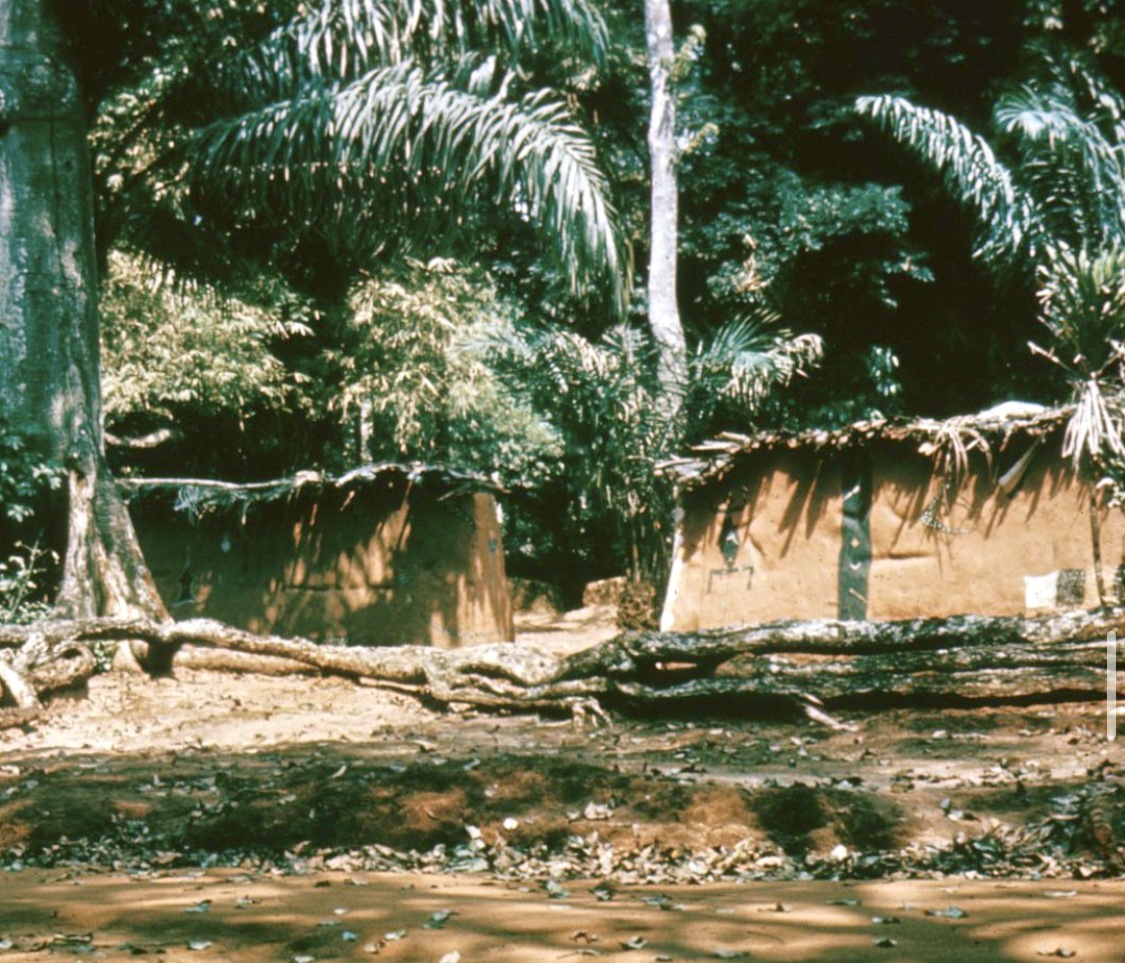
In an unknown Igbo community, likely in present-day Anambra State, the Alusį (divinity) compound stood as a sacred space dedicated to traditional spiritual practices. The compound’s walls were designed with ùlì motifs, a unique art form commissioned to skilled women who decorated these shrines with detailed patterns. A photograph by Tom Eighmy from the University of Wisconsin captures the beauty and cultural significance of such spaces, highlighting the role of art in Igbo religious traditions.
The written record
The colonial era brought drastic changes to these spiritual landscapes. British administrators, determined to enforce their rule and economic policies, launched a campaign to destroy major oracles and shrines across Igboland. Each time a village with a revered oracle was captured, the colonial government used explosives to demolish the shrines in full view of the local population. This was a strategic move to delegitimize indigenous religious beliefs, portraying them as primitive and powerless.
Among the sacred sites targeted were the famous Long Juju of Arochukwu, Agbara at Ozuzu, and Igwe-ka-ala at Umunneoha. These oracles were not only spiritual centers but also played key roles in governance, justice, and economic systems within Igbo society. Their destruction signified the dismantling of indigenous authority and the forced integration of local communities into the colonial economic structure.
Historical context
Beyond physical destruction, Christian missionary activity and Western education further eroded Igbo traditional beliefs. The colonial administration actively supported missionary expansion, seeing it as a tool to reshape society. Missionary schools were established to replace indigenous knowledge systems, ensuring that future generations were raised under European ideological influences. This effort was not only about religion but also about economic control. The British saw devotion to traditional spirituality as a waste of productive resources. By eliminating indigenous religious institutions, they redirected manpower and financial resources toward the colonial economy, reinforcing their authority over the region.
Despite these disruptions, traces of Igbo spirituality and artistic traditions remains. Alusį compounds, ùlì motifs, and indigenous belief systems have survived in various forms, often merging with modern expressions of faith and culture. Today, scholars and cultural historians continue to explore and document these traditions, recognizing their historical significance and ongoing influence.
Sources and references
- Afigbo, A. E. (1970). Sir Ralph Moor and the economic development of Southern Nigeria: 1896-1903. Journal of the Historical Society of Nigeria, 5(3), 376–377.
Cite this article
Discussion
Sign in to join the discussion
Comments are checked by an editor before they appear. Leave a source or a correction and it is read first.
Continue reading
Related histories
 Indigenous ArchitectureAla, the Earth Mother: The Sacred Guardian of Igbo Morality and FertilityRead history →
 Indigenous ArchitectureThe Ekpe House and the Evolution of Nsibidi: Cultural Secrecy and Colonial Influence in Southeastern NigeriaRead history →
 Indigenous ArchitectureIgbo Compound Entrances: A Study of North-Central Igbo ArchitectureRead history →
No comments yet
Nothing has been approved on this record yet. Comments are checked by an editor before they appear, so one written now shows on this page after that check.