 Ozikoro
Historical Studies · Published history
Anam: Origins of a Riverine Igbo Community
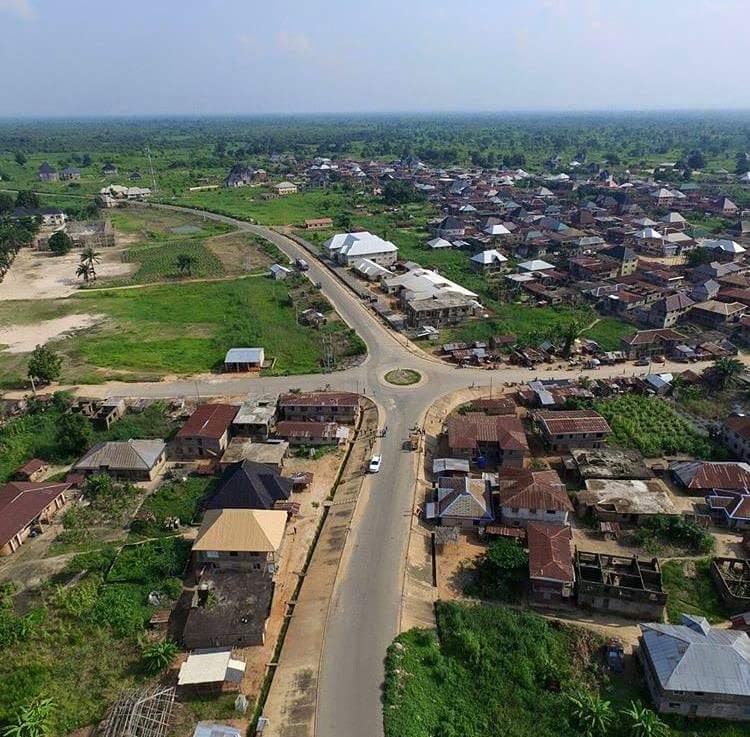
Anam is an old riverine Igbo community in present-day Anambra State. Its people came together through several waves of migration from different parts of the Igbo-speaking region and from neighbouring areas. The name is traditionally understood not as that of one founding ancestor but as a collective label for people who arrived from different places and eventually became one community.
The written record
For that reason, Anam’s history reads best as a story of migration, settlement and integration, not as the tale of a single father whose children founded all the villages. Its main ancestral traditions link the people to Nteje, Nsugbe, Aguleri, Umueri, Nando, Omasi, Anaku and other riverine communities. A smaller group of lineages traces its origin to Idah, in the former Igala Kingdom. Each village and quarter keeps its own version of this diversity.
Until the end of the nineteenth century, nothing about Anam’s past was written down. Yet some elders still remembered a great deal about themselves and their surroundings, handed to them by their ancestors and stored in memory to be passed on again. Everything below comes from that tradition, which is why villages sometimes remember the same events in different ways.
Historical context
Odah, the First Gathering Place
One tradition places the early gathering of Anam people at a settlement called Odah, in the area of present-day Umueze Anam. Oral history says groups moved into the area during the period remembered as the Adda War, linked with widespread slave raiding and warfare in seventeenth-century Igboland.
One of the early groups is said to have come from Nsugbe, crossing the Anambra River into the fertile wetland country of Anam. Among those associated with this first settlement was a hunter named Nwavor, remembered locally as an early founder. The migrants were drawn by good farmland, forests, game, fishing grounds and pools. Others followed from neighbouring communities, some fleeing the fighting, some looking for land, some simply attracted by the riches of the river environment. All of them settled together at Odah.
That coming together is what the name Anam is traditionally taken to mean: a gathering of diverse people, not the name of one man.
Refuge from the Adda War
The Adda War period was unstable. Local memory recalls the arrival of slave-raiding groups and the flight of people from many places toward the relative safety of the Anam wetlands and riverine forests. They came from Nsugbe, Nteje, Aguleri, Umueri, Nando, Omasi and other river settlements, and Odah’s population grew steadily. Anam was therefore formed by a long series of migrations over generations, not by one.
The Igala Connection
Anam’s traditions also include an Igala strand, though it accounts for only part of the community’s ancestry. The story begins with Ajida, a great warrior associated with Idah, whose descendant Ogbe had several children, among them Anaku, Olosi, Okpanam and Nzam, and another son whose line became linked to a quarter of Oroma-Etiti.
The tradition ties this movement to the Apa War remembered in Igala history, when groups moved south from the Idah area along the Niger. One of Ogbe’s descendants eventually reached Anam with his family. He found good land, plenty of game and settlements already established around Odah, and he stayed and was absorbed into the growing community. Other descendants of the same line are said to have settled elsewhere.
This explains an Igala-derived element within Anam but not the origin of the whole. Most of Anam’s traditions point to Igbo-speaking communities around the Anambra and Niger river systems.
The Nsugbe Connection
Nsugbe holds a particularly important place. A substantial tradition traces the ancestors of Umuikwu Anam to Nsugbe. They are said to have left during the warfare and eventually crossed the Anambra River into Anam. But Umuikwu was not the only beneficiary of that migration, since some lineages of Oroma-Etiti also remember Nsugbe ancestry. It shows a pattern in Anam’s past: migrants from a single source community could end up founding settlements in different parts of Anam.
From Odah to the Seven Villages
After the groups had lived together at Odah, the Aboh wars of the eighteenth century scattered them. According to Anam tradition, Aboh forces attacked settlements along the lower Niger and its waterways, and their river-borne military strength made communities beside the water especially vulnerable. The people of Anam moved out from Odah into the surrounding territory.
The seven traditional villages that came out of this dispersal were:
- Iyiora
- Mmiata Anam
- Oroma-Etiti
- Umudiora Anam
- Umueze Anam
- Umuikwu Anam
- Umuoba Anam
The saying “Anam mkpọ asaa,” Anam of seven villages, keeps the memory of that older arrangement. Later, Umuewelum Anam separated from Oroma-Etiti and became an eighth village.
Where the Villages Settled
The groups spread in different directions. Umueze Anam and Umudiora Anam are usually counted among the older communities, with ancestral ties to Amadiaba in Nteje. Umuikwu Anam moved toward the south. Mmiata Anam settled farther north, while Oroma-Etiti and Umudiora took up ground in the west. Other communities grew in their present locations as the population expanded.
So the villages are not the work of eight brothers descended from one man. They came from the separation and resettlement of groups who had first gathered together at Odah.
Mmiata Anam: The Hunters’ Settlement
Mmiata has its own founding story, and it is one of the most vivid in Anam. According to this tradition, Mmiata was founded in the eighteenth century by a group of hunters from Aguleri, Nando and Anaku, all in the Omambala region of present-day Anambra State. The hunters kept meeting on the hunting ground, especially at a resting place called Ọda, where they stopped after their expeditions. Over time they grew familiar with one another.
They also saw how much the land offered: valuable economic trees, many kinds of animals and fish, fertile ground for farming, and a place safe enough to keep clear of troubles at home. So they settled. They brought some of their close family and urged friends to join them.
They named the settlement Ụmụanata or Mmụanata in the Anam dialect, meaning the coming together of siblings. The name later shortened to Mmiata, which carries the sense of one unity, one people.
The War with Nzam
As the population grew, Mmiata pushed toward Umueze’s former location, called Aboh in this tradition, and toward Nzam in Olu, looking for more farmland and fish ponds. The push led to war between Mmiata and Nzam. The people of Olu urged their sons and daughters to fight, on the principle that if a fish is taken from one Olu person, it has been taken from all of Olu.
The struggle is remembered as a war between the leopard and Nzam (Ọgwụ agụ na Nzam). A leopard believed to be a man of Mmiata in another form is said to have killed many Nzam people in defence of his own. Mmiata came to regard the leopard as its totem, and there are taboos against killing it or eating its meat.
Mmiata II in Aguleri
In 1952, a family in Umudeze broke away from the rest of Mmiata after disagreements and crossed to Ọvịanwagbo in Aguleri. They settled there and founded Mmiata II, also known as Umudeze Aguleri. This ties Mmiata back to Aguleri, one of the places its hunters first came from.
Umuikwu Anam on the Southern Frontier
Umuikwu offers one of the clearest examples of Anam’s mixed origins. By its own tradition, its ancestors came from Nsugbe and settled in the south after the dispersal from Odah. The area was an exposed frontier, open to attack by water, but they took it anyway for the sake of its farmland, fishing pools, forests and game. Their readiness to hold such a dangerous place earned them a name for courage and fearlessness, and the name Umuikwu is traditionally tied to that reputation.
Their first settlement was called Ilo-Abito, a name said to have been carried over from a place of the same name in Nsugbe. Umuikwu is made up of four major clans: Umuegwu, Umuewenta, Umuogwu and Umutu. Though they share the migration from Nsugbe, their traditions admit that their ancestors were not all of one genealogy, which supports the view of Nsugbe itself as a community of several ancestral groups.
Long before Umuikwu’s permanent settlement, people from Nsugbe knew these waters well. Tradition says they crossed the Omambala (Anambra) River to fish in pools such as Onono, Ukwubili, Ojele and Aribo, then went home after the season or after some days. When they learned that Nsugbe people who had fled the earlier wars had settled there for good, an arrangement was made letting the visitors keep using the pools. By the late nineteenth century, the fishing grounds had passed entirely to the Umuikwu settlers, who took them into their own territory. It is another sign of how long the Nsugbe-Anam relationship has lasted.
The Aboh War and the Scattering
The Aboh War holds a large place in Anam oral history. Tradition says the people first resisted the attackers together at Odah. The elders consulted a chief priest about how to defeat them, and he answered that victory needed a particular spiritual intervention and that whoever carried the protective charm would die. The tradition says this came true.
Anam did repel the attack, but fear of another assault led the people to leave Odah for more defensible ground. The groups then founded the settlements that became Anam’s villages. Memories of resisting Aboh raids stayed alive for generations in several villages.
Many Streams, One Community
Anam was never simply the offspring of one ancestor. Its people flow from several sources:
- Nteje: especially important for Umudiora and Umueze Anam
- Nsugbe: especially important for Umuikwu Anam and parts of Oroma-Etiti
- Aguleri, Nando and Anaku: central to the hunters who founded Mmiata
- Umueri and Omasi
- Other riverine Igbo communities
- Idah/Igala: carried by particular lineages, not the whole population
Over generations, these groups settled the same landscape and grew into a shared Anam identity. The name still carries that meaning: the coming together of people from different places.
The Eight Villages Today
The traditional community now has eight villages: Iyiora, Mmiata Anam, Oroma-Etiti, Umudiora Anam, Umueze Anam, Umuikwu Anam, Umuoba Anam and Umuewelum Anam. The last grew out of Oroma-Etiti at a later date, while the first seven preserve the older “Anam mkpọ asaa” tradition.
Anam’s history is one of many migrations merging into a single riverine Igbo society. The first settlements at Odah drew people from across the Anambra-Niger region. Over time, migrants from Nsugbe, Nteje, Aguleri, Umueri, Nando, Omasi and other river communities joined them, along with hunters from Aguleri, Nando and Anaku who founded Mmiata, and a smaller number of lineages that remember Idah in the Igala Kingdom. War and the Aboh raids scattered the population from Odah and produced the villages of today.
Anam should not be read as the descendants of a man named Anam or Ogbe. It is the result of different peoples meeting in one river landscape and slowly becoming one community, and it belongs to the wider history of Anambra River communities, western Igbo migration and the movement of peoples along the Niger basin.
A few things to check before publishing:
- Mmiata’s origin: The new passage says hunters from Aguleri, Nando and Anaku founded Mmiata in the eighteenth century, while the earlier material has Mmiata as one of the seven villages that came out of the Odah dispersal. I wrote both as separate traditions, but you may want to say how they fit together.
- “Aboh” for Umueze’s former location: In the Mmiata passage, Aboh appears to be a place name, while elsewhere Aboh means the riverine kingdom whose forces raided Anam. A short clarification would prevent confusion.
- Anaku and Nzam: Both appear as sons of Ogbe in the Igala tradition, and here as a town (Anaku) and as an Olu community (Nzam). This may be intentional, but readers may wonder.
- Umudiora: Your source lists it as both an older community tied to Nteje and a village in the west.
- The fishing pools: The handover to Umuikwu is dated to the late nineteenth century, a long way from the migration itself.
Sources and references
- Nteje: especially important for Umudiora and Umueze Anam
- Nsugbe: especially important for Umuikwu Anam and parts of Oroma-Etiti
- Aguleri, Nando and Anaku: central to the hunters who founded Mmiata
- Umueri and Omasi
- Other riverine Igbo communities
- Idah/Igala: carried by particular lineages, not the whole population
Cite this article
Discussion
Sign in to join the discussion
Comments are checked by an editor before they appear. Leave a source or a correction and it is read first.
Continue reading


No comments yet
Nothing has been approved on this record yet. Comments are checked by an editor before they appear, so one written now shows on this page after that check.