 Ozikoro
Historical Studies · Published history
Black Douglas” and the Seeds of Revolt: How H.M. Douglas’s Brutality in Owerri Province Provoked the Killing of Dr. Stewart
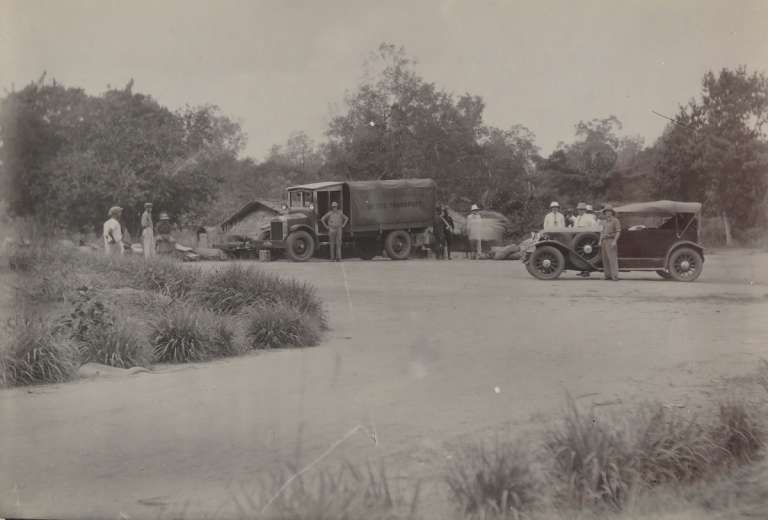
The early 20th century was a period of rapid colonial expansion in what is now southeastern Nigeria. British authorities sought to impose administrative control over autonomous communities in Igboland. In Owerri Province, the enforcement of policies by Colonial District Commissioner H. M. Douglas was later nicknamed “Black Douglas” for his harsh methods fueled resentment and resistance among Indigenous populations. This tension reached a tragic climax with the killing of Dr. Rogers Stewart in 1905, an event that precipitated punitive military action and left enduring memories in the region’s oral traditions. Examining this episode reveals not only the dynamics of colonial subjugation but also Igbo agency, the role of age-grade societies in collective resistance, and the complex interplay between British reports and local narratives regarding Stewart’s death and its aftermath.
The written record
Historical context
Colonial Oppression and “Black Douglas” in Owerri Province
After the British conquest of the Aro Confederacy in 1901–1902, colonial administrators accelerated efforts to bring resistant interior communities under formal rule. The Owerri Province was a center of such resistance, where strong traditions of self-governance clashed with British expectations of obedience to colonial legal and fiscal demands.
H. M. Douglas was appointed District Commissioner with wide disciplinary powers. He became infamous among Igbo communities for his rigid enforcement of colonial regulations, including taxation, forced labour, and the suppression of customary institutions. Oral histories from Mbaise and surrounding areas describe him as authoritarian and unyielding, often punishing collective communities for infractions perceived as administrative defiance. Although British records portray Douglas as carrying out necessary measures to pacify “rebellious” communities, Indigenous accounts emphasise that his methods disrupted longstanding social systems and intensified local resistance.
The nickname “Black Douglas” itself reflects local memory of him as a feared figure, a name that circulated in stories and retellings precisely because of the harshness associated with his rule. This background of continuing tension set the stage for the crisis that followed.
Igbo Agency, Age-Grade Societies, and Collective Resistance
In Igbo society, governance and community regulation did not depend primarily on centralized chieftaincies but rather on collective institutions such as age-grade groups, titled councils, and town assemblies. Age-grade societies were organized cohorts of men (and, in some areas, women) who progressed through stages of responsibility and authority together. These groups could mobilize labour, settle disputes, and coordinate communal responses to external threats.
The nimbleness of these structures enabled coordinated responses to colonial impositions. Rather than mere passive victims, many Igbo communities demonstrated agency in resisting policies they saw as unjust or destructive to their social order. In the Mbaise region, known for strong communal identity and autonomous village assemblies resistance to colonial officers such as Douglas took the form of collective objections to taxation, dispossession, and forced labour, often articulated through meetings of elders and age-grade groups.
This context of organized community structures that valued autonomy helps explain why events escalated quickly after the death of Dr. Rogers Stewart. The killing was not simply an isolated act of violence: it emerged from a backdrop of collective frustration and assertion of local authority in the face of coercive colonial power.
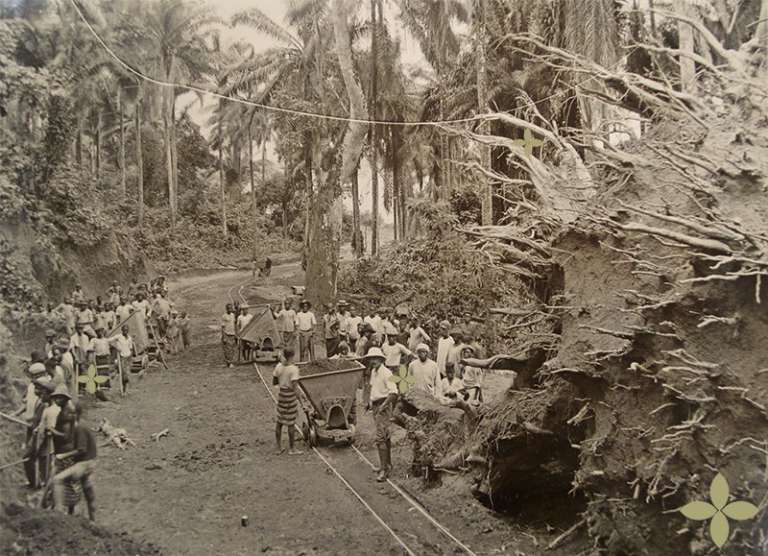
Photo credit; Ukpuru
The Killing of Dr. Stewart: A Catalyst for Crisis
Dr. Rogers Stewart was a British medical officer attached to provincial administration. On 16 November 1905, while travelling through hostile territory near northern Mbaise, he was confronted by local groups who mistook him for Douglas or identified him with colonial authority. The circumstances of his death remain contested. British administrative accounts presented the event as a brutal execution intended to demonstrate Indigenous hostility to colonial rule, while local narratives positioned it as a tragic consequence of confusion and long-standing grievances rather than cold-blooded intent.
Colonial records interpreted Stewart’s killing as deliberate aggression that needed a punitive response. The subsequent Ahiara Punitive Expedition (1905–1906) demonstrated the British view that force was the proper means to reassert authority. However, Indigenous interpretations understood Stewart’s death within a larger framework of resistance to ongoing oppression, not as an act of senseless violence but as an outcome of simmering conflict over colonial practices.
The Head That Was Never Found: Contrasting Narratives
One of the most enduring controversies surrounding Stewart’s death involves what happened to his remains, particularly his head. British military reports claimed that portions of Stewart’s body were ritually dismembered and that the head had been taken as a trophy of defiance. These narratives were used to justify extremely harsh reprisals and to portray Indigenous peoples as “savage” or uncivilised in colonial publications.
However, oral traditions among Mbaise communities paint a different picture. Elders recounted that while Stewart’s death was acknowledged, the stories of ritual practices were later exaggerated or misremembered through multiple retellings. In some versions, the head was thought to have been temporarily concealed by those who found it, not out of malice but as part of confusion about how to handle the situation without provoking further violence. Over time, these local accounts spoke of searches conducted by colonial forces between 1905 and the early 1930s that never yielded the head, becoming a symbol of contested memory rather than conclusive evidence of ritual practice.
These contrasting narratives demonstrate the political utility of colonial storytelling. British administrators emphasized ritual as a way of framing the Igbo as irrational and in need of control, whereas Igbo oral memory resisted such depictions and maintained alternative explanations rooted in community knowledge and historical experience.
Oral Tradition as Counter-History
Oral traditions in the Mbaise region preserved stories of the events surrounding Stewart’s death in ways that emphasised collective identity and indigenous perspectives. Age-grade societies and village assemblies continued to recount the episode in community gatherings, attributing much of the misunderstanding to a lack of cross-cultural communication and colonial disregard for Igbo social norms. Mbaise oral histories also frame the continued search for Stewart’s head for decades after the incident as part of colonial authorities’ attempts to validate their own narrative, even as community memory downplayed ritual elements that had been imposed onto the story by colonial rhetoric.
In this sense, oral tradition functions as a counter-history: a record of community experience that exists alongside, and often in tension with, official colonial archives. By retaining accounts that centre Indigenous interpretations, these oral narratives resist being reduced to simplistic colonial explanations of violence and ritual.
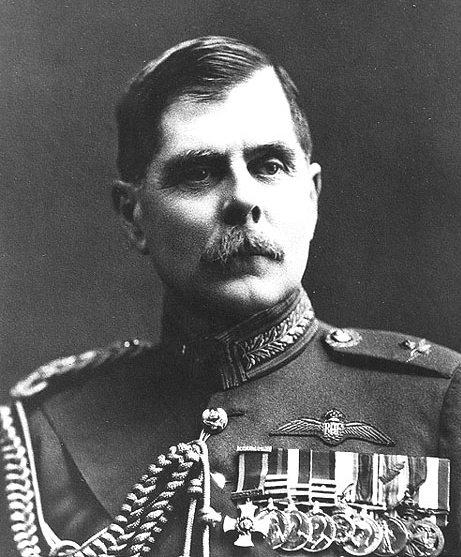
Photo credit is typically attributed to the National Air and Space Museum, Smithsonian Institution.
Legacy and Historical Memory
The events surrounding the killing of Dr. Stewart and the punitive responses that followed left deep marks on the political and cultural memory of the region. In British colonial archives, the episode became a cautionary tale about the dangers of Indigenous “resistance,” used to justify further centralised administration and military presence. In Igbo communities, particularly among the Mbaise, it became a story of collective endurance, contested meanings, and the assertion of agency in the face of domination.
The contrasting narratives about Stewart’s remains illustrate how memory is contested terrain, where different actors assert different truths based on experience, power, and purpose. While colonial records emphasised spectacle and sensational detail to justify authority, local oral accounts emphasise skepticism, community values, and resilience.
“Black Douglas” and the seeds of revolt in Owerri Province remind us that colonial history is not a single story but a set of contested narratives. The killing of Dr. Stewart was shaped by brutal colonial policies, organized Indigenous resistance rooted in age-grade systems, and misunderstandings that escalated into tragedy. The long-standing debates over the fate of Stewart’s remains reveal how colonial accounts and local oral traditions can diverge sharply, each serving different purposes in the construction of historical meaning. In examining these events, historians gain insight not only into the dynamics of early colonial rule in southeastern Nigeria but also into the ways communities remember, resist, and reinterpret the past.
Sources and references
- London Gazette. (1906). Military despatch on operations in Southern Nigeria Protectorate.
- Noonans Mayfair. (2024). British punitive actions in early Nigeria (1905–1906).
- OziIkoro. (2025). The killing of Dr. Stewart and the oral traditions in Mbaise.
- Soluap. (2023). Ahiara expedition: How it happene d.
Cite this article
Discussion
Sign in to join the discussion
Comments are checked by an editor before they appear. Leave a source or a correction and it is read first.
Continue reading


No comments yet
Nothing has been approved on this record yet. Comments are checked by an editor before they appear, so one written now shows on this page after that check.