 Ozikoro
Historical Studies · Published history
Navigating Trade and Interaction: The British Navy Expedition to Aboh on the Niger River
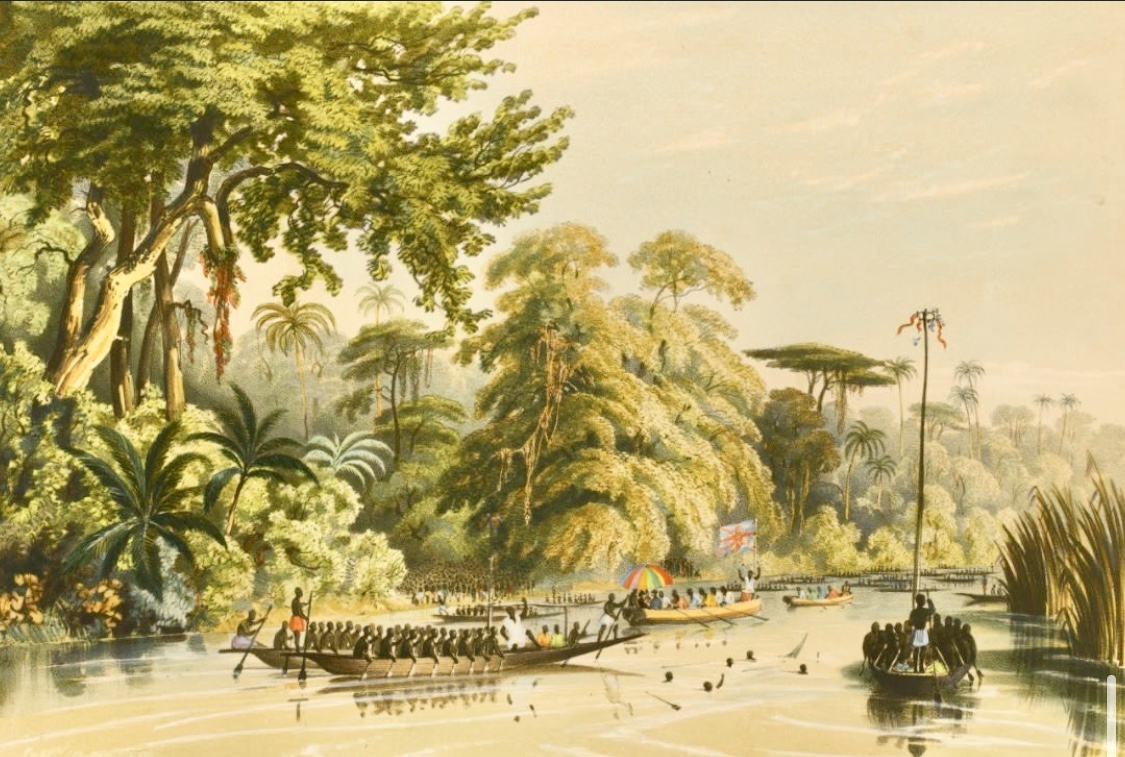
The British Navy expedition to the Niger River, specifically to the Igbo town of Aboh, was part of a broader effort by the British to explore West Africa and establish trade relations. Aboh, led by its king at the time, Obi Ossai, was a significant Igbo trading center along the Niger River.
The written record
One of the early and notable expeditions was led by Captain William Allen, and the images and documentation from these expeditions were published in the book Views on the River Niger (1840). This book provides visual representations and accounts of the journey. The illustrations often depict the British naval vessels navigating the wide expanse of the river, encounters with local peoples, and views of the natural landscape.
The town of Aboh is portrayed as an essential stop for the British during their journey because of its strategic location for palm oil trade, a critical economic resource at the time in hinterland Igbo. The images from this publication typically include river scenes, native canoes, local settlements, and interactions between British explorers and the indigenous population.
Historical context
This expedition is significant in the context of British interest in the Niger River for both trade and the eventual colonization of the region. It also marked one of the first attempts at deeper interaction between the British and the people of the lower Niger, including the Anioma people and Igbo in general.
Sources and references
- Allen, W. (1840). Views on the River Niger. London: John Murray and Ackerman.
Cite this article
Discussion
Sign in to join the discussion
Comments are checked by an editor before they appear. Leave a source or a correction and it is read first.
Continue reading


No comments yet
Nothing has been approved on this record yet. Comments are checked by an editor before they appear, so one written now shows on this page after that check.