 Ozikoro
Historical Studies · Published history
Dennis Memorial Grammar School (DMGS), Onitsha – The First Grammar School in Igboland (1925)
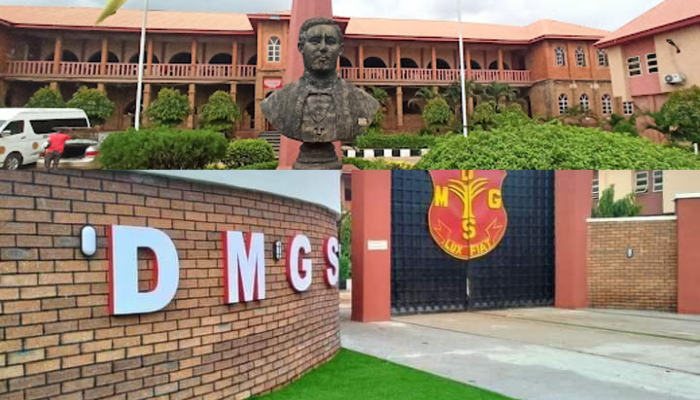
Dennis Memorial Grammar School (DMGS), Onitsha, Anambra state, stands today as one of the most historic educational institutions in Eastern Nigeria. Established by the Church Missionary Society (C.M.S.), it holds the distinction of being the first “grammar” school in Igboland, opening its doors on 25 January 1925 to its inaugural class of nineteen boarders and forty-six day students.
The written record
Historical context
The Vision for a Central School
The origins of DMGS can be traced back to February 1911, when the C.M.S. took a decisive step towards founding a secondary school in Onitsha. A small committee was set up to draft building plans and cost estimates, initially proposing the Central School, Onitsha. By early 1912, progress was already underway: an Upper School was established within the old printing house in the C.M.S. compound, integrating pupils from Standard 3 and above from the three existing Onitsha schools. By June of that year, enrolment had grown impressively to eighty-five boys and nine girls, and hopes were high that this foundation would evolve into a full-fledged secondary institution.
Challenges and Determination
Despite the early morale, the journey towards establishing the grammar school was far from smooth. As of July 1915, the Executive Committee decided to abandon the idea of Onitsha Grammar School, citing constraints and shifting priorities during the war years. Yet, the dream persisted. By 1918, the same Committee reaffirmed its support, noting that the “Onitsha Grammar School scheme still had E.C. support.”
Progress resumed steadily. With government approval, a lease was secured on a piece of land designated as the future site of the school. At the Executive Committee meeting of February 1914, plans for the new building were approved, and the institution was officially named “The Onitsha Grammar School.” The Secretary was also instructed to consult the principals of other secondary schools along the West African coast to help design an appropriate curriculum for the emerging institution.
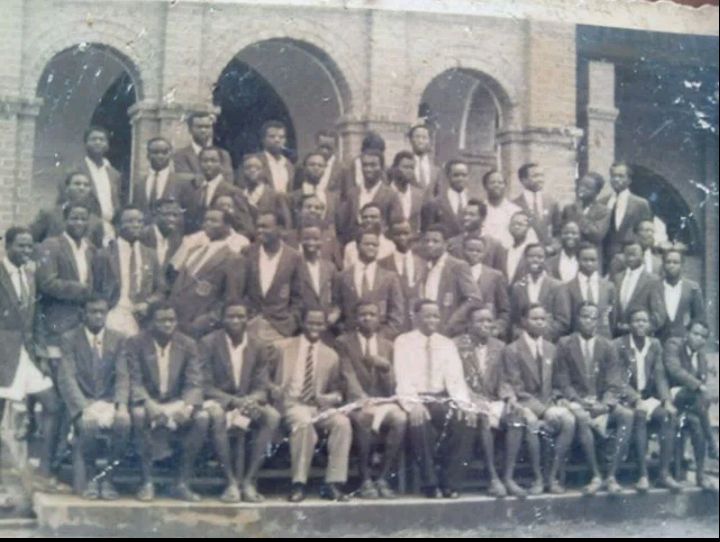
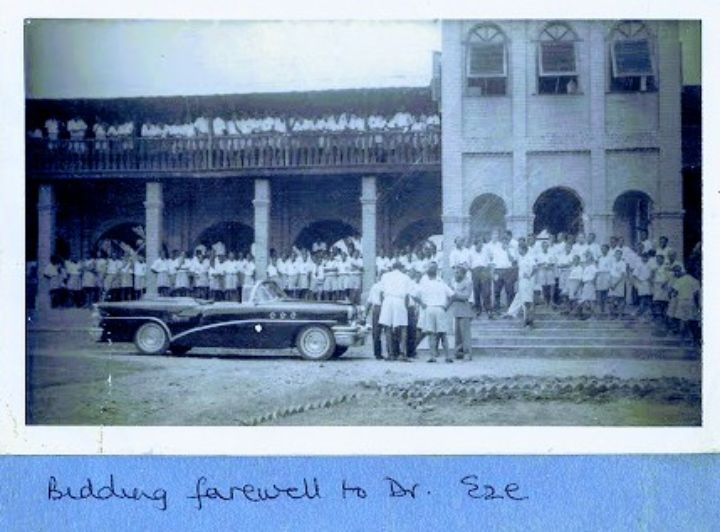
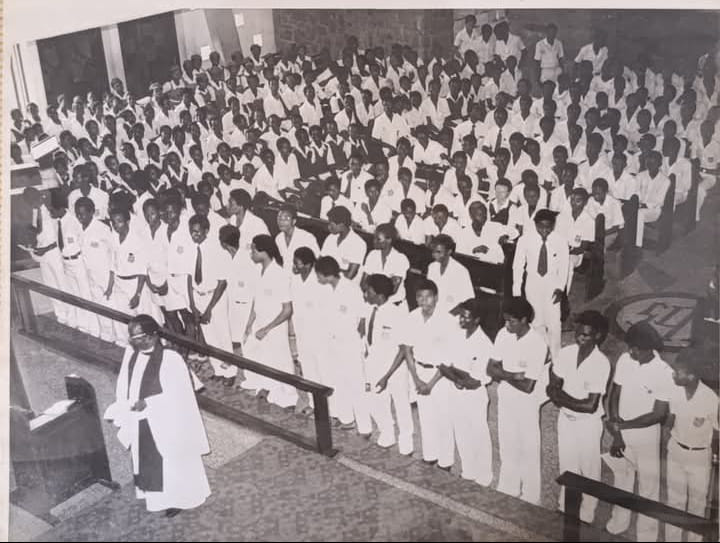
Among those present are Eugene Ezike (Senior Prefect), H.R.H. Igwe Dr Robert Eze [Okofia (VI) of Ukpo], Prof. C. S. Nwajide, the late Dr Emmanuel Egbogah, Sir K. B. C. Nwokeabia, and the late Ifeanyichukwu MacDonald Okafor, among others.
Also pictured is the then principal of DMGS, Mr Samuel Onochie Ogoazi (DMGS Class of 1939), the school’s first old boy to serve as principal (1960–1972). Credit: DOBA Secretariat
The Founding of DMGS
The Dennis Memorial Grammar School was officially founded in 1925 by the Church Missionary Society (C.M.S.), with classes commencing for the first time on 25 January 1925. The school was named in honour of Archdeacon Thomas J. Dennis, a dedicated missionary and pioneer of Igbo Bible translation who tragically drowned at sea in 1917 while attempting to save the manuscript of the first Igbo Bible during a German torpedo attack.
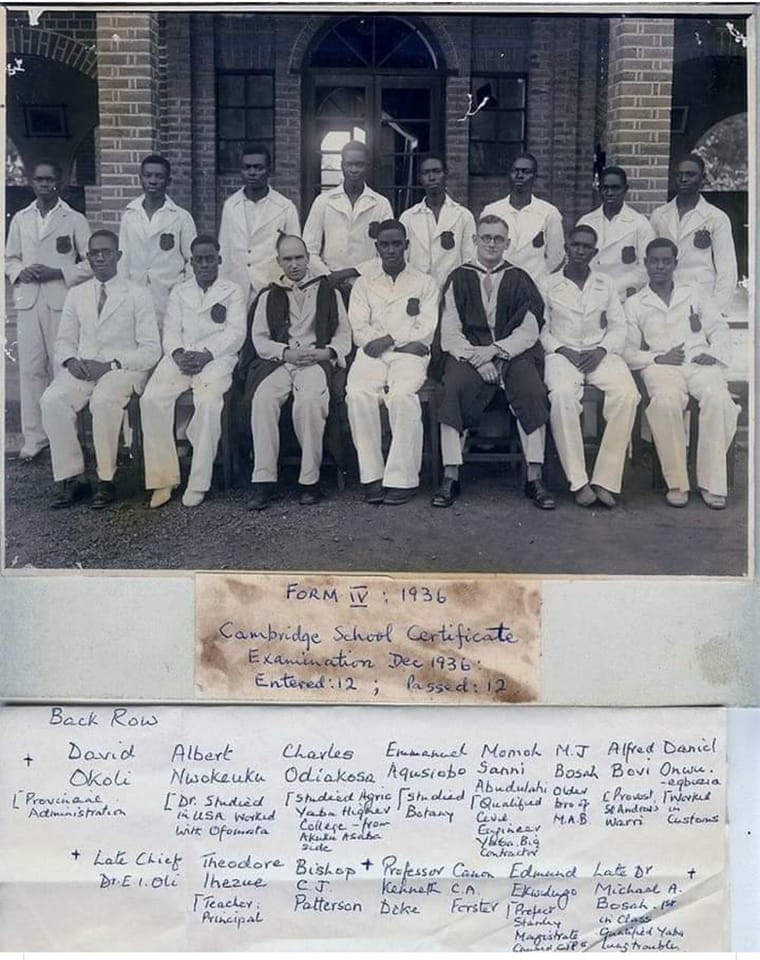
The first principal of DMGS was Rev. J. C. Taylor, who laid the foundation for the school’s long-standing reputation for discipline, character building, and academic excellence. Since its inception, DMGS has stood as the oldest secondary school in Igboland, earning respect across generations for its Christian ethics and pursuit of intellectual distinction.
A Memorial in Honour of Archdeacon Dennis
The death of Archdeacon T. J. Dennis, a renowned missionary and Igbo language scholar, profoundly influenced the school’s final identity. On 1 August 1917, while travelling home, Dennis perished when his ship was torpedoed by a German submarine during the First World War.
In the wake of his death, the C.M.S. Executive Committee resolved to create a lasting memorial in his honour. Their minutes recorded two resolutions:
- A fund should be opened to perpetuate the memory of the late Archdeacon Dennis.
- That the fund should be used “for the furtherance of education in the Mission.”
It was from this decision that the Onitsha Grammar School became Dennis Memorial Grammar School, a tribute to the man whose linguistic and missionary work had profoundly shaped Igbo education and Christianity.
A Legacy of Excellence
Since its founding in 1925, DMGS has stood as a pillar of academic and moral excellence, nurturing generations of leaders, scholars, and professionals across Nigeria and beyond. The school’s establishment symbolised not just the spread of Western education in Igboland, but also the determination of early missionaries and indigenous communities to create lasting institutions of learning.
Sources and references
- Church Missionary Society. (1911–1918). Minutes of the Church Missionary Society Executive Committee (West Africa Mission, Onitsha District) . C.M.S. Archives, University of Birmingham.
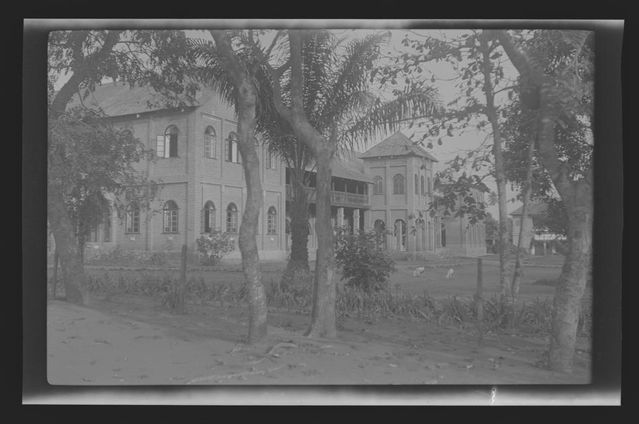
- Duckworth, E. H. (1940s–1950s). Photographs of Dennis Memorial Grammar School, Onitsha . Northwestern University Library, Melville J. Herskovits Africana Collection.
- Isichei, E. (1976). A History of the Igbo People . London: Macmillan.
- Ayandele, E. A. (1966). The Missionary Impact on Modern Nigeria, 1842–1914: A Political and Social Analysis . London: Longman.
- Nduka, O. (1964). Western Education and the Nigerian Cultural Background . Ibadan: Oxford University Press.
Cite this article
Discussion
Sign in to join the discussion
Comments are checked by an editor before they appear. Leave a source or a correction and it is read first.
Continue reading


No comments yet
Nothing has been approved on this record yet. Comments are checked by an editor before they appear, so one written now shows on this page after that check.