 Ozikoro
 Historical Studies · Published history
Enugu, Nigeria, 1960: A Visual Chronicle of Igbo Culture and Society in the Post-Colonial Era
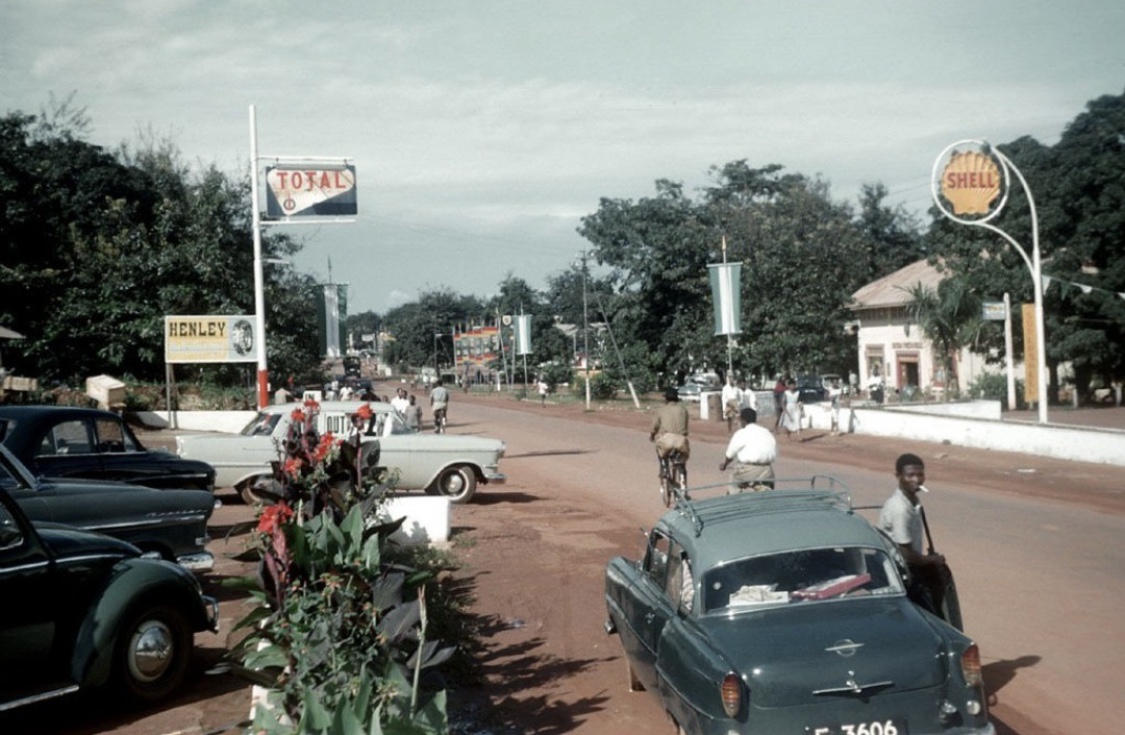
The photo by Simon Ottenberg, taken in Enugu, Nigeria, 1960, captures a moment in time, provides a rare, authentic glimpse into the everyday life and cultural heritage of the Igbo people as Nigeria approached its independence on October 1, 1960. This image, rich in historical and anthropological value, highlights various aspects of Igbo society:
The written record
A glimpse into Enugu’s past!
Cultural Heritage
Historical context
The scene reveals traditional Igbo architectural elements and indigenous fashion, showcasing clothing styles, hairstyles, and adornments that reflect Igbo identity and pride in cultural heritage.
Daily Life and Social Interaction
Enugu’s bustling streets are filled with people engaged in daily activities, whether trading at market stalls, socializing in groups, or navigating the town’s roads. These interactions underline a sense of community and provide insight into the rhythms of daily life during this period.
Economic Activities
The lively market scenes display various goods and services, showing the significance of trade and commerce within the community. These activities capture Enugu’s role as an economic hub, where local and regional products are bought, sold, and traded.
Social Dynamics and Community Bonds
The exchanges between individuals in the market reflect the community’s social cohesion and shared traditions. These social dynamics are a testament to the bonds that sustained Igbo communities, illustrating a social fabric woven with mutual support and trust.
Historical Context
Taken at the brink of Nigerian independence, this photo not only represents Igbo cultural life but also the broader context of a nation transitioning from colonial rule. The setting and activities in the image symbolize the resilience and continuity of Nigerian cultural identity amidst significant political and social changes.
Simon Ottenberg, an American anthropologist, extensively documented Igbo society through photography and field research from 1959 to 1962. His work provides an invaluable visual record of Igbo life, capturing both the ordinary and the extraordinary aspects of this vibrant culture during a transformative period in Nigerian history.
Sources and references
- Ottenberg, S. (1960). Enugu, Nigeria [Photograph]. In personal collection.
Cite this article
Discussion
Sign in to join the discussion
Comments are checked by an editor before they appear. Leave a source or a correction and it is read first.
Continue reading


No comments yet
Nothing has been approved on this record yet. Comments are checked by an editor before they appear, so one written now shows on this page after that check.