 Ozikoro
Historical Studies · Published history
Igbo Institutions and the Strength of Community in the Atlantic World: “Ọ bụ mmadụ ka e ji ama ala”
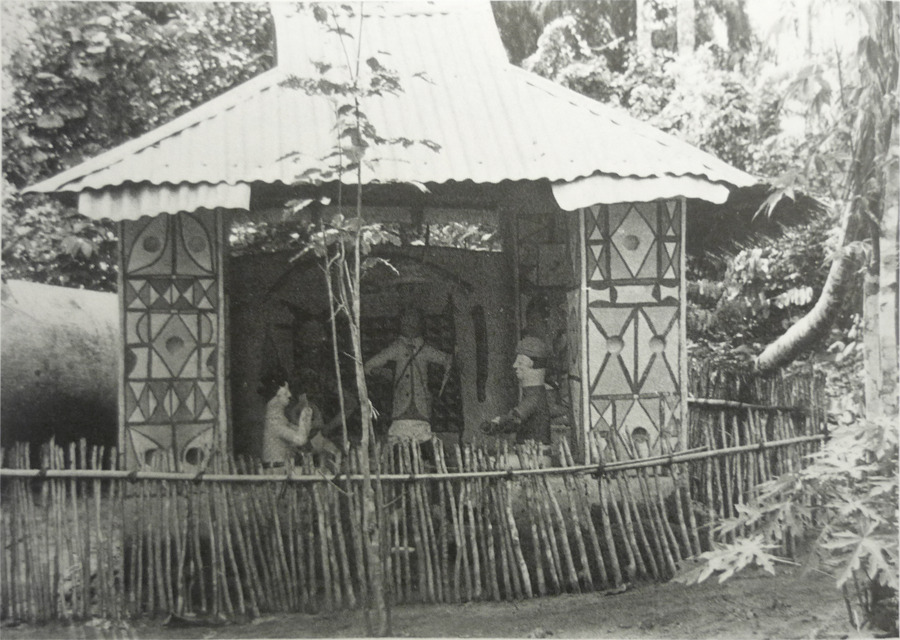
“Igwe bụ ike” (Unity is strength).
For the Igbo, the survival of the community depended not on kings or armies but on the collective spirit of its people. Unlike centralized kingdoms of the Yoruba or Asante, the Igbo built societies where decision-making rested in councils, age grades, and village assemblies. This unique system shaped not only their resilience at home but also the legacy they carried into the Atlantic World.
The written record
To understand the Igbo in Africa and the diaspora, one must first understand their institutions. Before the Atlantic slave trade scattered millions across the ocean, the Igbo had cultivated a culture rooted in decentralized governance, strong kinship, and spiritual authority. These institutions became both shields and targets during the chaos of enslavement. Yet, they also ensured that Igbo values lived on in the Caribbean, the Americas, and beyond.
Historical context
Igbo Political Life: Leadership Without Kings
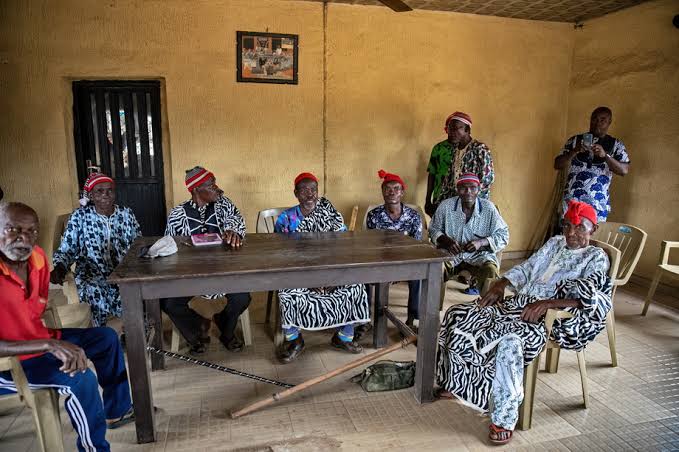
The Igbo were often described as a “stateless society.” But to call them stateless is to miss their genius. Authority was diffused, not absent. Leadership lay in the hands of councils of elders (ndi ichie), age-grade associations (ọgbọ), titled men (ndi ozo), and women’s groups such as umuada (daughters of the lineage).
A colonial observer once remarked that “every man is king in his own hut.” While this was an exaggeration, it reflected how no single ruler commanded absolute power. Instead, Igbo society thrived on negotiation, dialogue, and consensus. “Ọ bụ mmadụ ka e ji ama ala” (It is through people that a land is known). The Igbo believed community, not monarchy, was the true foundation of civilization.
Spiritual Authority: Priests, Deities, and Sacred Taboos
Religion bound Igbo institutions together. Deities like Ala (earth goddess) and Amadioha (god of thunder) anchored moral law. Priests (ndi dibia) mediated between spirits and humans, while oracles such as the famed Arochukwu oracle wielded influence across Igboland.
Spirituality was not abstract; it shaped law. To spill innocent blood was not only a crime but a pollution (nso ala) that demanded cleansing. Villages lived in constant negotiation between earthly councils and divine order. This dual system of governance; political and spiritual, carried into diaspora, where enslaved Igbo reconstructed shrines, rituals, and festivals in new lands.
Kinship and the Power of Lineage
Perhaps the strongest Igbo institution was kinship. Identity was drawn from umunna (lineage), which defined inheritance, marriage, and burial. To be cut off from kin was to lose personhood.
During the Atlantic slave trade, captives often clung to these networks even when scattered abroad. In Jamaica and Virginia, records show enslaved Africans forming “Igbo nation” groups, organizing mutual aid, and preserving burial practices that echoed home traditions. “Nwanne di na mba” (There is kin even in a foreign land).
Impact of Slavery on Igbo Institutions
The Atlantic slave trade was a storm that uprooted communities. Raids and wars shattered kin groups, while colonial policies sought to undermine Igbo self-rule. Yet even in the barracoons and plantations, Igbo captives carried fragments of their institutions.
- Village assemblies transformed into plantation meetings, where enslaved Africans discussed survival strategies.
- Umuada traditions reappeared as women-led religious movements in the Caribbean.
- Ozo title values resurfaced in respect given to elders in diaspora communities.
Thus, what began in small forest villages of southeastern Nigeria crossed the Atlantic as invisible cargo: values, structures, and ways of belonging.
Diaspora Echoes: Igbo Institutions Abroad
In the Americas, enslaved Igbo were often labeled “rebellious.” This reputation was less about violence and more about their insistence on autonomy. In Virginia, planters complained of “Eboe” (Igbo) slaves who resisted authority and valued community ties above obedience.
In Jamaica’s Jonkonnu festival, echoes of Igbo masquerade traditions lived on. In Haiti and Cuba, elements of Igbo spiritual practices mingled with other African systems, birthing syncretic religions like Vodou and Santería. Even language bore traces: words like unu (you, plural) slipped into creole dialects, reminders of an Igbo presence.
“Ihe onye metere, ọ ga-ahụ” (Whatever a person does, they will see). The slave trade sought to erase Igbo ways, but every attempt at suppression birthed new forms of expression. What the Igbo sowed in their home institutions was reaped, even in foreign plantations.
Continuities in Modern Times
Today, Igbo institutions remain vital. Age grades still organize development projects, councils still mediate disputes, and umuada still enforce morality. In diaspora, Igbo unions and hometown associations recreate kinship networks across New York, Houston, and London. Globalization may challenge tradition, but Igbo society shows that institutions rooted in people, not kings, endure.
The Igbo story is not just one of loss but of endurance. From the councils of elders in Nigeria to the plantation “nation” groups in the Americas, Igbo institutions have proven remarkably resilient. They remind us that leadership does not need crowns, and identity does not vanish in exile.
“Uwa bụ ahia; onye zere ahia, zere uwa” (The world is a marketplace; whoever avoids the market avoids the world).
The Igbo entered the Atlantic marketplace of history unwillingly, yet they carried with them the wealth of their institutions, wealth that still speaks today.
Sources and references
- Falola, T., & Njoku, R. C. (Eds.). (2016). Igbo in the Atlantic world: African origins and diasporic destinations. Indiana University Press.
- Basden, G. T. (1966). Among the Ibos of Nigeria. Frank Cass & Co. Ltd.
- Thornton, J. K. (1998). Africa and Africans in the making of the Atlantic world, 1400–1800. Cambridge University Press.
Cite this article
Discussion
Sign in to join the discussion
Comments are checked by an editor before they appear. Leave a source or a correction and it is read first.
Continue reading


No comments yet
Nothing has been approved on this record yet. Comments are checked by an editor before they appear, so one written now shows on this page after that check.