 Ozikoro
Historical Studies · Published history
Missionary Perceptions of Africa: A Colonial Narrative
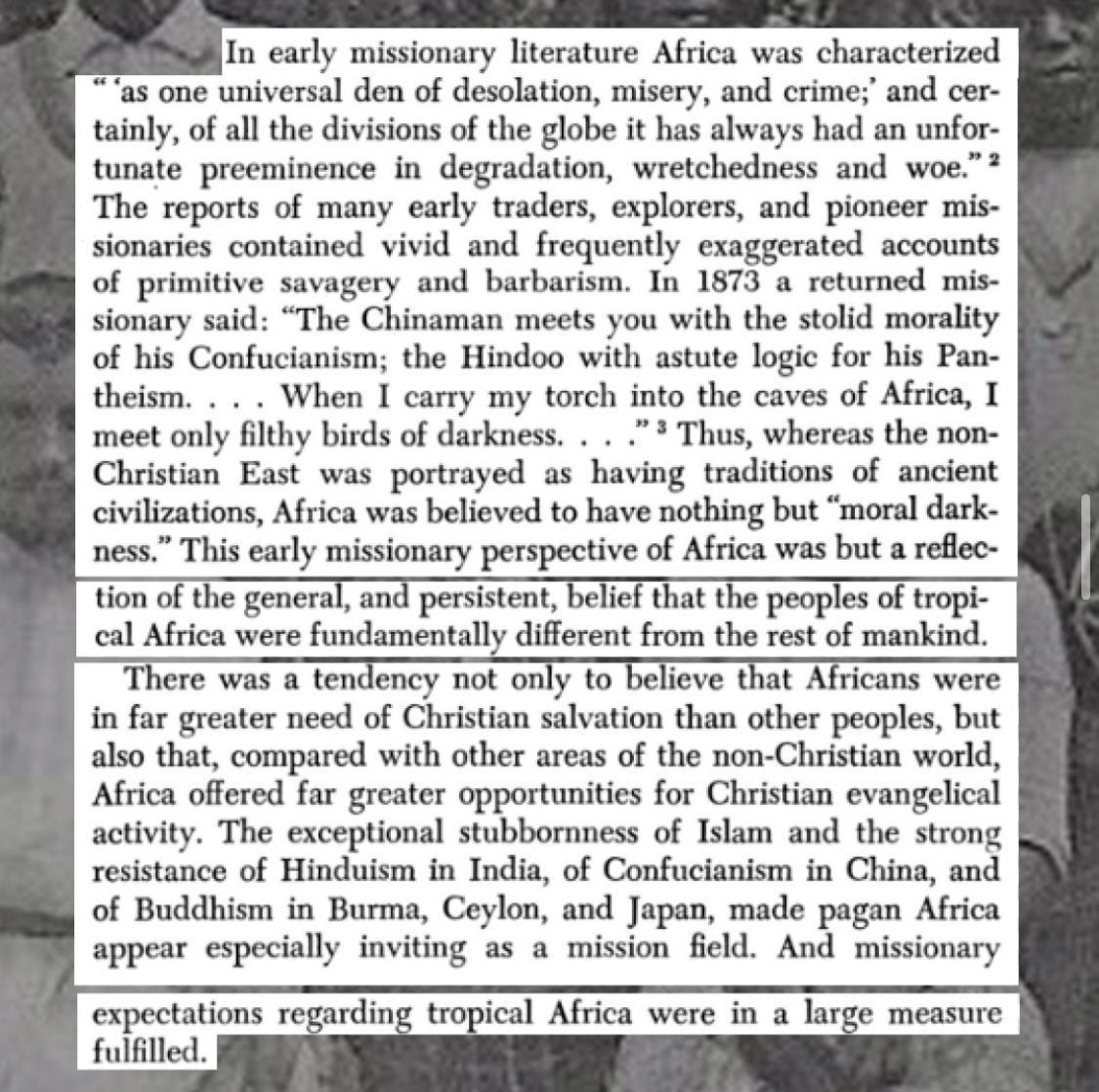
In the early days of European missionary activity in Africa, the continent was often described in highly negative terms. Missionaries, explorers, and traders wrote reports that exaggerated the conditions they encountered, portraying Africa as a land of savagery, darkness, and misery. These descriptions were used to justify their work, arguing that Africa was in desperate need of Christian salvation.
The written record
A missionary writing in 1873 claimed that while other non-Christian regions, such as China and India, had their own moral and philosophical traditions, Africa had nothing but “moral darkness.” This belief reinforced the idea that Africans were fundamentally different from other people and in greater need of conversion to Christianity.
Historical context
The Role of Religion in Colonial Justification
Missionaries saw Africa as the ideal place for Christian evangelism. Other major world religions, such as Islam, Hinduism, Confucianism, and Buddhism, had strong traditions that resisted conversion. However, Africa was viewed as a mission field with little religious resistance, making it a prime target for Christian expansion.
These missionary efforts were closely linked to colonial rule. European powers used religious missions to extend their influence, reshape African societies, and impose Western cultural values. Christianity was introduced alongside European education and governance, helping to dismantle indigenous belief systems.
Impact on African Identity
The missionary portrayal of Africa had long-term consequences. By depicting African cultures as backward and in need of “civilizing,” missionaries contributed to the loss of traditional knowledge and practices. Many Africans converted to Christianity, but often retained aspects of their indigenous beliefs, leading to a blend of religious traditions that still exists today.
While missionary activity brought education and healthcare, it also helped create stereotypes about Africa that persisted for centuries. These stereotypes influenced global perceptions of the continent and justified colonial domination.
The early missionary narrative of Africa was shaped by colonial interests, exaggerating Africa’s supposed moral and social deficiencies. Today, scholars challenge these views, highlighting the rich histories, philosophies, and civilizations that existed in Africa long before European contact. Understanding this history helps to correct misconceptions and acknowledge the resilience of African cultures and inventions.
Sources and references
- Ajayi, J. F. A. (1965). Christian missions in Nigeria 1841-1891: The making of a new élite. Longman.
- Isichei, E. (1995). A history of Christianity in Africa: From antiquity to the present. Africa World Press.
- Mudimbe, V. Y. (1988). The invention of Africa: Gnosis, philosophy, and the order of knowledge. Indiana University Press.
Cite this article
Discussion
Sign in to join the discussion
Comments are checked by an editor before they appear. Leave a source or a correction and it is read first.
Continue reading


No comments yet
Nothing has been approved on this record yet. Comments are checked by an editor before they appear, so one written now shows on this page after that check.