 Ozikoro
Historical Studies · Published history
Nnamdi Azikiwe’s 1949 Address to the Igbo People: A Rallying Cry for Self-Determination
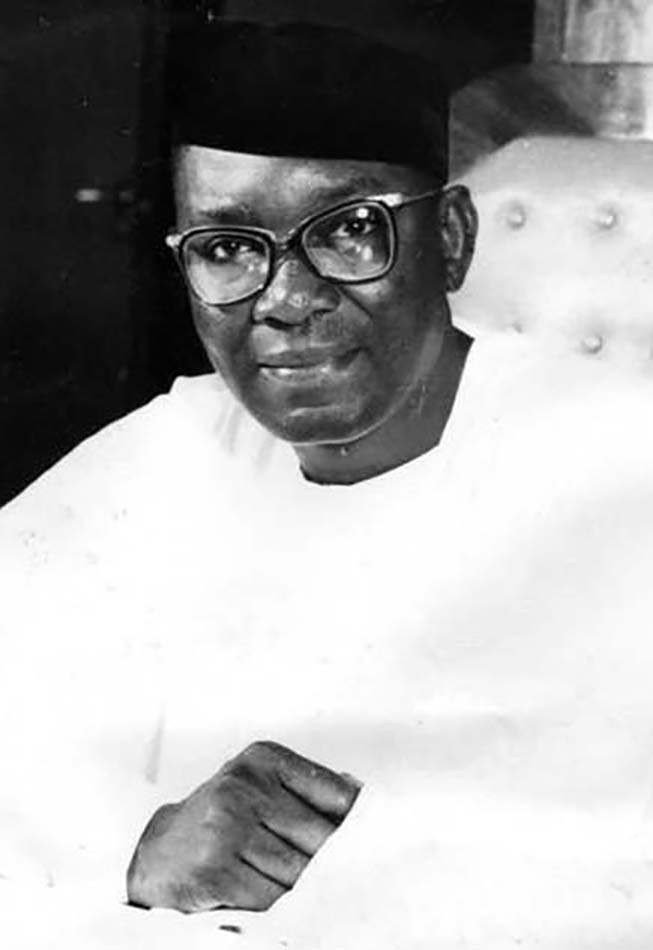
On a pivotal moment in Aba, Nigeria, on June 25, 1949, where Nnamdi Azikiwe, a leading figure in Nigeria’s independence movement, addresses the Igbo State Assembly with a powerful call for self-determination. Known as Zik, Azikiwe spoke eleven years before Nigeria’s independence, urging the Igbo to assert their identity and rights within a federated Nigeria and Cameroons, while envisioning a united Africa. His speech, delivered amidst colonial oppression, highlighted the Igbo’s marginalization and resilience, inspiring them to play a key role in the broader struggle for African liberation. Let’s explore the context, themes, and lasting impact of this historic address.
The written record

Historical context
The Historical Context: Colonial Struggles and Igbo Marginalization
In 1949, Nigeria was under British colonial rule, with independence still on the horizon. The Igbo, like other ethnic groups, faced systemic discrimination—lacking basic infrastructure such as secondary schools, pipe-borne water, and electricity, as Azikiwe noted. Politically, they were excluded, with no representation on the Executive Council and limited voting rights, despite their democratic traditions. The recent 1949 Enugu coal miners’ strike, where 21 workers were killed by colonial police, had heightened anti-colonial sentiment, setting the stage for Azikiwe’s address.
Azikiwe, an Igbo leader and founder of the National Council of Nigeria and the Cameroons (NCNC), was a prominent voice for Nigerian nationalism. His speech in Aba was a strategic moment to mobilize the Igbo, one of Nigeria’s largest ethnic groups, to demand equity and autonomy while contributing to a united anti-colonial front.
Core Themes: Self-Determination and Unity
Azikiwe’s address focused on self-determination for the Igbo within a federated Nigeria, a vision he extended to a United States of Africa. He proposed an “Igbo State” based on linguistic and ethnic unity, standing alongside other groups like the Hausa, Yoruba, and Kanuri—each autonomous yet united, “as separate as the fingers, but united as a part of the same hand.” This federalist approach emphasized both Igbo autonomy and collective African liberation, rejecting a homogenized Nigeria.
He celebrated the Igbo’s resilience, noting their history as a people never conquered in battle or subjected to a “Carthaginian treaty.” Azikiwe framed their suffering under British rule as a divine test, suggesting they were “specially created to suffer persecution” but destined to lead Africa’s redemption. This narrative aimed to inspire the Igbo to embrace their role in the independence struggle, asserting their rights “without apologies”.
Addressing Grievances and Inspiring Action
Azikiwe detailed the Igbo’s marginalization, highlighting disparities in infrastructure and education compared to the Northern and Western Provinces. He questioned why Igbo taxpayers faced “studied official victimization,” lacking basic services like postal systems and water. Politically, he decried their exclusion from key colonial bodies, urging them to channel their democratic traditions and “martial prowess” into a fight for self-realization.
Unlike later secessionist movements, Azikiwe’s vision was not about breaking away but about securing Igbo rights within a united Nigeria. This stance aligned with his Pan-African ideals, as seen in his 1949 London speeches denouncing European imperialism and advocating for African unity.
Impact and Legacy
The address galvanized the Igbo, reinforcing their role in Nigeria’s independence movement. It inspired them to demand equity, contributing to Nigeria’s independence in 1960, when Azikiwe became the first Governor-General and later President. However, the issues he raised—marginalization, infrastructure gaps, and political exclusion—persisted, fueling tensions that led to the Nigerian Civil War (1967–1970) and ongoing Igbo demands for fairness.
Some modern critiques argue Azikiwe’s later federalist policies contradicted his initial push for Igbo autonomy, especially when he opposed secession clauses in the Nigerian constitution. Others see the speech as a foundational moment, celebrating the Igbo’s unconquered spirit and their role in African liberation.
A Lasting Call for Justice
Azikiwe’s 1949 address remains a powerful testament to the Igbo’s resilience and the challenges of building a diverse nation. His call for self-determination within unity offers lessons for addressing ethnic tensions today, urging Nigeria to fulfill the promise of equity for all its peoples. Zik’s words continue to echo, a beacon for justice and African unity.
Sources and references
- Azikiwe, N. (1961). Zik: A selection from the speeches of Nnamdi Azikiwe, Governor-General of the Federation of Nigeria formerly President of the Nigerian Senate formerly Premier of the Eastern Region of Nigeria. Cambridge University Press.
- BlackPast. (2009, September 2). (1949) Nnamdi Azikiwe, “Address to the Ibo People”.
Cite this article
Discussion
Sign in to join the discussion
Comments are checked by an editor before they appear. Leave a source or a correction and it is read first.
Continue reading


No comments yet
Nothing has been approved on this record yet. Comments are checked by an editor before they appear, so one written now shows on this page after that check.