 Ozikoro
 Historical Studies · Published history
Old Dynamic Of Ndi Igbo and Wildlife
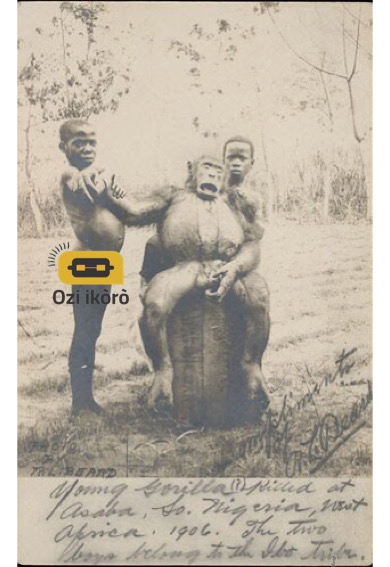
On a single day in 1906 in Ahaba, Southern Nigeria, West Africa, Two Igbo boys killed a young gorilla.
The written record
Historical Context:
In 1906, Southern Nigeria was under the British colonial rule. Which brought changes in land uses, governance, and how culture works because of colonial policies.
Historical context
Human-Wildlife Interaction:
The boys’ killing of the gorilla shows how complex the relationship between people and wildlife was at that time. Gorillas aren’t just animals; they are part of the culture, spirit, and, most often, even business of local communities.
Cultural Significance:
In many African Cultures, including the Igbo people, animals like gorillas are meaningful, either as symbols or for spiritual reasons. However, people can also see them as a threat or trouble, especially when human areas expand into where the animals live.
Economic Aspects: During that time, hunting wasn’t only for consumption and trade. The meat of wild animals, including gorillas, can make sales, or the animal parts can be used for traditional medicine or as souvenirs for colonial people.
Environmental Changes:
In the early 20th century, they cut down trees and destroyed habitats because of colonial farming policies and cash crop plantations like palm oil. This kind of thing brings humans and gorillas close, causing more problems.
Colonial Influence:
The colonial people had rules for protecting wildlife, which sometimes conflicted with local practices. However, the enforcement of these rules varies, and animal hunting is still common in local traditions.
Impact on Local Communities:
This kind of event can cause different reactions in the community. The community might see the boys as brave or skillful or as breaking cultural rules if the gorillas are respected or protected by local customs. Depending on how things are, the boys might face community judgment or praise.
Broader Implications:
This small event represents the bigger story of how humans affect nature, which is part of a worldwide story in which colonial expansion causes big changes in nature. The Killing of the gorilla shows the start of more trouble between humans and nature in West Africa, where traditional ways of knowing and using nature meet with new, sometimes opposite, colonial ideas about land and resources.
It reminds us of how Ndi Igbo and wildlife interacted in history through culture, economy, and changes in the environment during colonial times in West Africa.
Cite this article
Discussion
Sign in to join the discussion
Comments are checked by an editor before they appear. Leave a source or a correction and it is read first.
Continue reading


No comments yet
Nothing has been approved on this record yet. Comments are checked by an editor before they appear, so one written now shows on this page after that check.