 Ozikoro
 Historical Studies · Published history
The 17th Century Church of Saint Anthony: One of the Earliest Stone Church Structures in West Africa (at Ode-Itsekiri)
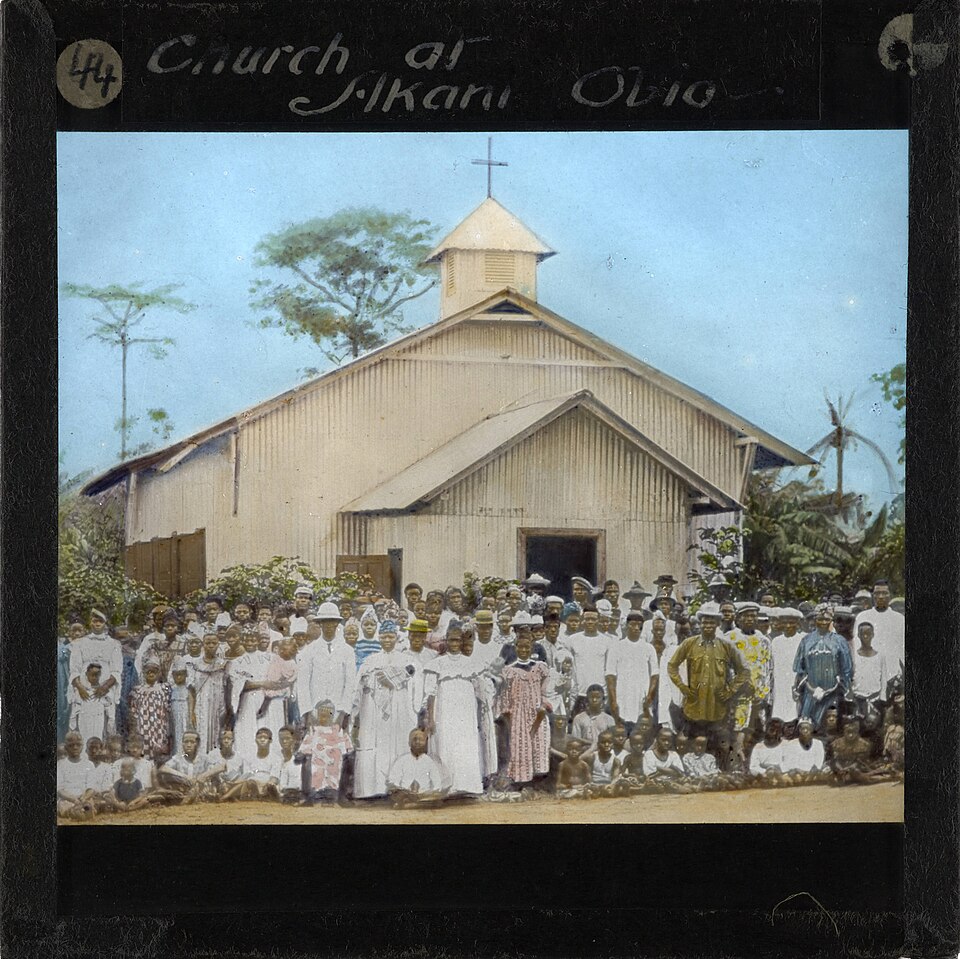
The Church of Saint Anthony at Ode-Itsekiri, founded in the 17th century, stands as one of the earliest known Catholic stone church structures in West Africa. Built within the historic capital of the Warri (Itsekiri) Kingdom, the church symbolizes the deep diplomatic, religious, and cultural ties forged between the Itsekiri monarchy and the Portuguese Crown. More than an architectural monument, it represents an era in which European Christianity, African political authority, and trans-Atlantic contact converged to shape a unique Itsekiri-Christian identity.
The written record
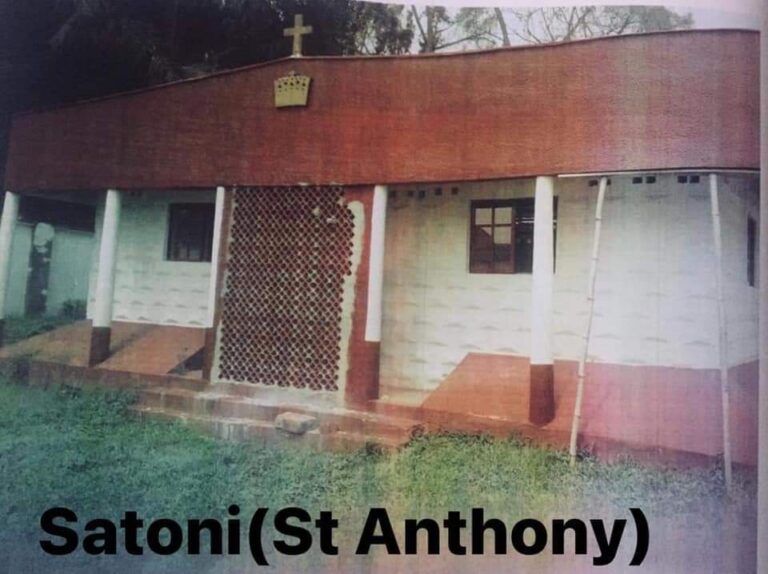
Photo credit: Agbebiyi Adekunle (Tadek Photography) via Wikimedia Commons
Historical context
Origins and Background of the Mission
- Portuguese–Itsekiri Relations in the 16th and 17th Centuries
The construction of the Church of Saint Anthony must be understood within the framework of early Portuguese contact with the Niger Delta. According to historical records, the Portuguese established sustained relations with the Warri Kingdom from the late 15th century, beginning with the reign of Olu Ginuwa and particularly flourishing during the rule of Olu Atorongboye (Olu Sebastian), who reigned in the late 16th century.
The Portuguese Crown viewed Warri as a valuable diplomatic and commercial partner, especially in terms of trade, maritime access, and Christian evangelization. Catholic missionaries, primarily Dominican and Jesuit priests, were active in the region, leading to the Christian education of royal princes, including Prince Dom Domingos, who later became Olu Atuwatse I.
- The Role of Olu Atuwatse I (“Dom Domingos”)
Olu Atuwatse I, educated in Portugal as a Christian nobleman, played a pivotal role in deepening the kingdom’s ecclesiastical connections. His return to Warri around 1611 marked the beginning of a more structured Christian presence, including the use of Portuguese liturgical traditions, adoption of Christian royal titles, and the establishment of churches at Ode-Itsekiri the kingdom’s spiritual and political center.
Construction and Significance of the Church
- Architectural Features and European Influence
The Church of Saint Anthony is widely considered one of the earliest stone-built church structures in West Africa. While many West African missions of the period relied on mud or wood due to climate and available materials, the Itsekiri through collaboration with Portuguese builders constructed a more durable stone structure, reflecting European ecclesiastical architectural influence.
Although the full architectural blueprint is lost, historical descriptions note features typical of early Iberian mission churches:
A rectangular stone layout,
Arched entrances or windows,
A simple apse for the altar,
Use of Portuguese-style crosses and iconography. Its existence demonstrates the Warri monarchy’s commitment to creating a permanent Christian institution embedded physically and spiritually in the capital.
- Saint Anthony as Patron
The church was dedicated to “Saint Anthony,” a saint widely venerated in Portugal. The choice of this patron reflects both Portuguese religious identity and the personal devotional influences carried by Dom Domingos and the missionaries he invited. The dedication further symbolized the Christian alliance referred to by some scholars as a “17th-century covenant” between the Itsekiri monarchy and the Portuguese Crown.
Religious and Political Functions
- A Center for Royal Christian Worship
The Church of Saint Anthony served not merely as a missionary station but as the royal chapel of the Olu of Warri. It hosted baptisms, royal masses, confessions, and Eucharistic celebrations conducted by Portuguese-trained clergy. For more than a century, Itsekiri monarchs maintained a hybrid religious identity, blending Catholic liturgy with Itsekiri customs.
This unique intersection made the kingdom one of the earliest Christian monarchies in the coastal Niger Delta, comparable to the Kongo Kingdom’s earlier adoption of Catholicism.
- Diplomatic Symbolism
The church also functioned as a diplomatic anchor. Its existence reassured Portuguese traders and missionaries of the kingdom’s stability and Christian affiliation. Through it, the Itsekiri monarchy communicated its openness to literacy, European education, and participation in global trade networks.
Furthermore, the church served as a venue where Portuguese envoys and priests met with the Olu, reinforcing trade agreements and political alliances. These interactions contributed to Itsekiri’s historical reputation as one of the most cosmopolitan Niger Delta polities.
Cultural Encounters and Local Adaptation
- Integration Into Itsekiri Society
Although founded by foreign missionaries, the Church of Saint Anthony became deeply woven into local life. Itsekiri incorporated Christian rituals into cultural events, integrating elements of baptismal naming, Christian marriage rites, and feast-day celebrations. The church also played a role in education, with catechists teaching reading, writing, and basic theology.
Missionaries sometimes adapted their teachings to local cosmology. Concepts such as “Oritse” the Supreme Being were used by early priests as bridges for explaining Christian monotheism, creating a syncretic religious atmosphere.
- Influence on Royal Regalia and Court Ceremony
With the rise of Christian symbolism came new forms of royal regalia. Crosses appeared on crowns, staffs, and royal garments. Some of these symbols were inspired by European military-religious orders such as the Order of Christ, whose insignia influenced Itsekiri court aesthetics.
The church thus became a cultural lighthouse shaping dress, ceremony, and visual identity within the kingdom.
Decline, Ruins, and Historical Memory
- Decline of Portuguese Catholic Missions
By the 18th century, political shifts in Portugal, growing Dutch influence in the region, and disruptions in missionary funding led to the decline of Catholic activity. Nevertheless, the Church of Saint Anthony continued to be remembered as a noble relic of the kingdom’s early Christian era.
- Present-Day Legacy
Today, the remnants of the church, though weathered, remain a significant heritage site in Ode-Itsekiri. The structure stands as a physical testament to:
Early European-African diplomacy,
The Christianized identity of Warri’s early monarchs,
The architectural and cultural sophistication of the Itsekiri Kingdom and Local historians continue to call for preservation efforts to ensure the church’s legacy is not lost to time.
The 17th Century Church of Saint Anthony at Ode-Itsekiri represents a remarkable chapter in West African history. As one of the earliest stone church buildings in the region, it symbolizes the deep entanglement of Itsekiri monarchy, Portuguese diplomacy, Catholic missionization, and cultural adaptation. Through the architecture, rituals, and politics linked to the church, the Itsekiri crafted a unique Christian identity that set their kingdom apart in the Niger Delta. Its story continues to illuminate the region’s global connections and historical depth.
Sources and references
- Alagoa, E. J. (1972). A history of the Niger Delta. Ibadan University Press.
- Ryder, A. F. C. (1969). Benin and the Europeans, 1485–1897. Longmans.
- Ta lbot, P. A. (1926). The peoples of Southern Nigeria. Oxford University Press.
Cite this article
Discussion
Sign in to join the discussion
Comments are checked by an editor before they appear. Leave a source or a correction and it is read first.
Continue reading


No comments yet
Nothing has been approved on this record yet. Comments are checked by an editor before they appear, so one written now shows on this page after that check.