 Ozikoro
Historical Studies · Published history
Akumazi: A Community of Many Origins in Ika-Igbo Country
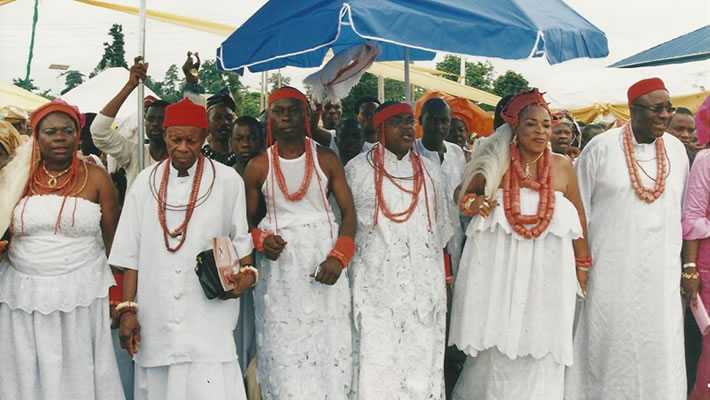
Akumazi is an Ika-Igbo-speaking community in present-day Delta State, and its history reflects the many movements and meetings of peoples in the western Niger region. Its traditions give more than one account of where it came from, so the oral histories are best handled with care and not squeezed into a single ancestral story.
The written record
Akumazi-Umuocha is the principal settlement. Owere-Olubor, Ekuoma and Ilabor grew up as the other major settlements within the wider community. According to the tradition kept at Akumazi-Umuocha, the community was founded by Onona and his wife Azi, and the settlement eventually took the name Akumazi. Some of the other settlements dispute this and say they had origins of their own.
The disagreement matters. Akumazi was probably not formed by one migration from one ancestral homeland. Its people came together through migration, settlement, intermarriage and the absorption of different groups, a pattern common across the Niger-Delta and western Igbo world.
Historical context
Different Settlements, Different Stories
Ilabor has two competing traditions. Akumazi-Umuocha links the settlement to Irabor, said to have been a child of a marriage involving the daughter of the Akumazi ruler. The Igbodo tradition instead credits its founding to Kehue and migrants from Ukun, near Ekpoma. The closeness of the names Irabor and Ilabor has added to the confusion over which account is right.
Ekuoma, once known as Akuku-Akumazi, keeps an independent tradition. Its oral history says Amrufa founded it around 1781 as a place of refuge during political troubles in the Benin area. It later kept a measure of independence from Akumazi-Umuocha.
Owere-Olubor remembers a separate migration. Its ancestors are said to have travelled from the Benin area through Ejeme before reaching their present home. The tradition is closely tied to the worship of Adofi, a river deity shared with Ejeme.
Together these accounts show that Akumazi’s history cannot be reduced to the ancestry of its headquarters. Each settlement holds its own memory of how it arrived and how it took shape politically.
Within the Ika-Igbo World
Whatever the distant origins of some of its groups, Akumazi grew up in a largely Igbo-speaking environment. The source records that families of Igbo origin from Aniocha were absorbed into the community, and that Igbo institutions and festivals took firm root, among them the Ekwunsun and Ogbanigbe festivals.
Over the generations, migration, trade, marriage and everyday contact with neighbouring Igbo communities spread Igbo language and customs through Akumazi. The source says an earlier language is traditionally associated with the community, but that Igbo eventually became dominant through contact with communities to the east. Akumazi thus became part of the wider Ika-Igbo cultural and linguistic sphere. That matters, because language is one of the surest signs of long cultural contact, and the dominance of an Ika-Igbo variety shows that Akumazi’s identity cannot be explained by claims of distant ancestry alone.
How Akumazi Was Governed
Traditional government centred on the Obi, but the internal organisation also carried features typical of Igbo community rule. The community was divided into settlements, and these into Idumu, lineages and families. At village level the source describes a participatory style of administration, while at the level of the whole community, representatives of the constituent settlements took part. Equality among the settlements showed itself in practices such as sharing kolanut and contributing together to communal affairs.
So Akumazi was not simply a centralised monarchy. Lineage-based and communal institutions worked alongside the authority of the Obi.
The Four Principal Settlements
- Akumazi-Umuocha: The headquarters of the community. Its divisions include Idumu-Obi, Odugan, Isi-Ube, Idumu-Igwe, Idumu and Idogbo.
- Ekuoma: Formerly Akuku-Akumazi. Its quarters include Odopo, Umuosi, Idumu-Echem and Idumu-Ute, and its own tradition holds a history distinct from Akumazi-Umuocha.
- Owere-Olubor: Formerly Owere-Akumazi. It contains Umudese, Umunofo, Umuaguma, Idumu-Etiti and Umu-Ikpuru, and preserves its own account of migration and settlement.
- Ilabor: The fourth major settlement, with contested traditions of origin that connect it to both Akumazi and neighbouring Igbodo.
Religion and Igbo Institutions
Religion in Akumazi follows a pattern familiar across Igbo society: a Supreme Deity above a hierarchy of spirits, earth forces and ancestors. Among the recognised powers are Ani, the earth deity; Ifejioku, tied to farming; Uzun or Idigun, linked to iron; and Olokun, linked to water. Ancestor veneration holds a central place.
The presence of Ikenga is especially telling for Akumazi’s Igbo connections. The source explicitly contrasts the cult of Olokun with that of Ikenga and names the latter as an Igbo institution. The major festivals point the same way. Igu, Iwa-Ji and Ogbanigbe belong to the traditional calendar, with Iwa-Ji marking the eating of the new yam and the farming cycle.
Language and Identity
Akumazi shows how identity can form over centuries of contact instead of coming from one migration. Its present identity reflects several populations, including people from neighbouring Igbo communities who were absorbed through marriage, trade, settlement and social ties. The result was an Ika-Igbo language and culture. Personal names reflect this too, since the source records names that mix elements from across the wider region.
For this reason it is more accurate to see Akumazi neither as simply “Benin” nor simply “Igbo” but as a layered community whose later language and culture became firmly Ika-Igbo.
Akumazi and Its Neighbours
Akumazi lies among Mbiri, Ute-Ogbeje, Umunede, Otolokpo, Igbodo, Obior and other Ika and Aniocha-speaking settlements, in a zone where communities on both sides of the western Niger region were in steady contact. Its history belongs to the wider story of Ika-Igbo migration, settlement and cultural growth in western Igboland, and its institutions, language, festivals, lineages and religion all reflect that long process of integration.
In Short
Akumazi is a multi-origin community that became part of the Ika-Igbo world. Its settlements hold different traditions of migration and ancestry, and these sometimes contradict one another. Some link particular groups to the Benin area, while others point to Igbodo, Aniocha, Ishan and other neighbours. Rather than treating any one tradition as the last word on the whole community, the evidence suggests Akumazi grew through successive settlement, migration, intermarriage and cultural blending. Igbo language and institutions became deeply rooted, while the community kept memories of its varied past.
Sources and references
- Akumazi Kingdom. (n.d.). Niger Delta People.
- Williamson, K. (1968). Igbo speech forms . Oxford University Press.
Cite this article
Discussion
Sign in to join the discussion
Comments are checked by an editor before they appear. Leave a source or a correction and it is read first.
Continue reading


No comments yet
Nothing has been approved on this record yet. Comments are checked by an editor before they appear, so one written now shows on this page after that check.