 Ozikoro
Historical Studies · Published history
Abbi: A Settlement Built on Migration and Belonging
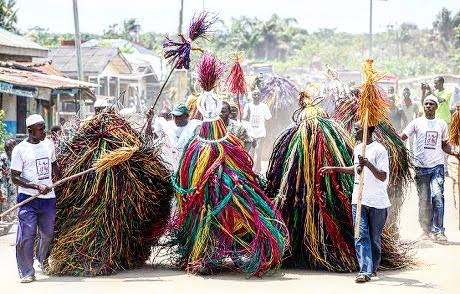
The history of Abbi, in present-day Delta State, is kept in traditions of migration, settlement, kinship and the slow absorption of different families into one community. The founding story centres on Amacha, said to have come from Achalla-Ukwu, east of the Niger, and to have eventually settled in the area now called Abbi.
The written record
According to tradition, Amacha first went to Aboh in the late sixteenth century with his wife Omai, his children, servants and dependants. The Obi of Aboh received him as a kinsman, partly because their languages and customs were so alike.
Amacha soon became involved in Aboh’s politics. When the Obi died, two princes, Ogwezhi and Ugbo, fought over the throne. Ogwezhi won, and Ugbo and his supporters left Aboh to found settlements farther inland. Others tied to the losing side were caught up in the conflict too. Amacha, Ukwata, Efe, Amai and other families were among those who eventually moved away, and their journeys helped create several settlements in the Ukwuani hinterland, including Abbi, Amai, Umukwata, Orogun and Emu.
Historical context
Leaving Aboh
Amacha is remembered as a supporter of Efe, whom he considered the rightful heir to the Aboh throne. Backing the losing faction made staying in Aboh harder and harder, so he left with his family and the sacred objects of his lineage, among them the Nze shrine, associated with war and protection.
The journey was not a single march. He first stopped at Umu-Olu but moved on because Aboh still held sway there. He then passed through Ashaka and Ushe before reaching the land where Abbi would rise. Along the way, some members of his party stayed behind in the places they passed, while others went on with him to their final homes. In this way the migration fed into the wider settlement of the Ukwuani hinterland.
Founding Abbi
Amacha arrived with his wife Omai and three sons: Ogwezhi, Okolo and Aninta. Tradition says he explored the land with his sons before deciding to stay, and only after he was satisfied that it suited both housing and farming did he declare that he would remain.
The name Abbi is traditionally traced to the words “Ka anyi biri n’ebe a,” meaning “Let us live here,” which were worn down over time to Ka-Abili and finally Abbi.
Another member of the extended family, Ndueze, was already there. He was the younger brother of Omai and had come with her from Achalla-Ukwu.
Amacha set up his authority by creating institutions and shrines tied to the land and its protection: the Ani shrine, the Nze shrine and the Ndiche shrine. He also founded the Orile Abbi, a communal space for public and social life. With these in place, the settlement stopped being a temporary camp and became an organised community.
Amacha’s Descendants
Amacha’s three sons were Ogwezhi, Okolo and Aninta. Ogwezhi’s descendants include Onyedem, Okubor, Otokei, Ajua and Ejine. Okolo is remembered as the ancestor of Okita. Aninta’s descendants include Echi, Udu, Ogwezhi and Ukpene. Of these, Udu, son of Aninta, became especially important in Abbi’s early days because he explored and protected the new territory.
Ndueze and the Nze Shrine
Ndueze was one of the first outside families brought into Amacha’s settlement. He had lived in Amacha’s household since he was young, grew close to the family, and eventually took charge of the Nze shrine. His story shows something basic about early Abbi: kinship did not depend on descent from Amacha alone. Relatives, dependants and other migrants could be taken in and given recognised duties in the community’s institutions.
Ewolokpo Arrives
Ewolokpo, like Amacha, is said to have come from Achalla-Ukwu. Tradition says one of Amacha’s sons met an old man living in the forest at a place called Odor-Ata. It was Ewolokpo, who explained that he had left Achalla-Ukwu to find a new home. Amacha saw that he spoke the same language and welcomed him.
Ewolokpo then took the traditional oath of oneness, which marked his entry into the settlement. He was given charge of the Ani shrine, while Amacha kept the Ndiche shrine. His coming was another step in Abbi’s growth through the absorption of people from outside Amacha’s own household.
Ogwezhi from Ubulu-Uku
Later, another newcomer arrived from Ubulu-Uku. Udu, son of Aninta, found a young man travelling alone in Abbi’s hunting grounds. Udu knew the forests well from hunting and patrolling them. He questioned the stranger and discovered they spoke related languages.
The young man, also named Ogwezhi, explained that he had left Ubulu-Uku after a serious family quarrel and had wandered into Abbi’s territory. The elders considered his case and accepted him. Like Ewolokpo, he took the oath of oneness and became part of Abbi. He settled in what is now Elovie Quarter and later married a woman from neighbouring Emu.
The Dispute and Okwele
Ogwezhi’s arrival did not end without trouble. Members of his family and the Ewolokpo family fell into a dispute over an allegation of misconduct. The traditional authorities heard the matter and ruled against Ogwezhi’s side. His family refused to accept the judgement, and a serious conflict followed.
Amacha’s descendants drove Ogwezhi and his immediate family out of their settlement, and they went toward Orogun and stayed there for a time. After reconciliation they were allowed back into Abbi, though not to their old home. They were given a new area, which became Okwele Quarter, where Ogwezhi founded another family whose descendants are still linked to Okwele.
How the Quarters Formed
Abbi grew through several stages. First came Amacha and his family, then Ndueze, Ewolokpo, and later Ogwezhi and his descendants. These groups settled into different quarters and lineages within the growing town. One tradition ties the earliest settlement to Elovie, and as the population grew, further quarters such as Umia and Okwele took shape.
So Abbi is not simply the story of one founding ancestor. Amacha started the settlement and its institutions, but the community expanded by taking in other families and migrant groups.
Ukwata and the Neighbouring Settlements
The migration out of Aboh produced other communities as well. Ukwata, traditionally named as Amacha’s brother, left the main group and founded Umukwata, meaning the settlement or descendants of Ukwata. His lineage’s first village was Owa. Though Owa became a separate settlement, it kept ritual ties with Abbi and continued to return there for certain observances linked to Ezulu. Other members of the wider migration helped establish or shape Amai, Orogun and Emu.
These traditions show that the exodus from Aboh was not one family’s journey. It was a wider scattering of related and associated groups whose settlements grew into distinct communities across the Ukwuani region.
In Short
Abbi’s history mirrors that of Ukwuani communities east of the Niger, where settlement was shaped by migration, war, kinship, hunting, farming and the search for new land. Amacha’s journey from Achalla-Ukwu, and his stay in Aboh, form the core of the founding tradition. But the later arrivals of Ndueze and Ewolokpo from Achalla-Ukwu and of Ogwezhi from Ubulu-Uku show that Abbi grew by taking people in, and its traditions therefore carry several layers of ancestry, not one uniform genealogy.
At the centre stood the authority Amacha and his descendants established, backed by the Ani, Nze and Ndiche shrines, communal spaces and the oath-taking that formally made newcomers part of the community. Abbi is best understood as a settlement founded by Amacha and enlarged through successive migration and integration, which produced the quarters, lineages and institutions of Abbi today.
Sources and references
- Abbi History. (n.d.). History and origin of Abbi. https://abbihistory.blogspot.com/p/blog-page.html
- Isichei, E. (1976). A History of the Igbo People . Macmillan.
Cite this article
Discussion
Sign in to join the discussion
Comments are checked by an editor before they appear. Leave a source or a correction and it is read first.
Continue reading


No comments yet
Nothing has been approved on this record yet. Comments are checked by an editor before they appear, so one written now shows on this page after that check.