 Ozikoro
Historical Studies · Published history
The Igbo Diaspora in the Caribbean and America: “Ụwa bụ ahia; onye zere ahia, zere uwa”
“Ụwa bụ ahia; onye zere ahia, zere uwa” (The world is a marketplace; whoever avoids the market avoids the world). This proverb reminds us that no one can escape the interactions that shape destiny. For the Igbo, scattered by the Atlantic slave trade, the world itself became that vast market where their traditions, songs, and resilience were exchanged, reshaped, and reborn in distant lands.
The written record
From Virginia plantations to Jamaican sugar estates and Brazilian ports, Igbo men and women carried fragments of their culture into the Atlantic world. Though enslaved, they planted seeds of identity that grew into folklore, festivals, languages, and religions of the diaspora. The Caribbean and the Americas became home not only to suffering but also to the rebirth of Igbo heritage in unexpected forms.
Historical context
Igbo in the Caribbean
By the 18th century, the Igbo were one of the largest African groups in Jamaica and Barbados (Falola & Njoku, 2016). Plantation owners often referred to them as “Eboe.” Though stigmatized as rebellious, this very spirit gave rise to resistance movements and left deep cultural footprints.
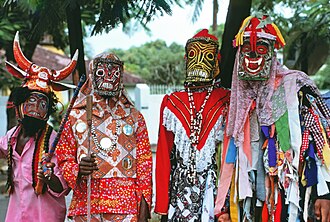
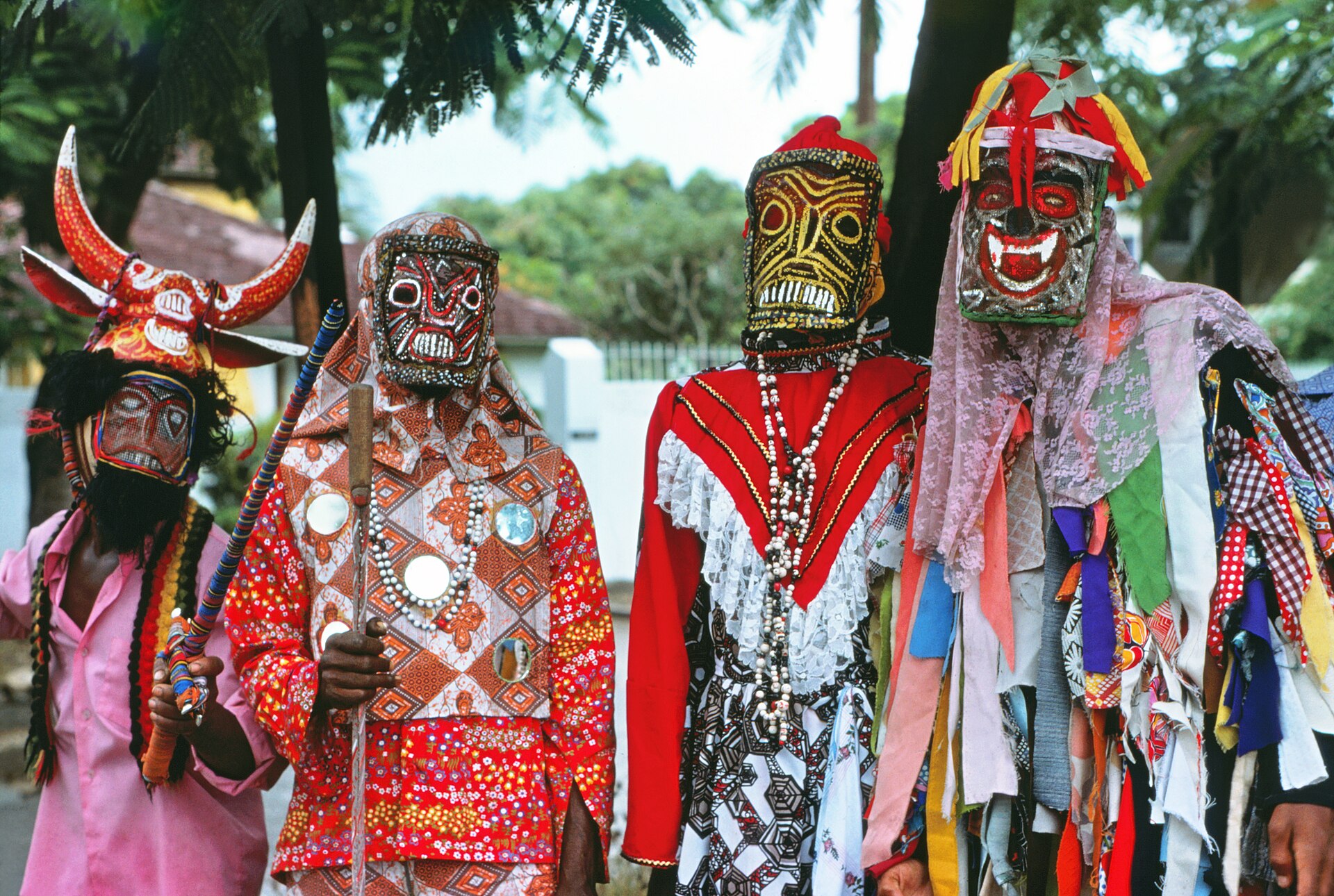
- Jonkonnu Festival (Jamaica): This carnival-like tradition, blending African masquerades with European festivity, bears strong Igbo roots. Its masked dances recall the mmanwụ traditions of Igboland.
- Language Influence: Jamaican Creole includes Igbo words such as unu (you all) and soso (only).
- Resistance: Many Igbo joined Maroon communities, fleeing plantations to form self-governing settlements in Jamaica’s mountains.
Igbo in North America
In Virginia and the Carolinas, Igbo captives were well-documented. They were often identified by the term “Eboe” in slave registers.
- Eboe Landing (Georgia): In 1803, a group of Igbo captives, refusing slavery, marched into the waters of Dunbar Creek. Their act of collective suicide became a powerful symbol of dignity over bondage. Folklore in the Gullah-Geechee community preserves the legend, sometimes claiming they “flew back to Africa.”
- Cultural Continuity: Igbo call-and-response singing styles influenced African American spirituals. Proverbs and storytelling methods also took root in the plantation quarters.
Igbo in Brazil and Haiti
- Brazil: Igbo captives contributed to Candomblé, where Yoruba, Igbo, and other African traditions fused. Ritual objects like drums carried echoes of Igbo cosmology.
- Haiti: The Igbo participated in the Haitian Revolution (1791–1804). Their spiritual traditions mixed with those of other African groups to shape Vodou, a religion that emphasized ancestral presence and liberation.
“A na-agwa ntị ihe, ntị adịghị anu; mgbe isi kpachara akpụkpọ ya, ntị esoro ya hapụ” (The ear is warned, but it refuses to listen; when the head bears the punishment, the ear follows). This saying mirrors the story of the diaspora: though enslavers refused to listen to cries of justice, resistance rose, and history bore the punishment of their cruelty.
Cultural Survivals and Transformations
Despite oppression, the Igbo spirit survived in diaspora through:
- Names: Many preserved African-sounding names or gave children day-names linked to Igbo traditions.
- Foodways: Yam festivals and okra dishes echoed African cuisines.
- Spirituality: Belief in ancestors, masquerades, and divination adapted into Caribbean religions.
- Music & Dance: Drumming, ululation, and masquerade dance influenced calypso, reggae, and African American blues.
Identity and Memory
The Igbo abroad often lived in tension: they were labeled “Eboe” but yearned for home. Folklore became a bridge, tales of flying Africans, ancestral spirits, and masquerades comforted enslaved communities. Over time, these stories shaped Creole cultures that still carry Igbo fingerprints.
In the Gullah South, Jamaica, and Haiti, descendants today recognize Igbo heritage in language, festivals, and family traditions. The Igbo diaspora in the Caribbean and the Americas is a story of loss and reinvention. Though torn from their homeland, the Igbo remade worlds in music, religion, and resistance.
“Mmiri gara gara anaghị emebi mmiri ozuzo” (The flowing stream does not spoil the rain). Though dispersed across oceans, the Igbo spirit added to the rain of cultures, enriching every land it touched.
Sources and references
- Falola, T., & Njoku, R. C. (Eds.). (2016). Igbo in the Atlantic world: African origins and diasporic destinations. Indiana University Press.
- Thornton, J. K. (1998). Africa and Africans in the making of the Atlantic world, 1400–1800. Cambridge University Press.
- Gomez, M. A. (1998). Exchanging our country marks: The transformation of African identities in the colonial and antebellum South. University of North Carolina Press.
Cite this article
Discussion
Sign in to join the discussion
Comments are checked by an editor before they appear. Leave a source or a correction and it is read first.
Continue reading


No comments yet
Nothing has been approved on this record yet. Comments are checked by an editor before they appear, so one written now shows on this page after that check.