 Ozikoro
Historical Studies · Published history
The Igbo Origins and Development of the Aboh Kingdom
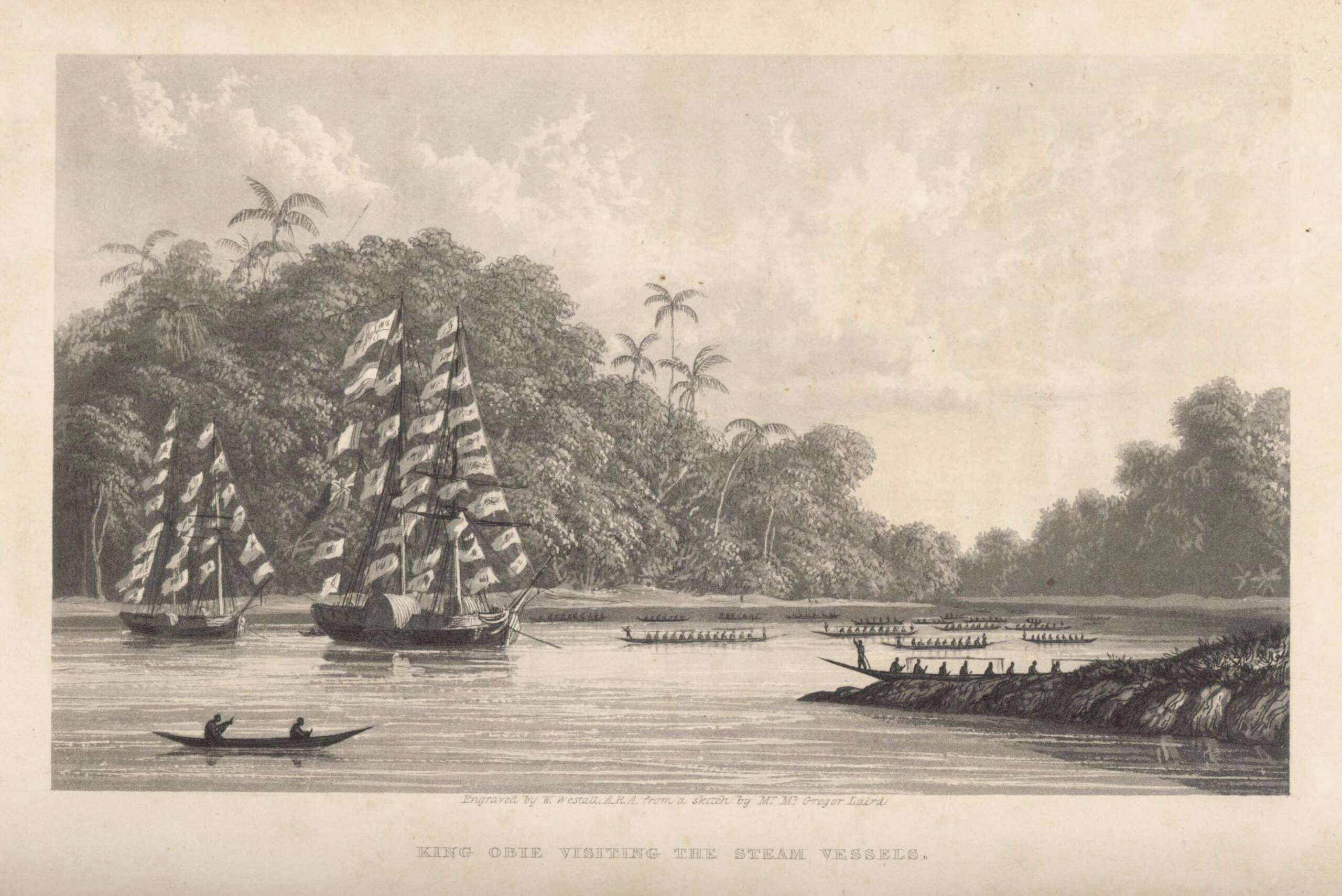
Aboh belongs to the history of the Igbo of the western Niger. No single migration made it. It grew out of several Igbo-speaking groups moving, settling and slowly merging along the river. At the heart of the story is a meeting between the Ika Igbo, especially people from Agbor, and older riverine Igbo communities already living on the lower Niger. From that meeting came a strong river kingdom that joined centralised kingship to older Igbo habits of lineage authority, titled office and customary law.
The written record
Historical context
The People Already There
Long before any Aboh monarchy, the lower Niger was settled. Among the early inhabitants were the Akarai, also recorded in some traditions as Akiri or Akalai. Tradition ties them to the wider Nri-Awka world of the Igbo heartland, and over generations groups from the interior drifted toward the Niger and built settlements along its banks and waterways.
The river shaped how they lived. They were fishermen, farmers, canoe builders and traders, and they knew the Niger and its tributaries intimately. Their religious and social life came from the wider Igbo system: Omenala, ancestral authority, the Ofo, earth-centred worship and titled leadership. So when Aboh eventually emerged, the ground under it already held a people with their own economy and culture.
The Ika Migration from Agbor
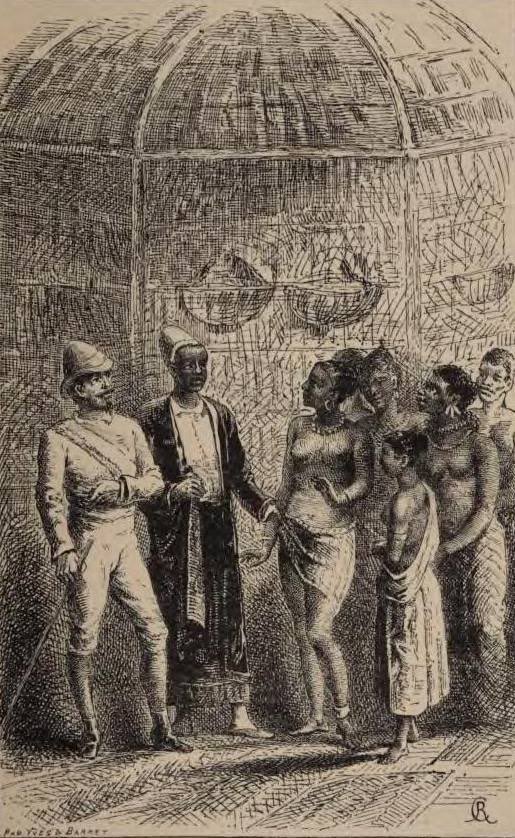
The second strand came from the Ika Igbo, and in particular from the old kingdom of Agbor. Aboh and Ika traditions say a royal party left Agbor and moved south toward the Niger during a time of political upheaval in Ika country. One well-known tradition names Omasio, a prince of Agbor, as a leader of the movement.
The exact circumstances and dates survive mainly in oral tradition, but the Agbor link stays central to how Aboh remembers the ancestry of its ruling dynasty. The migrants travelled down the western Niger corridor and reached the lower river. They did not settle apart. They met the riverine communities already there and became part of them. It was one of many movements of Igbo people within Igbo country that shaped the societies of the Niger basin.
Two Traditions Come Together
The newcomers brought their lineages, ideas of kingship, military organisation and political institutions. The riverine communities brought deep knowledge of the Niger, established farming and fishing, and existing networks of trade and settlement. Through marriage, alliance, shared settlement and political incorporation, the two gradually became one community. Neither vanished. Pieces of both traditions went into the Aboh state as it formed, which is why the process is often described as an Ika-riverine Igbo synthesis.
The Obi and the Royal Line
Out of this mixing came the office of the Obi of Aboh. The Obi became the central political authority, while the wider community kept institutions reflecting long-standing Igbo political organisation. Aboh thus developed a centralised kingship, which was unusual, since many Igbo communities were governed in a much more dispersed way. The monarchy also gave the kingdom a way to coordinate the different communities and lineages that had joined it.
The clearest surviving link to Ika ancestry is the royal lineage called Umudei. The name is traditionally connected to Dein, the ancient royal title of Agbor. In Agbor tradition, Nwadei means a prince, and in Aboh, Umudei means the descendants or children of the royal house. This forms part of the oral genealogy tying the Aboh dynasty to Agbor and the wider Ika. Other titles and institutions in the Aboh royal system likewise carry linguistic and cultural echoes of neighbouring Ika communities.
Ofo, Custom and the Limits of the Crown
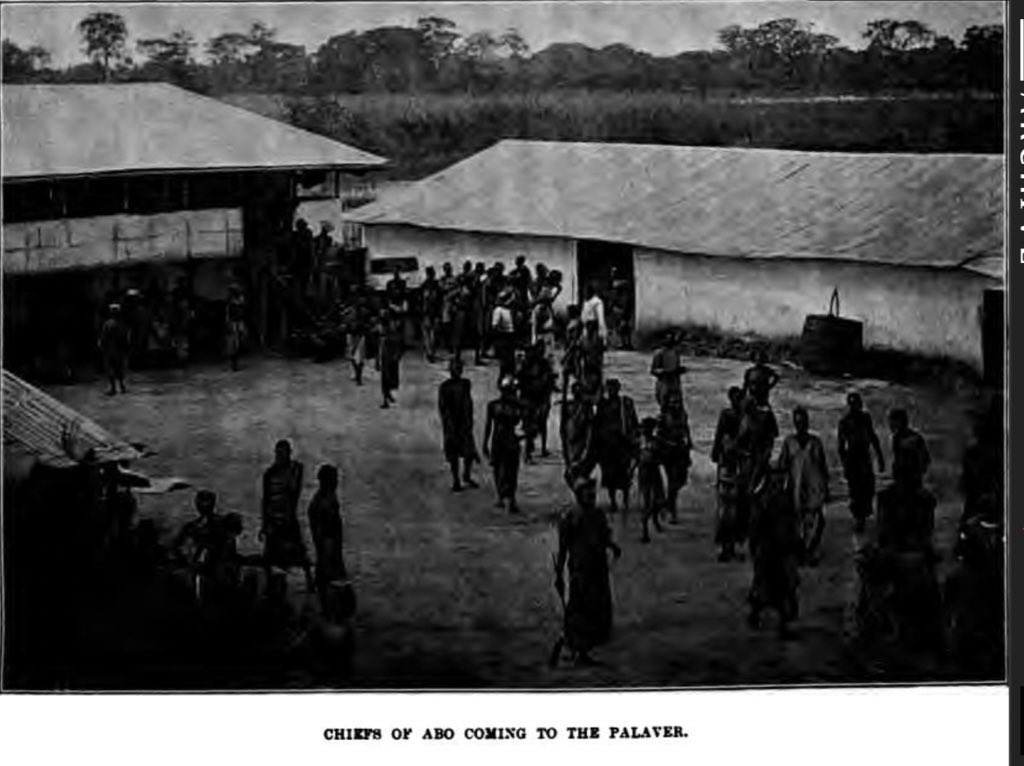
Powerful as he was, the Obi did not rule outside a wider framework. The Ofo stood as a symbol of legitimate authority, ancestral approval and truth, and holding and being recognised as bearer of it tied political power to the ancestors and to the customary order. The Obi governed within Omenala, ancestral authority, titled institutions and customary law.
He also governed alongside the Ndiche, the senior members of the community and other important traditional authorities. Together with other titled men, they gave the kingdom a way of consulting and deciding collectively. The Obi held substantial authority, especially over war, diplomacy and administration, but he exercised it within the customs of the society. That mix of kingship and shared authority shows how flexible Igbo political life could be. Some Igbo communities ran on village assemblies and lineage heads, others built strong kingships, and Aboh is among the most prominent examples of the second kind.
The Four Royal Houses
Succession in Aboh worked through four principal royal houses:
- Umu Ossai
- Umu Ozegbe
- Umu Ojugbali
- Umu Ogwezi
Having several houses protected the standing of the main branches of the royal lineage. Rather than narrowing power to one hereditary line, the system kept the branches of the royal family, and the wider Aboh community, in relationship with one another.
A River Kingdom
Geography counted for a great deal. Aboh sat at a strategic point on the Niger, linking the Igbo interior with the waterways of the lower river and the Niger Delta. Its people built up real skill in canoe building, river navigation, fishing, farming, war on the water and long-distance trade. These skills let Aboh control key waterways and take part in commercial networks reaching deep into the Delta and the interior. Its wealth and influence rested on being a riverine Igbo power.
What Each Side Contributed
The Ika mainly shaped Aboh’s royal and military institutions. Agbor supplied a royal ancestry, and Ika political culture helped push Aboh toward a more centralised kingship. The riverine communities added their knowledge of the Niger, their local economic networks and their established social institutions. Aboh became a meeting point for several strands of the Igbo world: Ika migrants carrying the Agbor royal tradition, older riverine communities such as the Akarai, the fishing, farming, navigation and trade of the lower Niger, and shared Igbo institutions like the Ofo, Omenala, titled authority and communal government. Together these produced a distinctive political civilisation.
Aboh in Igbo History
Aboh’s story shows that Igbo civilisation was never confined to the interior east of the Niger. Igbo speakers had long lived along the Niger corridor, crossed the river, founded settlements on its waterways and built sophisticated political and commercial systems. Aboh is one of the clearest cases. It links the Ika Igbo of Agbor with the riverine Igbo of the lower Niger, and shows how migration and contact between Igbo populations could produce new states.
Aboh is best seen as a distinctive Igbo river state, shaped by Ika migrants meeting older Niger communities, and not as an isolated kingdom. Its monarchy, royal houses, Ofo institutions, river economy and military organisation all grew inside a wider Igbo world in which people moved, traded, married across communities and founded new settlements on both sides of the river for centuries.
Sources and references
- Afigbo, A. E. (1981). Ropes of Sand: Studies in Igbo History and Culture . University Press.
- Isichei, E. (1976). A History of the Igbo People . Macmillan.
- Manfredi, V. Iduuwe: History of Agbor . Boston University.
- Nwaubani, E. (1999). The political economy of Aboh, 1830-1857. African Economic History .
- Ogedengbe, K. O. (1971). The Aboh Kingdom of the Lower Niger, c. 1650-1900 [Doctoral dissertation, University of Wisconsin-Madison].
Cite this article
Discussion
Sign in to join the discussion
Comments are checked by an editor before they appear. Leave a source or a correction and it is read first.
Continue reading


No comments yet
Nothing has been approved on this record yet. Comments are checked by an editor before they appear, so one written now shows on this page after that check.