 Ozikoro
Historical Studies · Published history
The Rise of Agbor: Origins and History of an Ika Kingdom
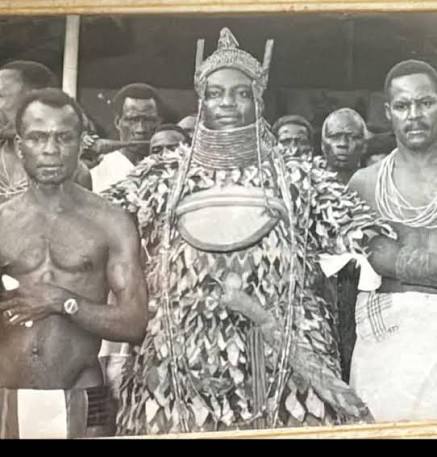
Few towns matter as much to Ika history as Agbor. In A History of Ika, Egwubutor Iduwe traces it from an old indigenous settlement, held together by ancestral worship, to a political power whose reach eventually covered a large stretch of what is now Delta State. His account rests mainly on Agbor’s own oral traditions, genealogies, royal histories and customs. What comes out of it is a long story of settlement, religion, warfare, migration and slow political change.
The written record
Historical context
Ogele and the Earliest Agbor
In this telling, Agbor did not begin as a kingdom. It began with an ancestor called Ogel (or Ogele), remembered as the patriarch of the first people to live in the area. Tradition places him at Ominije, around present-day Agbor-Nta, beside a sacred egbon tree and a grove known as Ugba-Agbor. He stayed a spiritual presence in Agbor life long after kings arrived.
Those early people were farmers living in forest country with good soil and plenty of streams. Around their settlements the wider community grew, and Imeobi became its royal and political heart. The old territory was far larger than today’s town and was divided into three parts: Imeobi, the area around the palace; Igure, the outlying settlements; and Azuwu-Agbor, the wider backcountry under Agbor’s influence.
From Priests and Elders to a Ruler
Before kingship, authority lay with priests, elders and the custodians of ancestral shrines. Iduwe dates this Ogel period to roughly 700 BC. The change came when the community wanted stronger leadership, especially in war.
Tradition credits Nze, a great warrior and organiser, with much of that change. He is linked to the Ipami cult, the Iwaiseh society and the Agbalanze tradition. His son Igidi took the next step. The people held a shooting contest to choose an Oluotu, a leader to govern and defend them, and Igidi won it. Power began to move away from a purely priestly order toward a single political leader. Nze was buried at Ihu-Nze/Olor-Akan, which became a major ancestral site. The story of this period also shows how tightly religion and government were bound together, since the ancestors were still active in the life of the community.
Dein and the First Strong Monarchy
Around 1270 AD, according to the manuscript, Dein rose to power. He had travelled beyond Agbor, gained military experience, and came back to rule with far more authority than any Oluotu. He is tied to the Ugbən law, a strict set of royal commands, and to a more hierarchical government. Royal vocabulary from this era survived: the king was Dein, his wife Nwunyẹn Dein, his children Nnwụ Dein, and the royal household Idibo Dein.
The system did not outlast him. After his death, authority fragmented again and villages largely governed themselves.
Ufu, Owuuwu and the Restored Kingdom
The monarchy came back through a determined woman named Ufu. Ambitious and set on founding a dynasty, she worked to put her son Owuuwu on the throne. He took power around 1440, and from him descends the long line of Eze and Obi who ruled Agbor until the colonial period.
Iduwe treats Owuuwu as one of Agbor’s greatest rulers. He extended Agbor’s influence toward the Niger in the east and into territories to the west and south. He set up tributary relationships, appointed governors, and placed members of the royal family in positions of power. Under him, bronze and brass working, weaving, carving and other village crafts flourished, and he is credited with giving the kingdom a legal framework. In this account, Agbor stops being a cluster of related communities and becomes a territorial state.
The Line of Rulers
Owuuwu’s successors, as the manuscript records them:
- Akina (c. 1471): A peaceful, generous ruler who strengthened the kingdom’s social order. In his time, a stranger who lived in Agbor for seven years could join the community, though never head an ancestral lineage.
- Agho (c. 1522): A son of Owuuwu, remembered as a farmer, hunter and warrior. The Osihəzi festival belongs to his period.
- Ahisama (c. 1569): Associated with the origin of the Igwe Festival, which comes from the story of a woman named Igwe and her relationship with the king.
- Oruehdo (c. 1625): An eloquent and brave warrior and wrestler, whose reign saw fighting and the building of defensive settlements.
- Oseeh (c. 1650): Took the throne after a succession struggle and ruled amid family disputes before handing over to Ogwade.
- Ogwade (c. 1660): An elderly, experienced king. Traditional medicine developed in his time, with the help of a physician from Ozara.
- Adigwe (c. 1698): His accession sparked a conflict involving Kime and the people of Alisimien. It ended in migration, and Kime’s descendants became associated with Nnwụ-Eze-Chima in eastern Agbor.
- Nmordu, also called Mordu (c. 1740): Came to power after another bitter succession dispute. His reign is notable for closer contact with Benin, and he introduced or adopted some titles and institutions Iduwe links to Benin influence. The author insists, though, that older Ika institutions remained the foundation of Agbor society.
The Nineteenth Century
Agbor stayed politically and militarily strong into the 1800s. Obanor, who came to power around 1820, was a capable and generous ruler, and a farmer, hunter and warrior. Igbənije followed around 1852 but reigned only about seven months and was buried at Olor-Akan. Around 1860 came Obidinn, already elderly and long a farmer and hunter, whose reign brought wars with neighbours such as Egbudu-Akan. Gbenoba took the throne around 1890, a powerful and fearless warrior who ruled just as European colonial expansion was reaching the region. Iduwe presents him as one of the last major rulers of independent, pre-colonial Agbor.
Colonial Rule
British rule reshaped everything. The Eze’s traditional authority was gradually placed beneath colonial administration, and taxation, courts, police, schools, Native Administration, district government, roads and communications began to replace or override older institutions. Under Agborbu, who became ruler in 1914, the kingdom broke apart further as communities once tied to Agbor were carved out and folded into colonial divisions. His reign sits between the old kingdom and the colonial state.
Obika and Ikechukwu
Obika was still a minor when his father died, so a regency ruled until he could become Eze. The colonial government recognised him in the 1930s. He was educated at Agbor Government School, entered modern politics, and served through the rise of Nigerian nationalism and the road to independence, later taking part in regional government.
The last ruler the manuscript covers in depth is Prince James Ikechukwu, who took the throne in 1968, during the civil war and the difficult years that followed. Iduwe portrays him as a modernising king who pushed for roads, better communications, urban growth and economic development, and worked to secure Agbor’s place among the Ika. He died in 1979, which closes the manuscript’s main royal chronology.
How Agbor Lived
Traditional Agbor life ran through families, lineages, villages, age groups, title societies, priests, elders and the palace. The king never governed alone. He depended on that whole network. Land belonged to the community, with the Eze as overall authority, and the Ofor stood as the chief symbol of legitimate rule, tying together ancestry, justice, office and the link between the living and the dead.
Religion centred on the ancestors. The Ogel cult, Ipami, Iwaiseh, ancestral shrines and royal burial grounds all mattered, and the dead kept a place in the community’s moral and political life. Royal ancestors in particular underwrote the throne’s legitimacy, which explains why Olor-Akan/Ihu-Nze appears so often in the tradition.
Festivals, such as the Igwe Festival, were more than celebration. They marked farming seasons, honoured royal authority and the ancestors, and spoke to fertility, protection and unity, and they were how history and belief passed from one generation to the next.
Marriage was above all an alliance between families and lineages. Iduwe discusses bridewealth, the role of parents, family obligations, divorce, adultery, widowhood and remarriage, and shows that marriage carried economic and political weight beyond the couple. Death was treated as a passage, not an ending. Burial customs varied with a person’s age, status and manner of death, and a king’s grave became part of Agbor’s sacred landscape.
War shaped the kingdom too. Its warriors were well organised and repeatedly fought neighbours to defend territory and settlements, extend influence, collect tribute, protect trade routes and uphold the king’s authority.
The economy stood on farming, especially yams, along with hunting, fishing and palm production. Weaving, carving, and bronze and brass work added wealth, and local trade flourished. Agbor’s position made it a commercial hub linking parts of Ika country to their neighbours, and in the nineteenth century the palm-oil trade drew it into the wider Atlantic economy.
Agbor in the Ika Story
Put together, Iduwe’s account makes Agbor the central political and historical power of the Ika world. It grew from Ogel’s ancestral settlement, gained direction under Nze and Igidi, saw a strong monarchy under Dein, then a period of fragmentation, then restoration and expansion under Owuuwu. Its kings then ruled through a long run of wars, festivals and changes, until colonial rule and the modern Nigerian state arrived.
The royal sequence he gives runs: Ogel, Nze, Dein, Owuuwu, Akina, Agho, Ahisama, Oruehdo, Oseeh, Ogwade, Adigwe, Nmordu, Obanor, Igbənije, Obidinn, Gbenoba, Agborbu, Obika and Ikechukwu.
But the manuscript is clear that Agbor’s story is not only a story of kings. Beneath the monarchy lay far older structures: lineages, villages, priests, age groups, ancestral institutions, crafts and farming. Agbor also had deep contact with its neighbours, Benin above all, and borrowed from them at times. Iduwe holds that its core language and identity stayed Ika throughout.
Sources and references Cite this article Discussion Comments are checked by an editor before they appear. Leave a source or a correction and it is read first.Sign in to join the discussion
Continue reading


No comments yet
Nothing has been approved on this record yet. Comments are checked by an editor before they appear, so one written now shows on this page after that check.