 Ozikoro
 Historical Studies · Published history
UNN’s Disruption and Symbolic Significance During the Nigerian Civil War: Closure, Destruction, and Its Representation of Eastern Resilience
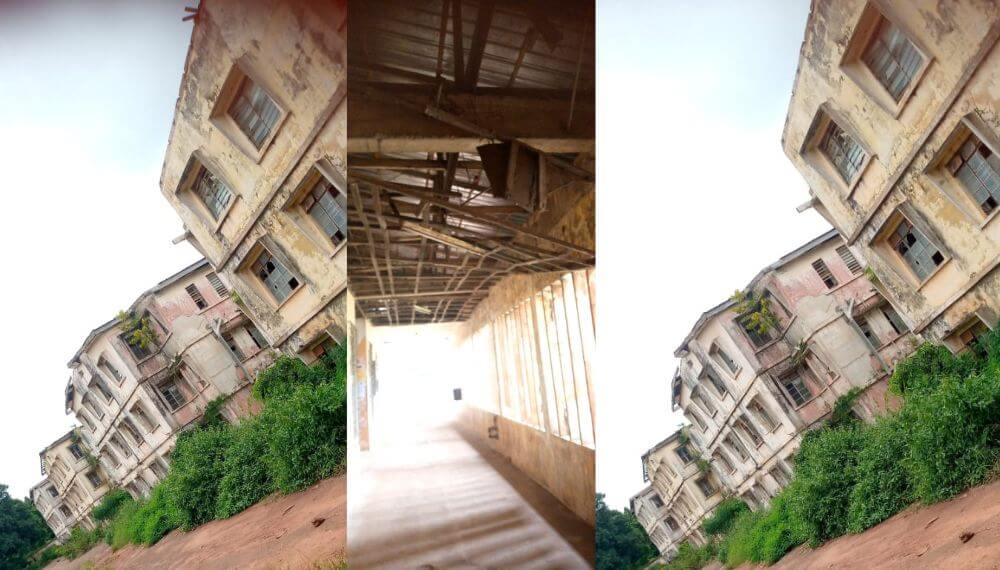
The University of Nigeria, Nsukka (UNN), founded in 1960 as a symbol of “intellectual sovereignty” and the first indigenous university in Nigeria, occupied a central place in the aspirations of the newly independent nation. However, the dream of “mental emancipation” was violently interrupted by the Nigerian Civil War (1967–1970). For the people of the Eastern Region, who had declared the sovereign Republic of Biafra, UNN was not just an academic institution but the “brain of the revolution.” Consequently, it became a primary target for destruction. The war brought about the complete cessation of academic activities, the systematic looting of its libraries, and the physical ruin of its infrastructure. This article examines the disruption of UNN during the conflict, the symbolic weight of its destruction, and how its eventual reopening serves as a testament to the “indestructible spirit of Eastern resilience.”
The written record
Historical context
The Strategic Target: Why UNN was the War’s First Casualty
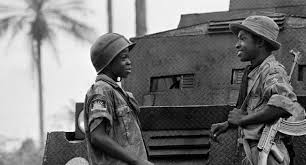
When the war broke out in July 1967, Nsukka was one of the first locations to experience the “brutality of the frontline”;
- Geographic Vulnerability: Located in the northernmost part of the Eastern Region, Nsukka was the gateway for the Nigerian Federal troops advancing from the North. Its proximity to the border made UNN an immediate theater of combat.
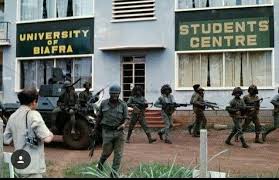
- Intellectual Enclave: Federal forces viewed UNN as the “nerve center” of Biafran ideology. Many of the architects of the secession were academics from Nsukka. The university was rebranded as the “University of Biafra,” and its laboratories were utilized by the Research and Production (RAP) unit to develop defensive technologies like the Ogbunigwe.
- The Capture of Nsukka: Within weeks of the conflict’s commencement, Nsukka fell to Federal forces. The university was abandoned by students and staff, who fled southwards, marking the beginning of a “three-year academic blackout.”
The Systematic Destruction: Books and Buildings as Combatants
The destruction of UNN was not merely “collateral damage” but an attempt to erase the intellectual identity of a people;
The Burning of the Libraries: Historical accounts describe soldiers storming the UNN library and setting fire to thousands of books.
Eyewitnesses famously quoted soldiers as saying, “Na these books dem dey read, na why they know too much” (It is because of these books they know too much). This act represented a “cultural genocide” aimed at stunting the future of the region.
Looting of Equipment: Science laboratories that Azikiwe had painstakingly equipped were stripped bare. Valuable research data, ethnographic artifacts from the Institute of African Studies, and administrative records were either stolen or “destroyed beyond repair.”
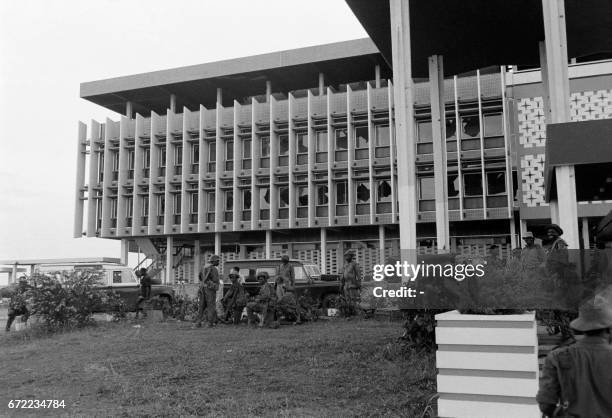
Physical Ruin: The beautiful campus was converted into a military garrison. Classrooms became barracks, and the “lush avenues” were overgrown with giant grass. Buildings were riddled with bullet holes and structural damage from shelling, leaving the campus a “ghostly silhouette” of its former self.
Symbolic Significance: The University of the Village as a Martyr
During the war, the state of UNN became a “metaphor for the Biafran struggle;
A Fallen Lion: The “Lion,” the symbol of the university, became a symbol of the “wounded Eastern psyche.” For the Biafran public, the reports of the desecration of Nsukka were used to fuel the “will to resist,” as it proved that the war was not just against soldiers but against their “civilization and future.”
The Exile of Scholars: Prominent figures like Chinua Achebe and the poet Christopher Okigbo (who died in action near Nsukka) became the “voices of the exile.” The disruption of UNN forced these intellectuals to use their pens and lives to defend the “idea of Nsukka” from the trenches and foreign capitals.
Martyrdom of the Institution: UNN’s suffering was viewed as “vicarious.” The university suffered so that the people might understand the high price of their quest for “dignity and autonomy.”
The Resilience of Return: Reconstruction Against the Odds
The end of the war in January 1970 saw a “triumphant yet tragic” return to the ruins of Nsukka;
The “Commando Session”: In March 1970, just months after the surrender, the university reopened for what became known as the “Commando Session.” Students returned to a campus without windows, doors, or books, often sitting on “cinder blocks” to attend lectures.
Indigenous Self-Help: Despite the Federal government’s “Three Rs” (Reconstruction, Rehabilitation, and Reconciliation) policy, many Igbo felt that UNN received minimal federal aid. The reconstruction was largely driven by the “communal efforts” of the staff and the surrounding communities who donated labor and resources to revive the “Lion.”
Restoring the Name: Although the Federal government insisted on the name “University of Nigeria,” for those who returned, the institution was a “reborn” entity. The rapid recovery of UNN’s academic standards in the 1970s is cited as one of the greatest “miracles of post-war recovery” in Africa.
Representation of Eastern Resilience in Memory
Today, the history of UNN’s wartime disruption serves as a “foundational myth” of perseverance for the Igbo people;
The “Return of the Exiles” in Literature: The trauma of UNN’s destruction is a recurring theme in Nigerian literature. Works like Chimamanda Ngozi Adichie’s Half of a Yellow Sun use the “ruined campus” as a backdrop to explore the shattering of middle-class dreams and the “unconquerable nature of the human spirit.”
Educational Determination: The war instilled a “hunger for education” that defined the post-war Eastern Region. Because they had seen their university burned, the Igbo placed an even higher “sanctity on the certificate,” leading to the proliferation of private and community-built schools across the East.
A Living Monument: Every bullet hole still visible on older campus buildings serves as a “silent witness.” UNN stands not just as a center of learning, but as a “monument to survival,” reminding students that their education was “bought with a price.”
UNN’s Disruption and Symbolic Significance During the Nigerian Civil War: Closure, Destruction, and Its Representation of Eastern Resilience remains a “poignant chapter” in African history. The university’s journey from the “soaring heights of 1960” to the “ashes of 1967” and its “rebirth in 1970” mirrors the trajectory of the people it was built to serve. While the fire could consume the books, it could not extinguish the “intellectual curiosity” or the “cultural pride” that Nnamdi Azikiwe had sparked. UNN’s survival proved that an institution built on the “truth and the dignity of man” is indestructible. Today, as the “Lion” roars again, it remains the ultimate symbol of the Eastern Region’s ability to “rise from the ruins” and reclaim its place in the world.
Sources and references
- Achebe, C. (2012). “There Was a Country: A Personal History of Biafra”. London: Penguin Books. (Offering a first-hand account of the displacement of Nsukka’s intellectual community).
- Afigbo, A. E. (1971). “The University of Nigeria, Nsukka: The First Ten Years”. Journal of African Studies.
- Aniefiok-Ezenwonye, A. (2024). “Post-Civil War Reconstruction in Eastern Ibibioland, Nigeria: An Appraisal”. Ohazurume: Journal of Culture and Heritage.
- Elias, T. O. (1971). “University of Nigeria, 1960-1970: An Historical Analysis”. Enugu: University of Nigeria Press.
- Isichei, E. (1976). “A History of the Igbo People”. London: Macmillan.
- Obiechina, E. (1971). “Nsukka: The Culture in Exile”. Okike: An African Journal of New Writing.
- Okaf or, N. (1971). “The Development of Universities in Nigeria”. London: Longman.
Cite this article
Discussion
Sign in to join the discussion
Comments are checked by an editor before they appear. Leave a source or a correction and it is read first.
Continue reading


No comments yet
Nothing has been approved on this record yet. Comments are checked by an editor before they appear, so one written now shows on this page after that check.