 Ozikoro
Historical Studies · Published history
From Mistake to Massacre: The Ahiara Punitive Expedition (1905–1906) Triggered by Dr. Stewart’s Death
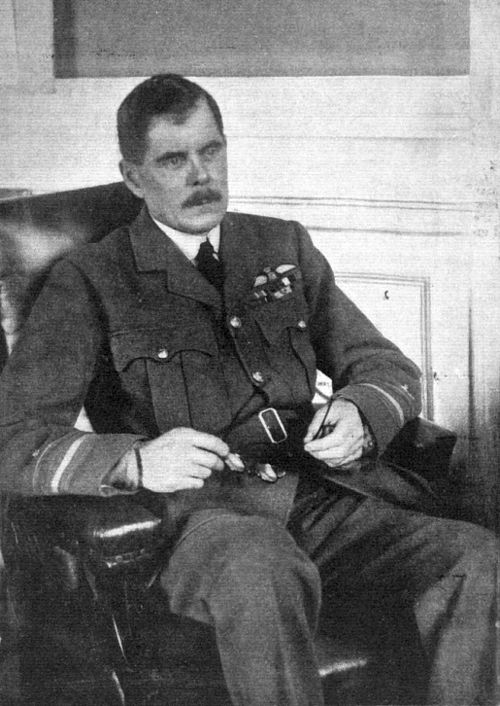
The Ahiara Punitive Expedition (1905–1906) stands as one of the most devastating episodes of British colonial military action in southeastern Nigeria, markedly within the Mbaise region of Igboland. Triggered by the mistaken killing of Dr. Rogers Stewart who was believed to be a colonial official despised by Igbo communities, the punitive campaign rapidly escalated into what many local histories describe as a scorched-earth offensive against villages, farms, and traditional leaders. This essay examines the historical backdrop of the incident, analyses the nature of the punitive campaign led by Major Hugh Montague Trenchard, and reflects on the profound destructive impact it wrought on Mbaise communities. The narrative of this clash not only illustrates the violence of colonial imposition but also reveals how misunderstandings and resistance intersected in the broader process of British expansion into interior Igboland.
The written record
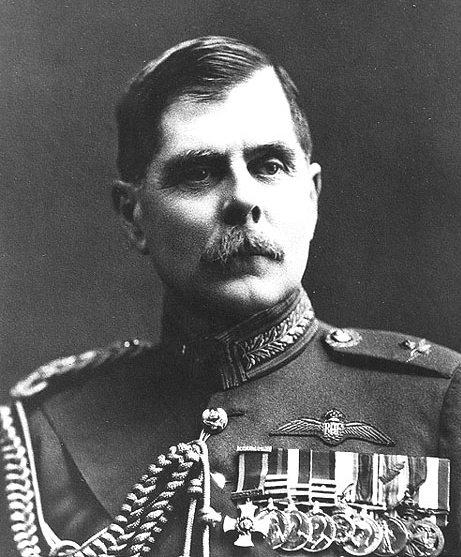
Photo credit is typically attributed to the National Air and Space Museum, Smithsonian Institution.
Historical context
Historical Context: British Expansion and Local Resistance
At the beginning of the 20th century, British colonial authorities were consolidating control over what would later become the Southern Nigeria Protectorate. Through military expeditions against powerful indigenous polities, such as the Aro Confederacy during the Aro Expedition of 1901–1902, British forces had extended their reach into inland Igbo territories. However, many communities remained resistant to direct colonial rule, preferring traditional forms of social organization based on kinship and communal authority. The Mbaise area, encompassing villages like Ahiara, Onicha, Nguru, and Ezinihitte, was one such region where British influence was still tenuous and contested by local populations.
Tensions were exacerbated when British authorities attempted to disrupt local economic and social systems. For example, in 1905, pressure to abolish road tolls, a main source of wealth for Ahiara leaders, fueled resentment against British District Commissioner H. M. Douglas and colonial administrators. This context of mounting hostility set the stage for the dramatic incident that would soon provoke a full-scale military response.
The Death of Dr. Rogers Stewart: Mistaken Identity and Cultural Misunderstanding
On 16 November 1905, Dr. Rogers Stewart, a British medical officer attached to the colonial forces, entered Igbo territory while riding his bicycle from Owerri toward Calabar. Having taken a wrong turn along a hostile route, he found himself near Ezinihitte and the northern Mbaise area, where he was seized by locals who believed he was the hated District Commissioner Douglas. Different sources recount the exact circumstances of Stewart’s death. Colonial records often framed the incident in sensational terms, suggesting he was killed amid beliefs that his death could nullify colonial dominance. Oral histories from Mbaise, however, emphasize that Stewart was mistaken for Douglas, and that his execution was motivated by collective resistance to oppressive colonial rule and resentment of Douglas’s policies.
While precise details remain contested, the essential fact is that Stewart was captured and killed, his bicycle reportedly tied to a tree to prevent news of his death from reaching British forces. Some narratives claim parts of his remains were distributed among nearby communities as symbolic acts of defiance, though British searches in later years failed to recover his remains in entirety. Regardless of the exact circumstances, his death provided the catalyst for a punitive expedition by colonial authorities.
The Punitive Expedition: British Military Strategy and Tactics
In response to Stewart’s death and ongoing resistance, the British administration authorized a retaliation that quickly escalated beyond mere retribution. Beginning 7 December 1905, British forces launched what became known as the Ahiara Punitive Expedition, also referred to in colonial sources as part of the Bende-Onitsha Hinterland Expedition. Although not always explicitly named “Ahiara Expedition” in European records, this campaign involved significant deployment of troops to enforce British authority in the region where Stewart’s death occurred.
Major Hugh Montague Trenchard, later celebrated as a founding figure of the Royal Air Force, played a central role in directing this campaign. Trenchard’s background in military expeditions across Nigeria had already established him as a commanding presence in colonial campaigns. With several columns of troops equipped with Maxim machine guns and artillery, the British employed a combination of direct combat, fortified camps, and forced submission of resistance leaders to break local opposition.
According to military despatches, British columns encountered trenches and stocks, indicating prepared local resistance, and were compelled to return with reinforcements to overcome fortifications. The use of superior firepower, including Maxim guns, meant pitched battles with Igbo warriors ended disastrously for defenders, who relied primarily on local weapons and fortifications.
The punitive expedition soon transformed into a scorched-earth campaign, characterized by widespread destruction of property, food sources, and village infrastructure. British forces razed villages, including the market at Afor Ukwu in Onicha where Stewart was killed, destroyed farms and food stores, and drove the indigenous population into flight. According to various accounts, homes were burnt, crops were confiscated or destroyed, and traditional leadership structures were dismantled.
In addition to material destruction, punitive measures included executions, imprisonment, and forced labour. Some locals were reportedly deported to regional centers such as Onitsha under harsh conditions, and puppet courts and warrant chiefs were installed to facilitate colonial control. Thousands of Igbo men were also pressed into labour to construct roads and other infrastructure under British supervision.
The sustained offensive lasted several months and was not fully concluded until April 1906, after a prolonged campaign that left entire communities devastated and resistance largely quashed. By this point, British forces had established firm control over Ahiara as well as the wider Mbaise region, integrating it into the colonial administrative system and ending longstanding autonomous resistance.
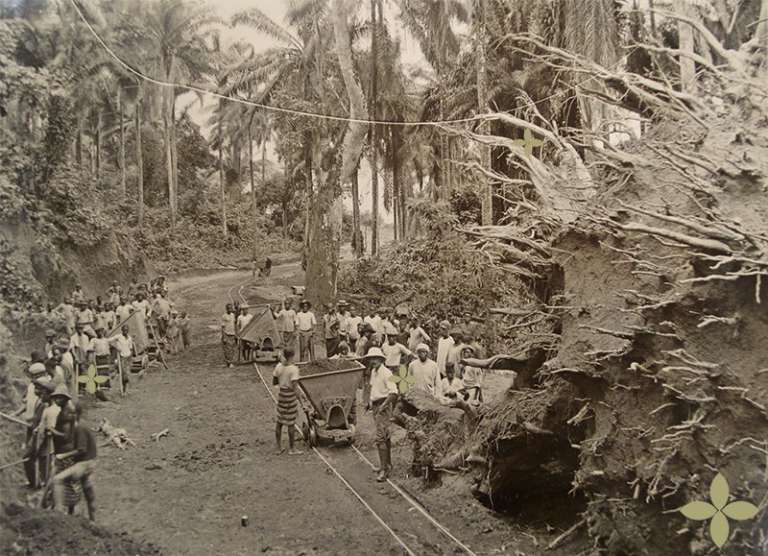
Photo credit; Ukpuru
Colonial Justifications, Local Memory, and Legacy
British administrators framed the punitive expedition as necessary retribution for Stewart’s killing and a measure to enforce order and protect colonial interests. From the colonial perspective, punitive expeditions were standard tools for securing submission among resistant populations. However, local memories and oral histories tell of deep trauma and resentment, emphasizing that the punitive campaign was both indiscriminate and disproportionate to the underlying event.
Moreover, historians such as Ekechi have argued that oppressive colonial policies such as forced labour, arbitrary courts, and heavy taxation were key factors in the hostility that ultimately led to Stewart’s death and the subsequent punitive campaign. Thus, the punitive expedition can be viewed not merely as a response to an isolated incident, but as part of a broader pattern of colonial coercion that aimed to dismantle indigenous autonomy and impose imperial rule.
The Ahiara Punitive Expedition (1905–1906) remains a powerful episode in Nigerian colonial history, a tragic moment when a single mistaken identity triggered a massive military response that devastated entire communities. Led by Major Hugh Montague Trenchard, British forces employed scorched-earth tactics that razed villages, destroyed food sources, and disrupted traditional social structures in the Mbaise region. While colonial narratives justified these actions as necessary to enforce control and avenge a colonial death, local memories emphasize the brutality of punitive imperialism and the long-lasting scars it inflicted on Igbo communities. Integrating both colonial records and oral histories, the Ahiara Expedition stands as a reminder of the complexities and human costs of colonial expansion in West Africa.
Sources and references
- Ekechi, F. K. (1974). Igbo response to British imperialism: The episode of Dr. Stewart and the Ahiara Expedition, 1905-1916. Journal of African Studies, 1(2), 145-157. (Abstract).
- Soluap. (2023, September 8). Ahiara expedition: How it happened.
- Ozi Ikòrò. (2025, June 22). The killing of Dr. Stewart and the brutal Ahiara Expedition of 1905.
- Noonans Mayfair. (2024). Lot 141: British punitive actions in early Nigeria (1905–1906).
- London Gazette. (1906). Military despatch on operations in Southern Nigeria Protectorate. (E xtract).
Cite this article
Discussion
Sign in to join the discussion
Comments are checked by an editor before they appear. Leave a source or a correction and it is read first.
Continue reading


No comments yet
Nothing has been approved on this record yet. Comments are checked by an editor before they appear, so one written now shows on this page after that check.