 Ozikoro
 Folklores · Published history
Sacred groves (Ihu Ala) – protection and modern threats

In the heart of almost every traditional Igbo community lies a verdant sanctuary known as the Ihu Ala or Ohia Nso (Sacred Grove). These are patches of primary forest preserved for centuries, serving as the “spiritual lungs” of the community and the physical dwelling place of the Earth Goddess, Ala. In Igbo cosmology, the land is not merely an economic asset but a sentient, sacred entity. The sacred grove represents the “unbroken covenant” between the living, the dead, and the unborn. It is a space where the biological diversity of the Niger Delta and the southeastern rainforests remains untouched by the machete or the plow. However, as Nigeria undergoes rapid urbanization and religious shifts, these ancient botanical cathedrals are facing unprecedented “existential risks.” This article explores the traditional mechanisms of protection that have preserved the Ihu Ala for generations and the modern threats that now jeopardize their survival.
The written record
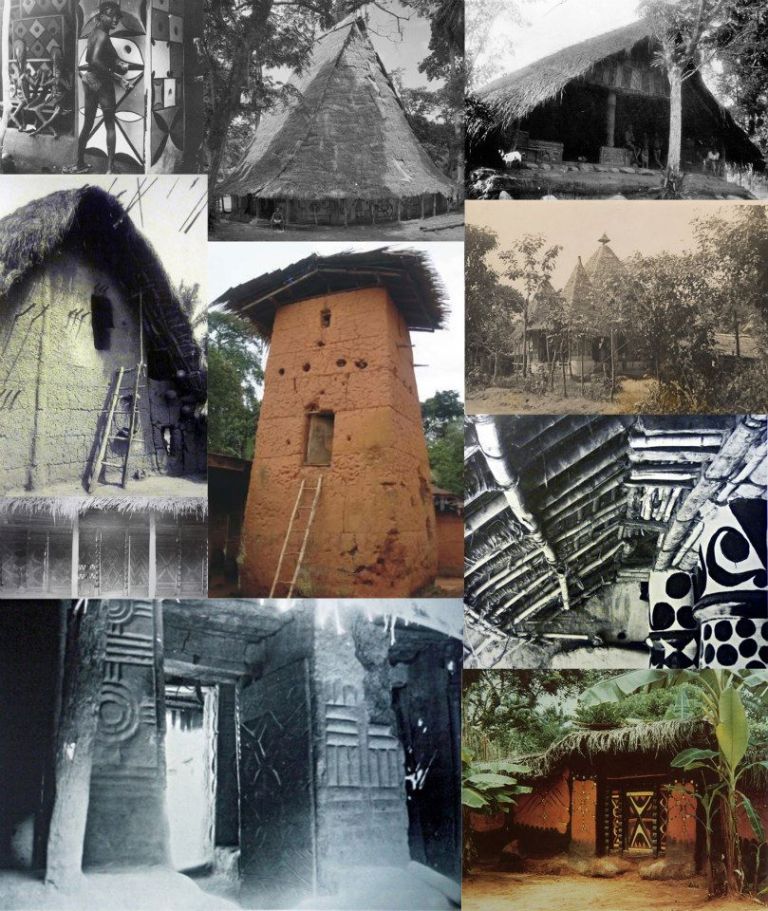
Photo Credit: G.I. Jones Archives / Museum of Archaeology and Anthropology, University of Cambridge.
Historical context
The Concept of Ihu Ala: The Earth’s Sacred Face
The term “Ihu Ala” literally translates to the “Face of the Earth.” It is the most vital sanctuary in the Igbo traditional religious system:
- Metaphysical Significance: The Ihu Ala is considered the portal through which the community communicates with Ala, the deity responsible for fertility, morality, and the harvest. It is the “moral compass” of the village; any abomination (nso ala) committed in the community must be cleansed through rituals performed at the mouth of the grove.
- Biological Reservoirs: These groves often contain the oldest trees in the region, massive Silk Cotton trees (Akpu) and Iroko trees (Oji) that have stood for centuries. They serve as “genetic archives” for rare medicinal plants and indigenous fauna that have been driven out of the surrounding farmed landscapes.
- The Oracle and the Ancestors: Many groves house the community’s central shrine or serve as the “burial ground for titled men” and heroes. This dual role as a cemetery and a sanctuary reinforces the belief that the “ancestors are the guardians of the forest.”
Traditional Protection: Taboos and Spiritual Surveillance
For centuries, the Ihu Ala remained intact without the need for wire fences or government rangers. Protection was enforced through a “complex system of social and spiritual sanctions:
- The Power of Taboo (Nso): It is strictly forbidden to cut down any tree, hunt any animal, or even pick up dry wood within the Ihu Ala. These taboos are not viewed as mere “rules” but as “divine laws.” Violating these laws is believed to bring about “instant spiritual retribution,” such as mysterious illnesses or the failure of crops.
- The Role of the Chief Priest (Atama/Onye-Isi-Ala): The grove is managed by a hereditary priest who serves as the “custodian of the forest.” He alone, often accompanied by titled elders, has the authority to enter the inner sanctum of the grove. His presence acts as a “human shield” against encroachment.
- Age-Grade Vigilance: The Otu Ogbo (Age Grades) often served as the “physical protectors” of the grove boundaries. They ensured that no neighboring community shifted the boundary markers and that no local farmer expanded their yam plot into the sacred territory.
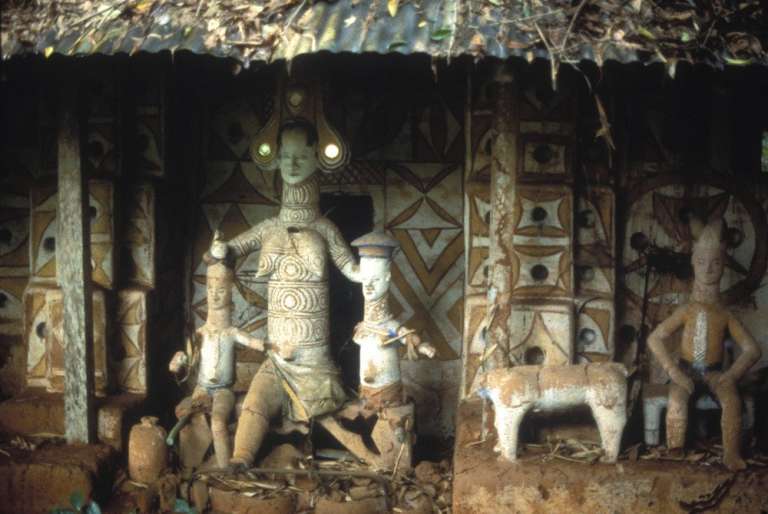
A traditional statue of the Earth Goddess Ala, the guardian of morality and the protector of the natural world in Igboland.
Photo Credit: National Commission for Museums and Monuments, Nigeria / Ethnographic Gallery.
Ecological Value: The Science of the Sacred
While the Igbo protected these groves for spiritual reasons, the “ecological benefits” were profound and scientifically significant:
- Watershed Protection: Many Ihu Ala are located near the “headwaters of streams” or surrounding village springs. By preserving the dense canopy, the Igbo protected their water sources from evaporation and siltation, ensuring a year-round supply of clean water.
- Micro-climate Regulation: The groves act as “natural air conditioners,” lowering the ambient temperature of the surrounding village. In an era before modern cooling, the cool breeze coming off the Ihu Ala was a cherished communal resource.
- Pollination and Biodiversity: The groves provide a safe haven for bees, birds, and bats, which are essential for the “pollination of crops” in the surrounding farmlands. In this sense, the spiritual protection of the forest was a “practical investment” in food security.
Modern Threats: The Siege of Development and Faith
The 21st century has brought a “multifaceted assault” on the sanctity of the Ihu Ala, driven by demographic and ideological shifts;
- Religious Transformation: The rise of certain “Pentecostal movements” has been particularly damaging to sacred groves. Some zealots view the Ihu Ala not as an ecological treasure but as a “stronghold of idolatry.” This has led to the “deliberate clearing” of groves and the burning of ancient trees in the name of “spiritual deliverance.”
- Urbanization and Land Hunger: As village populations explode, the pressure to “convert forest to residential land” has become immense. Developers often view the Ihu Ala as “wasted space” and exert pressure on traditional councils to sell off the land for housing estates or commercial centers.
- The Erosion of Traditional Authority: As the influence of the Onye-Isi-Ala and traditional priests wanes among the Western-educated youth, the “fear of spiritual sanctions” has diminished. Without the “deterrent of the taboo,” the groves become vulnerable to illegal logging and poaching.
Conservation Strategies: Bridging Tradition and Science
To save the remaining Ihu Ala, there is a growing movement to “re-brand” these spaces as community-managed nature reserves;
- Integration with Global Conservation: Organizations like UNESCO have recognized the value of sacred groves (such as the Osun-Osogbo Sacred Grove, a parallel in Yorubaland). Applying “World Heritage” status to significant Igbo groves could provide the legal and financial backing needed for their protection.
- Educational Outreach: There is a need to teach the “youth and religious leaders” that protecting a sacred grove is an act of “environmental stewardship” that is compatible with modern values. Highlighting the “medicinal and climatic” importance of the forest can build a broader coalition for its defense.
- Legal Protections: The Nigerian government and State Houses of Assembly must pass “specific legislation” that recognizes the Ihu Ala as protected heritage sites, making it a criminal offense to encroach upon them, regardless of religious or commercial motives.
The Sacred groves (Ihu Ala) are the “living bibles” of Igbo history and ecology. They represent a time when humanity lived in “conscious balance” with the natural world, recognizing that the Earth is not a commodity but a mother. The protection of these groves is not just about preserving old trees; it is about preserving the “spiritual and biological integrity” of the Igbo nation. If the modern threats of religious intolerance and unregulated development are allowed to erase the Ihu Ala, the community loses its “historical anchor” and its most resilient defense against environmental degradation. The “Face of the Earth” must be protected, for once these ancient forests are gone, the “wisdom they hold” and the water they protect cannot be easily restored. The preservation of the Ihu Ala is, ultimately, the preservation of the “future of the land.”
Sources and references
- Aniakor, C. C. (1984). Igbo Arts: Community and Cosmos. Los Angeles: Museum of Cultural History, University of California. (Providing context on the spatial and spiritual role of the grove).
- Iwu, M. M. (1993). Handbook of African Medicinal Plants. CRC Press. (Discussing the pharmaceutical importance of forest reservoirs).
- Metuh, E. I. (1985). African Religions in Western Conceptual Schemes: The Problem of Interpretation. Pastoral Institute.
- Onyekwere, O. (2018). Sacred Groves and Biodiversity Conservation in Southeastern Nigeria. Journal of African Ecology.
- Umeh, J. A. (1999). After God is Dibia: Igbo Cosmology, Divination & Sacred Science. Karnak House.
Cite this article
Discussion
Sign in to join the discussion
Comments are checked by an editor before they appear. Leave a source or a correction and it is read first.
Continue reading


No comments yet
Nothing has been approved on this folktale yet. Comments are checked by an editor before they appear, so one written now shows on this page after that check.