 Ozikoro
 Discography · Published history
The Trans-Atlantic Legacy: The Biafran Influence on Jamaican Jonkonnu Music and Cuban Carabali Rhythms
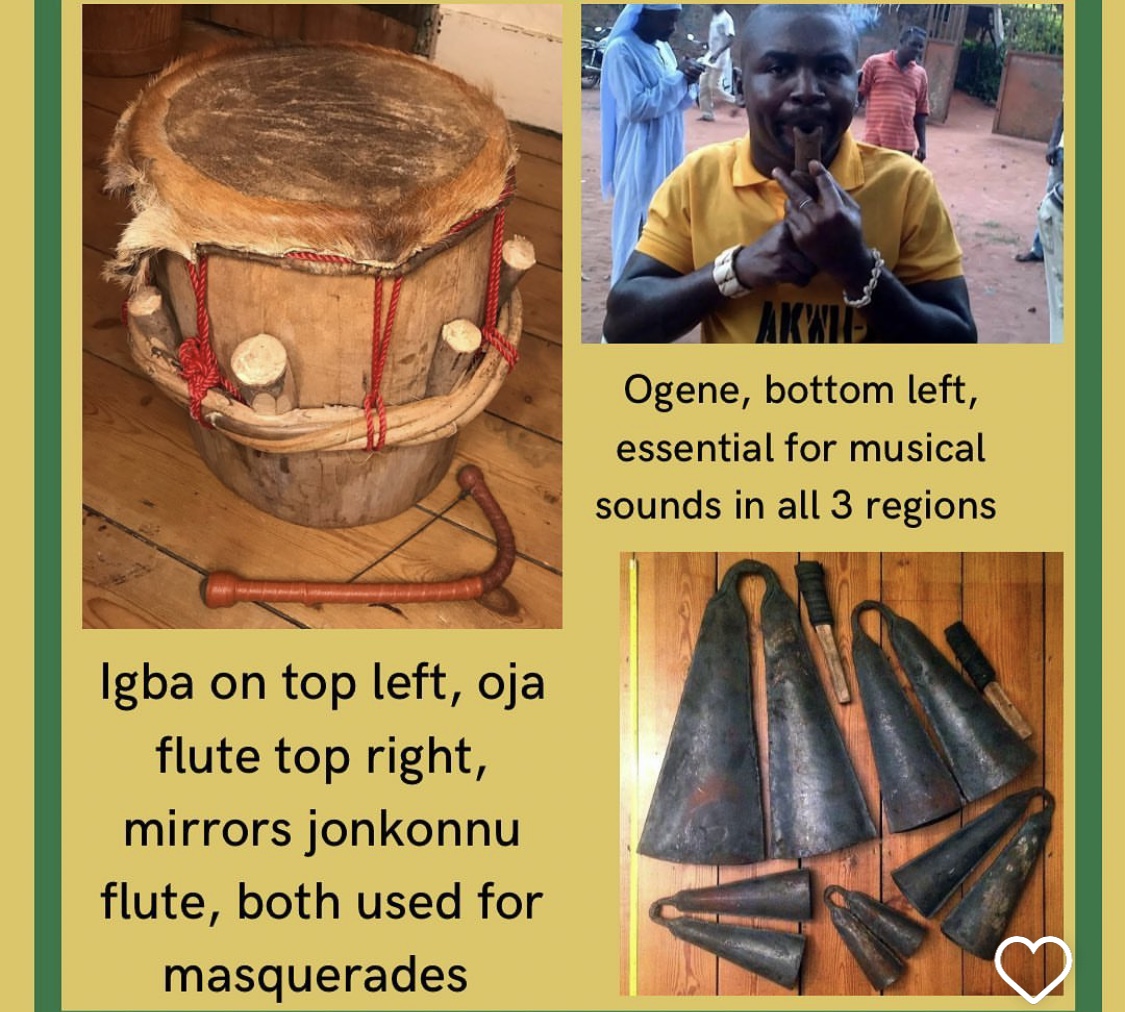
The music of Jamaica’s Jonkonnu and Cuba’s Carabali reveals a rich legacy influenced by the Biafran Africans forcibly relocated to the Caribbean during the transatlantic slave trade from 1700s to 1830s. Instruments, rhythmic patterns, and cultural practices reflect an indelible connection among Biafra (present-day Nigeria), Jamaica, and Cuba. This article delves into the historical migration of musical traditions, particularly Igbo influences, highlighting the shared cultural threads and the adaptation of musical elements such as drums, flutes, and rattles in the Caribbean
The written record
Historical context
Abstract
.
Introduction
The Jonkonnu festival in Jamaica and the Carabali music in Cuba represent cultural phenomena rooted in African traditions. The transatlantic slave trade facilitated the forced migration of Biafran Africans—primarily the Efik, Igbo, Ibibio, Ijaw and Ekoi peoples from Bonny and Calabar in present-day Nigeria to the Americas. This cultural displacement left a lasting impression on music, dance, and festival traditions, reflected in the instruments and rhythmic styles of these regions.
Biafran Africans and Their Cultural Influence
The cultural contributions of the Biafran peoples, particularly the Igbo, to the Caribbean are evident in Jonkonnu festivals and Carabali music. Both traditions exhibit a unique use of instruments, rhythmic styles, and performance rituals that resonate with African origins.
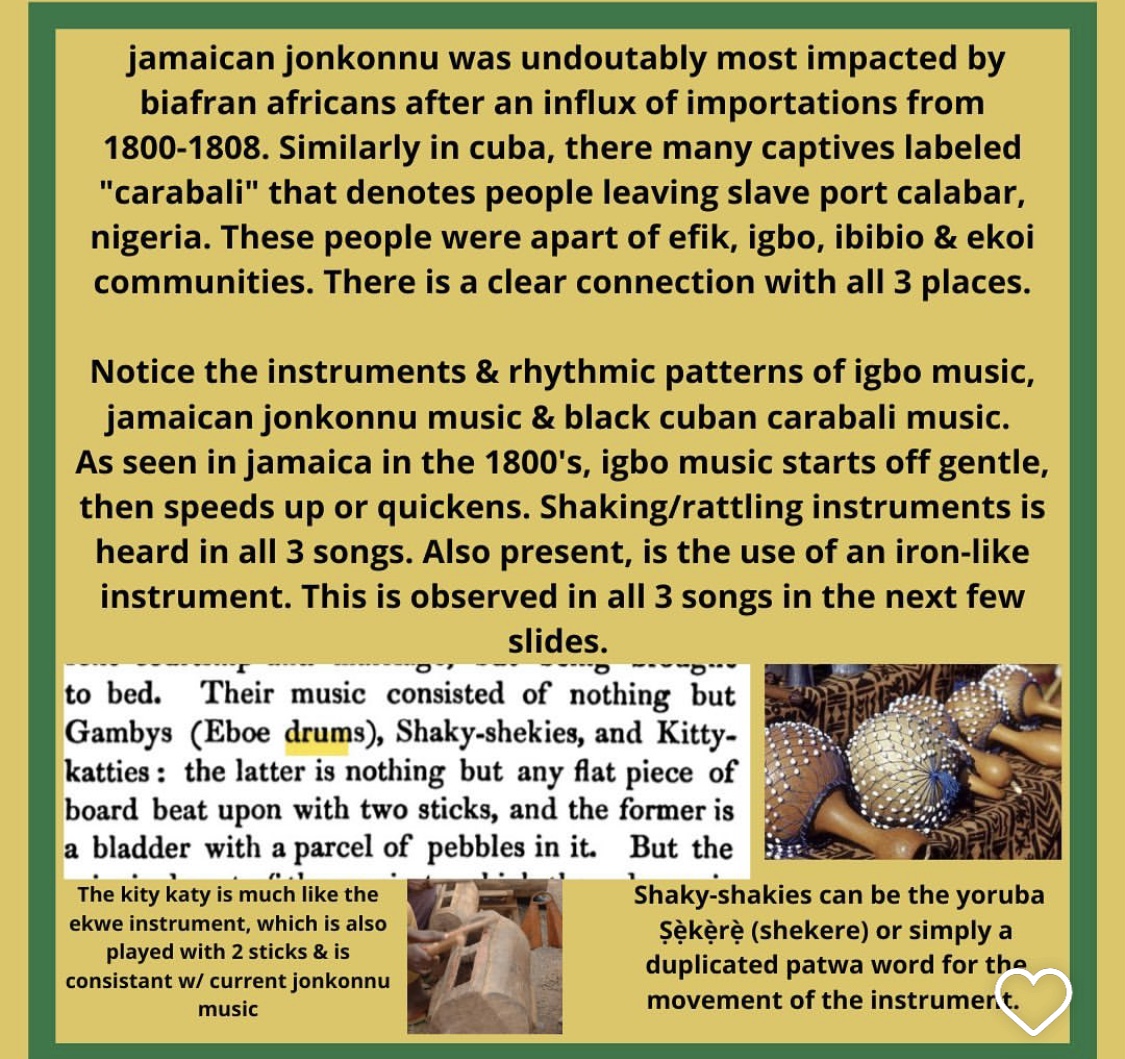
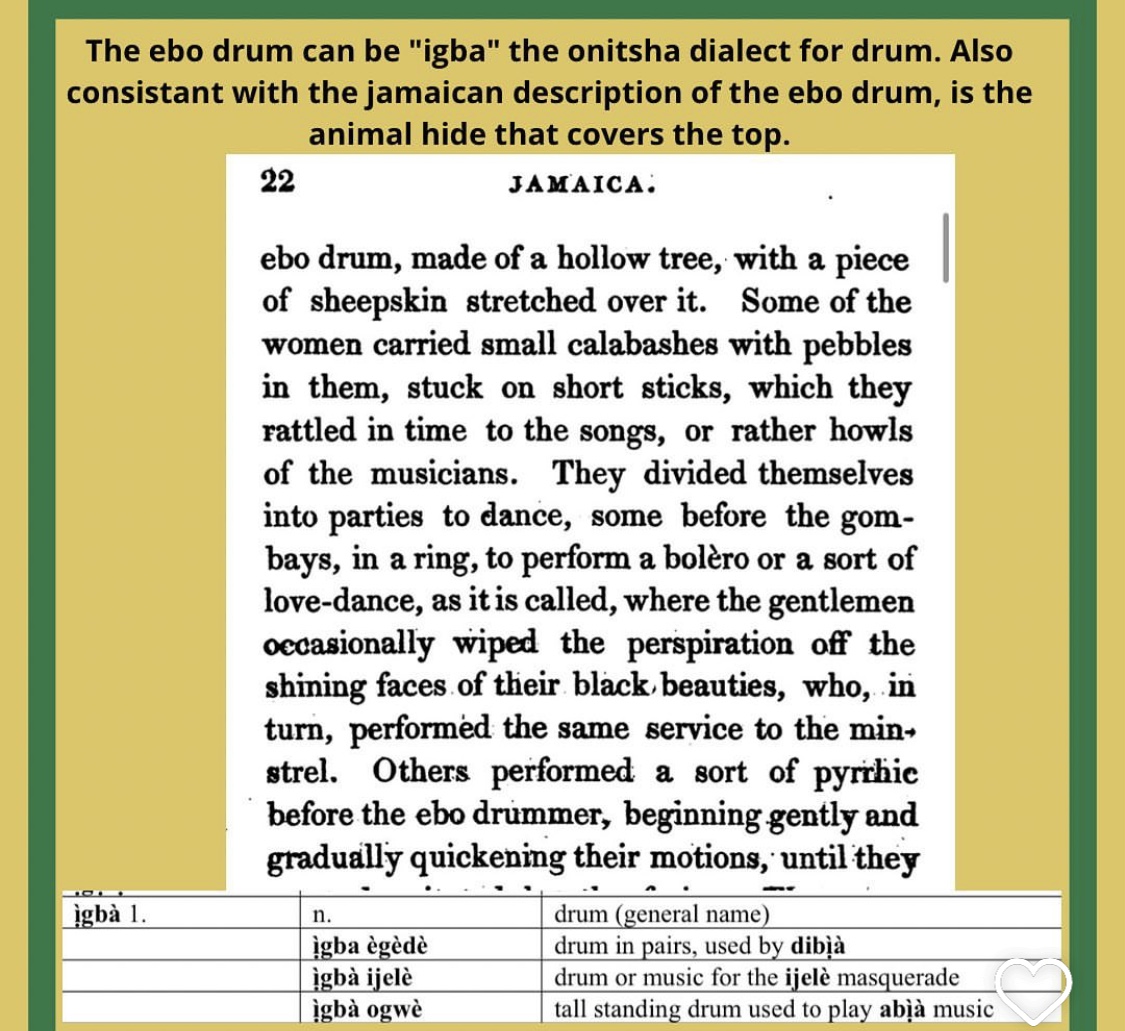
The instruments central to these traditions, such as the ebo drum (likely derived from the Igbo word “igba,” meaning drum), the shaky-shakies (linked to Yoruba “sekere”), and the iron clappers like the ogene bell, mirror those used in Igbo and other Biafran music. The ebo drum is crafted from hollow wood, topped with animal hide, and played in tandem with rattles and flutes to create complex, evolving rhythms.
Rhythmic Parallels Across Cultures
Jonkonnu music in Jamaica begins with gentle rhythms that gradually quicken, a practice similarly observed in traditional Igbo music. The use of rattles (e.g., shaky-shakies) and iron-like clappers is integral to both traditions, creating a syncopated interplay of sounds. The ogene bell, prominent in Igbo culture, is also essential to the Jonkonnu musical ensemble and Cuban Carabali performances.
The inclusion of the oja flute, used in Igbo masquerades, finds a parallel in Jonkonnu flutes, suggesting a shared performative heritage. The combination of percussion, wind instruments, and dynamic rhythms underscores a transatlantic cultural synthesis.
Cultural Continuity and Transformation
While the transatlantic slave trade disrupted communities, it also facilitated the survival and transformation of cultural practices. The rhythmic complexity, ceremonial aspects, and community engagement of Jonkonnu and Carabali music underscore their African roots. For instance, Jonkonnu performances incorporate both music and dance, reflecting the collective spirit of Biafran cultural expressions.
In Cuba, Carabali music similarly showcases a communal ethos, with performances structured around call-and-response patterns reminiscent of African traditions. The adaptation of these practices to new environments illustrates cultural resilience and the ability to maintain identity in the face of adversity.
Conclusion
The Biafran influence on Caribbean music highlights the enduring legacy of African cultures in the Americas. From the Igbo drums and oja flutes to the use of iron bells and rattles, Jonkonnu and Carabali music are powerful testaments to the transatlantic journey of enslaved peoples. This cultural legacy continues to inspire and connect communities across the Atlantic, celebrating a shared heritage rooted in resilience and creativity.
Sources and references
- Bastide, R. (1971). African Civilisations in the New World. Harper & Row.
- Bilby, K. M. (2010). “Jonkonnu in Jamaica: The Performative Legacy of an African Diaspora Masquerade Tradition.” African Arts, 43(2), 34–47.
- Thompson, R. F. (1983). Flash of the Spirit: African and Afro-American Art and Philosophy. Random House.
- Wynter, S. (1970). “Jonkonnu and the Dancehall.” Caribbean Quarterly, 16(3), 1-11.
Cite this article
Discussion
Sign in to join the discussion
Comments are checked by an editor before they appear. Leave a source or a correction and it is read first.
Continue reading
No comments yet
Nothing has been approved on this record yet. Comments are checked by an editor before they appear, so one written now shows on this page after that check.