 Ozikoro
 Cultural Heritage · Published history
Achina: A Hilltop Igbo Town Rooted in Tradition, Royalty, and the Sacred Rhythm of Nkwa Music
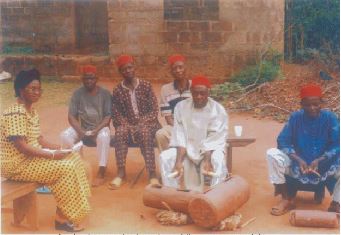
Achina, which people call Achina Idegwu egbe buru oku asoghi anwuru (meaning it is only a brave bird that would carry a burning thing without fear), is one of the towns in Aguata Local Government Area, Anambra State. The town is on top of a hill in South Aguata, and if someone wants to use a compass to say it, it is around 6 degrees north of the Equator.
The written record

Achina is a town of about 20,000 inhabitants in the heartland of Igbo country in southeastern Nigeria. It is bordered in the north by Onneh and Agbudu, to the south by Umuchu, Akokwa, and Uga, to the east by Enugu-Umuonyia, and the west by Amesi and Akpo.
In Achina, title is very important. You can hear names like Igwe, Okpala, Obi, Ichie, Eze, Nze, etc. These titles are at the front of people’s names, like Okpaluba, Obika, Ezeonuegbu, and many others. Ozo title is the main one.
Historical context
An account recorded that the core of the people who first settled in Achina migrated from the Okigwe escarpment, like their neighbours. Migrants from other parts of the Igbo area later joined them to make up Achina. Some Achina people moved to establish other communities, like Urualla in Imo State.
Legend and oral tradition have it that the founders of the three neighbouring towns of Amesi, Akpo, and Achina were siblings whose homesteads enlarged to become separate communities. However, the closeness of the three communities is reflected in the similarities in dialect and customs. A common culture extends beyond the three communities, covering the entire Aguata, Orumba, Ideato, and Arondizuogu axis.
A man must have a title before they can become a king in Achina. Kingship does not only follow the bloodline; it rotates among all the villages in Achina. People previously saw their king as an oga in charge of justice and everything. Because they respected the king, lots of royal music came out, and the biggest of them all was Nkwa music.
The Nkwa music is a small gathering of two performers. The performer of the father and mother drums (oke
na nwunye) is the master instrumentalist. The father introduces the music and dictates its rhythm. In other words, he is in charge of the music. The child drum (nwa nkwa) complements the basic
rhythms the mother and father supplied, enriching the music’s texture. The number of instruments does
not affect the rhythmic twist, which is the main characteristic of African rhythms. There is normally a crucial
dialogue in rhythm between the father and mother drums. They send out messages that only the members
can interpret. There is no formal dance pattern for nkwa; it is a type of individualistic freestyle move. The music is instrumental all through. It has no vocal section. The Nkwa music troupe has no special
costumes for the drummers or the dancers. However, the red cap is always noticeable
How the Nkwa Music started.
Nkwa music is not borrowed. It runs in the family line from father to children. Nze Okwuegbunem Udogu, the person in charge of Nkwa, said it has been from his great-grandpapa to his own time. He is also training his child to take over so that the music will not die.
As he was training him, he would carry the boy to events so that the boy could observe how he was playing, and very soon, the boy would join in, too.
What Nkwa Music Means for the Achina People.
Nkwa music is a special royal music in Achina.
1. Nkwa is only for big chieftaincy matters.
2. Nkwa must play before any other music in any king’s event.
3. They would play Nkwa in Ozo title giving, king coronation, Ofala festival, and when the king walks (we do not say it out when the king dies in Igbo culture; we would say he went to rest or did his last Ofala).
4. Nkwa music is so holy. Only people they could initiate could dance it.
Anybody who does not respect these rules is looking for problems. When it involves the king, it is at the highest level of music in Achina.
Sources and references
- NKWA MUSIC OF ACHINA TRADITIONAL SOCIETY IN IGBO CULTURE
- IBEKWE, EUNICE U. Ph.D
Cite this article
Discussion
Sign in to join the discussion
Comments are checked by an editor before they appear. Leave a source or a correction and it is read first.
Continue reading
Related histories
 Cultural HeritageEleven Days of Nwafor Ogidi: Inside the Festival Keeping an Old Igbo Tradition AliveRead history →
 Cultural HeritageIli Ji Nkpor Obododike: The Indigenous Agricultural Ritual CycleRead history →
 Cultural HeritageMusic and Drum Traditions: Tracing the “Igbo Drum” in the AmericasRead history →
No comments yet
Nothing has been approved on this record yet. Comments are checked by an editor before they appear, so one written now shows on this page after that check.