 Ozikoro
 Cultural Heritage · Published history
Ili Ji Nkpor Obododike: The Indigenous Agricultural Ritual Cycle
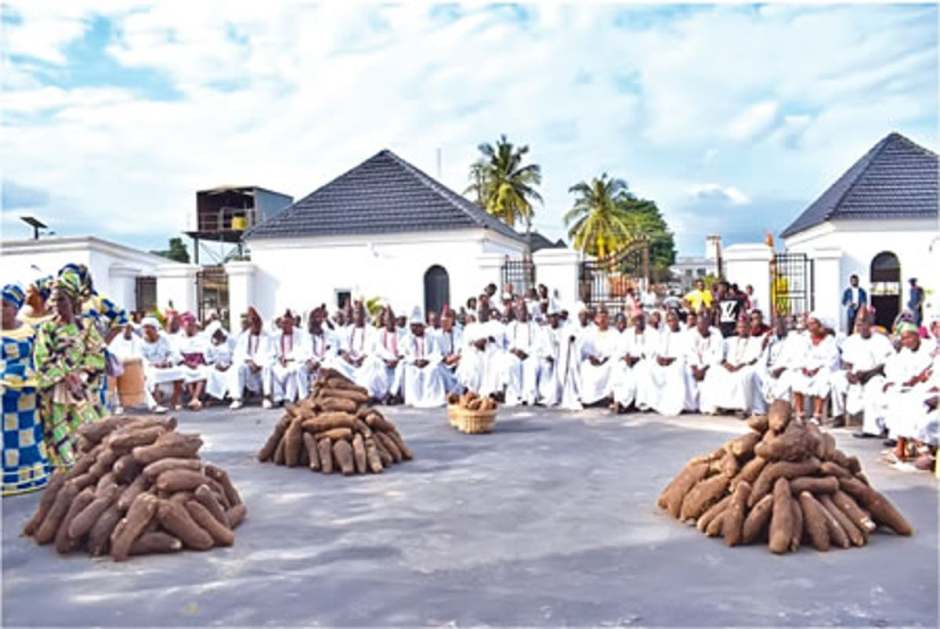
Within the broad Igbo cosmological worldview, “New Yam Festival” is, strictly speaking, an inadequate description of the complex indigenous ritual systems through which different Igbo communities mark the conclusion of the annual agricultural cycle. What is commonly presented today as one homogeneous festival is better understood as a plurality of community-specific ritual observances, each governed by its own sacred institutions, ritual authorities, pantheons and omenana.
The written record
Across Igbo geographical and cultural boundaries, neither the beginning nor the end of the agricultural year is necessarily marked by one uniform ceremony. In some communities, the cycle begins through Ifejioku or Ahịa Njoku, while elsewhere distinct indigenous institutions perform that function according to the antiquity and omenana of each people.
For Nkpor Obododike, an ancient Idemmili community in present-day Anambra State, the agricultural cycle has its own clearly defined ritual order. It begins with Alọm Ana and reaches its ritual culmination through Emem Udo na Ajana (Àjà Ana).
Historical context
Udo, Ajana and the Sacred Foundations of the Agricultural Year
At the centre of this ritual order are Udo and Ajana.
Udo is an ancient pantheon revered within the Umusiome quarters of Nkpor Obododike and traditionally associated with kingship and the sacred authority of the land. Ajana, representing the primordial earth, constitutes the terrestrial foundation upon which the community exists, farms, reproduces and maintains its covenant with the land.
The Opening of Ili Ji
Ili Ji Nkpor begins with Ikpo Onunu, performed by the Eze Nkpor at the Udo and Ajana shrines.
Ili Ji is therefore not simply the public consumption of the first yam. It is a ritual commemoration of the completion of the agricultural cycle and an affirmation of the community’s continuing relationship with the spiritual institutions upon which its existence is traditionally understood to rest.
The formal inauguration is undertaken by the Eze Nkpor at the Royal Palace, constituting the fatherly and institutional opening of Ili Ji for the entire community. From the palace, the ritual order extends into Nkpor’s constituent quarters, each of which proceeds according to its own sacred institutions and established omenana.
The principal indigenous pantheons associated with the quarters are:
- Udo and Ajana — Umusiome
- Ngwu — Isingwu
- Arọ — Ububa
- Ogwugwu — Amafor
- Dimudeke — Mgbachu
These are not merely a catalogue of deities. They form part of the sacred architecture through which the quarters preserve their historical identities, ancestral obligations and relationships with the land.
The presentation of the first yam to these indigenous pantheons is therefore an act of ritual acknowledgement. The first produce of the earth is not initially regarded as belonging solely to the individual farmer; it is first acknowledged within the sacred order before the community proceeds to its social enjoyment.
Ili Ji is consequently agricultural, spiritual, ancestral, communal and political at once, bringing together the land, farmer, family, quarter, indigenous pantheons and traditional institution of kingship within one ritual continuum.
Ịsacha Ikwe Ụgani and Ezumezu
The ritual code governing the first-yam offering does not end with the observances of the individual quarters. Its culmination is marked by Ịsacha Ikwe Ụgani, reserved for the Ezumezu Shrine at Eke Nkpor Square.
Ezumezu occupies a distinctive position within Nkpor’s sacred geography. It is the collective sacred space where the indigenous deities associated with the different quarters have their respective places and are revered within a common ritual framework.
The movement from the individual quarter pantheons towards Ezumezu therefore represents a movement from the particular to the collective, from the sacred identity of each quarter towards the ritual unity of Nkpor Obododike as a whole.
This ordering reflects an important principle of Nkpor’s indigenous conception of community: the quarters retain their distinctive histories and sacred institutions while remaining constituent parts of a larger communal body. The ritual progression of Ili Ji embodies this relationship between quarter, community, kingship, earth and ancestral order.
The 2026 Ili Ji Cycle
In the 2026 agricultural cycle, the Royal Regent and Head of the Council of Chiefs, High Chief Ifejirika Udeze (Onowu Nkpor), representing Eze Nkpor, performed the prescribed Ikpo Onunu ritual observances at the Udo and Ajana shrines, respectively, four market days before the formal Ịgba Ofala at the Onowu’s Palace.
On 11 September 2026, the official Ofala celebration of the Nkpor Royal Palace subsequently took place under the leadership of the Onowu Nkpor, in collaboration with the Otu Omenana Nkpor, headed by Chief Gilbert Okeke (Ichie Kwupulani Nkpor).
The Ofala thereby fulfilled its traditional institutional purpose as the formal royal declaration opening the Ili Ji Nkpor Obododike observance to the sons and daughters of Nkpor, both at home and in the diaspora.
This declaration carries significance beyond the ceremonial occasion. It affirms the continuity of Nkpor’s indigenous institutions and the authority of its traditional custodians to determine the ritual commencement of the community’s agricultural celebration.
Cite this article
Discussion
Sign in to join the discussion
Comments are checked by an editor before they appear. Leave a source or a correction and it is read first.
Continue reading
Related histories
 Cultural HeritageEleven Days of Nwafor Ogidi: Inside the Festival Keeping an Old Igbo Tradition AliveRead history →
 Cultural HeritageMusic and Drum Traditions: Tracing the “Igbo Drum” in the AmericasRead history →
 Cultural HeritageOgbunike: A Historical and Cultural Town in Anambra StateRead history →
No comments yet
Nothing has been approved on this record yet. Comments are checked by an editor before they appear, so one written now shows on this page after that check.