 Ozikoro
 Cultural Heritage · Published history
Afa Divination — The Window Into The Metaphysical Used by Dibia’s in Igboland
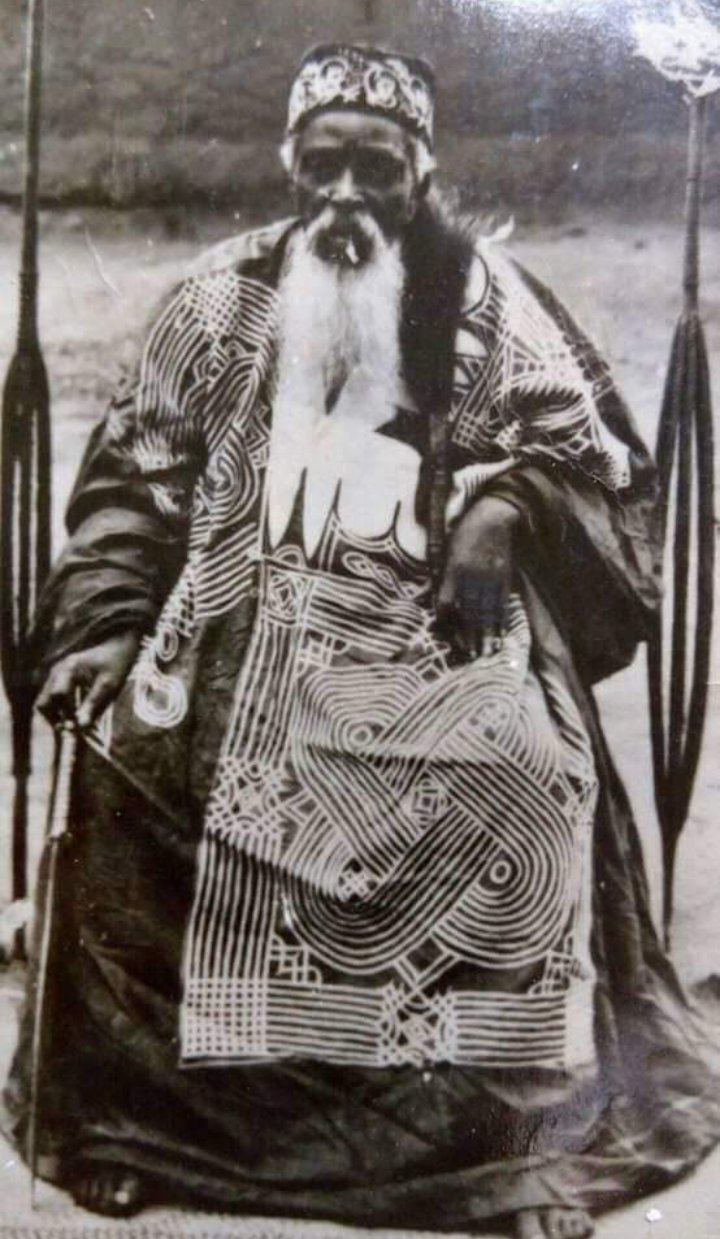
Afa divination is one of the most important intellectual and spiritual systems within the cultural traditions of the Igbo people of southeastern Nigeria. Practiced by dibia (diviners, healers, and ritual specialists), Afa serves as a sacred means of communication with ancestral spirits, deities, and unseen forces that shape human destiny. Although it shares structural similarities with the Yoruba Ifa divination system, Afa is uniquely Igbo in its symbolism, tools, interpretive corpus, and cosmological worldview. For generations, Afa has guided communities through personal dilemmas, health concerns, moral decisions, conflict resolution, and the identification of spiritual causes behind life events. This essay explores the origins, tools, procedures, and social significance of Afa divination, drawing from scholarly studies and ethnographic research.
The written record
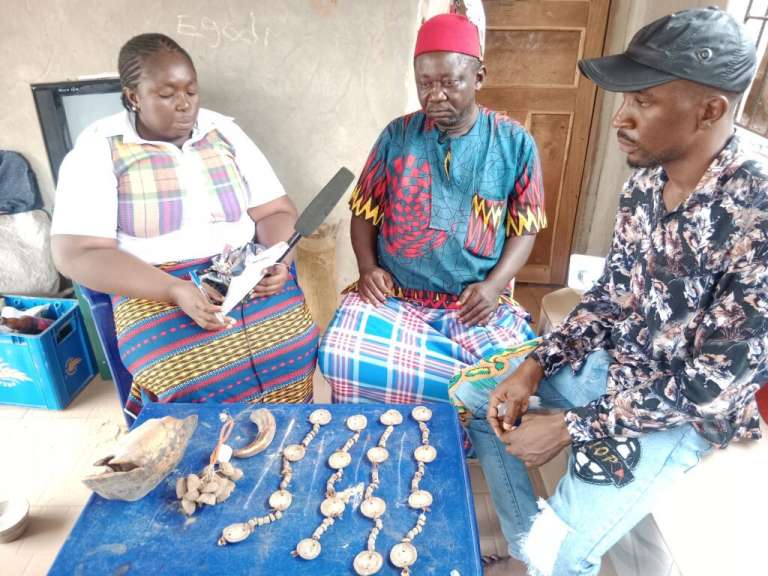
Photo credit; Ozi ikoro.
Historical context
Origins and Cosmological Foundation of Afa
The Afa system is rooted in Igbo cosmology, which views the universe as an interconnected realm inhabited by humans, ancestors, deities (alusi), and various spiritual forces. According to Igbo belief, every individual possesses a personal destiny (akaraka), and disruptions in one’s life, misfortune, illness, conflict, or stagnation may reflect imbalance in the spiritual order. Afa functions as the tool through which these hidden dimensions are brought to light.
Scholars such as Onwuejeogwu emphasize that, historically, the Igbo regarded Afa not merely as fortune-telling but as a sophisticated divinatory science. The diviner (dibia afa) is trained to interpret a large body of verses, symbols, proverbs, and mythic narratives collectively known as the Afa corpus. These narratives explain human experiences, moral expectations, and the workings of unseen forces that influence daily life.
Tools of Afa Divination
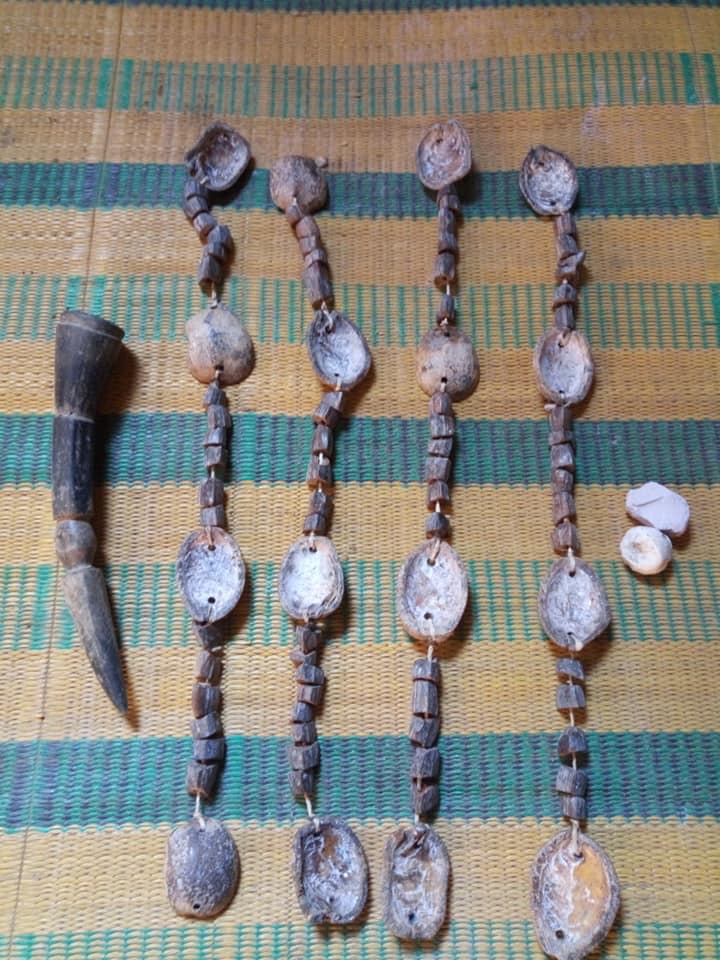
Afa uses a combination of sacred instruments that help the dibia obtain messages from the spiritual realm. The most common tools include the ọkpụkpụ afa (Afa chain) and akụ́, which refers to sacred divination seeds, nuts, or small objects cast during consultation.
1. The Afa Chain (Okwu Afa)
The Afa chain operates similarly to the Yoruba opele, consisting of a series of objects often seeds, cowries, or carved pieces linked together. When thrown onto the ground or mat, the chain creates patterns that correspond to specific symbols within the Afa corpus. These patterns are interpreted by the diviner with reference to memorized verses.
2. Afa Seeds or Nuts (Akụ́)
In many Igbo communities, diviners use sixteen sacred seeds, pieces of kola nut, or cowries that are cast to generate binary patterns. These patterns form the basis of Afa signs (ogwugwu or odu afa), each linked to a set of stories and prescriptions. As noted by Emeagwali, the consistency of these patterns allows divination results to be repeated and verified, contributing to the intellectual credibility of the system.
3. Other Ritual Instruments
Additional tools may include chalk (nzu), bells, staff, and symbolic items representing ancestors or deities. These objects help create a ritual atmosphere, maintain spiritual purity, and affirm the diviner’s authority.
The Divination Process
An Afa session typically begins with ritual purification and invocation of spiritual forces. The dibia calls upon ancestral spirits and divinities believed to guide the divinatory process. The client states their purpose whether illness, misfortune, uncertainty, or a need for guidance.
- Casting and Interpretation
The diviner casts the Afa chain or seeds. The resulting configuration corresponds to an Afa sign that points to specific stories, teachings, or warnings within the Afa corpus. Each sign may reveal:
- The origin of the problem
- The spiritual force involved
- The required sacrifices or offerings
- The moral or behavioral corrections needed
- Possible future outcomes
The diviner’s role is not only to identify the sign but also to interpret its meaning within the context of the client’s life. According to Ubah, Afa interpretation is a highly intellectual activity that draws on memory, metaphoric language, and deep knowledge of Igbo cosmology.
2. Prescriptions and Sacrifice
After providing interpretation, the dibia prescribes solutions, which may involve:
- Sacrifice (iga afa or icho mmuo)
- Cleansing rituals
- Healing with herbs
- Settling disputes
- Behavioral changes
- Honoring neglected ancestors.
These actions are believed to restore harmony between the individual and the spiritual world.
Afa as a Guide in Decision-Making and Social Order
Afa is not limited to personal issues; historically, it played a major role in Igbo community governance. Town unions, age grades, and families consulted dibia afa on matters such as:
- Land disputes
- Marriage decisions
- Agricultural planning
- Healing epidemics
- Identifying criminals or witches
- Ensuring spiritual balance during festivals.
Chukwukere notes that Afa served as a traditional conflict-resolution mechanism, enabling communities to maintain order before the arrival of Western legal systems. In this way, Afa was both a spiritual and socio-political institution.
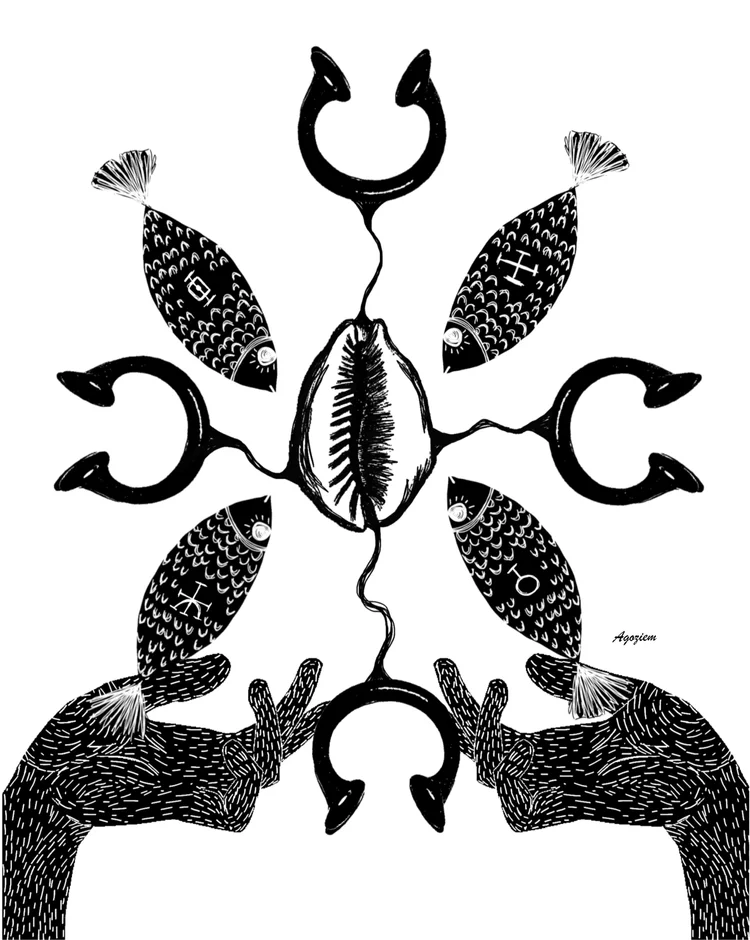
The composition features stylized fish representing rivers, abundance, and clarity. A central cowrie shell symbolizes trade, prosperity, and spiritual connection.
Photo credit; Chiagoziem Nneamaka Orji
Connection to Ancestors and the Spiritual Realm
A central belief in Afa is that the ancestors (ndichie) continue to influence the living. Through divination, the dead communicate warnings, requests, or blessings. When ancestors are neglected or displeased, Afa may reveal the need for rituals such as libations, thanksgiving, or renewal of family obligations.
Similarly, Afa communicates messages from the alusi, deities believed to protect or discipline humans. Thus, Afa functions as a bridge connecting all realms of existence human, ancestral, and divine.
Contemporary Relevance
Despite Christianity and modernization, Afa divination remains widely practiced, especially in rural communities. Many Igbo people consult dibia afa discreetly even while identifying with modern religions. Additionally, scholars and cultural revivalists are working to document and preserve the Afa corpus as part of indigenous knowledge systems.
Afa continues to be valued for its ability to provide moral instruction, psychological comfort, guidance, and a sense of connection to ancestry. It persists as a sophisticated indigenous epistemology, one that blends spirituality, philosophy, and practical wisdom.
Afa divination is a central aspect of Igbo traditional thought, reflecting a worldview where spiritual forces and human life are interconnected. Through its tools, rituals, and interpretive corpus, Afa provides explanations, guidance, and solutions to life’s challenges. More than a spiritual practice, it is a cultural intellectual system that preserves Igbo history, ethics, and cosmology. As scholars continue to study and document it, Afa stands today as a testament to the richness of indigenous African philosophies and divination sciences.
Sources and references
- Chukwukere, I. (1982). Tribulations of a Dibia: Divination, Affliction, and Healing in Southeastern Nigeria. Anthropos, 77(1/2), 143–159.
- Emeagwali, G. (2014). Indigenous African technologies: Afa divination as an intellectual tradition. Journal of Black Studies, 45(6), 587–604.
- Onwuejeogwu, M. A. (1981). An Igbo civilization: Nri kingdom and hegemony. Ethnographica.
- Ubah, C. N. (1998). Religion and society: The Afa divination system and its social relevance. Dialectical Anthropology, 23(4), 309–329.
- Waddell, C. (2017). Divi nation across cultures: A comparative study of Ifa and Afa traditions. African Studies Review, 60(3), 79–101.
Cite this article
Discussion
Sign in to join the discussion
Comments are checked by an editor before they appear. Leave a source or a correction and it is read first.
Continue reading
Related histories
 Cultural HeritageEleven Days of Nwafor Ogidi: Inside the Festival Keeping an Old Igbo Tradition AliveRead history →
 Cultural HeritageIli Ji Nkpor Obododike: The Indigenous Agricultural Ritual CycleRead history →
 Cultural HeritageMusic and Drum Traditions: Tracing the “Igbo Drum” in the AmericasRead history →
No comments yet
Nothing has been approved on this record yet. Comments are checked by an editor before they appear, so one written now shows on this page after that check.