 Ozikoro
Biography · Published history
Akanu Ibiam: The Igbo Doctor Who Stood Against Empire
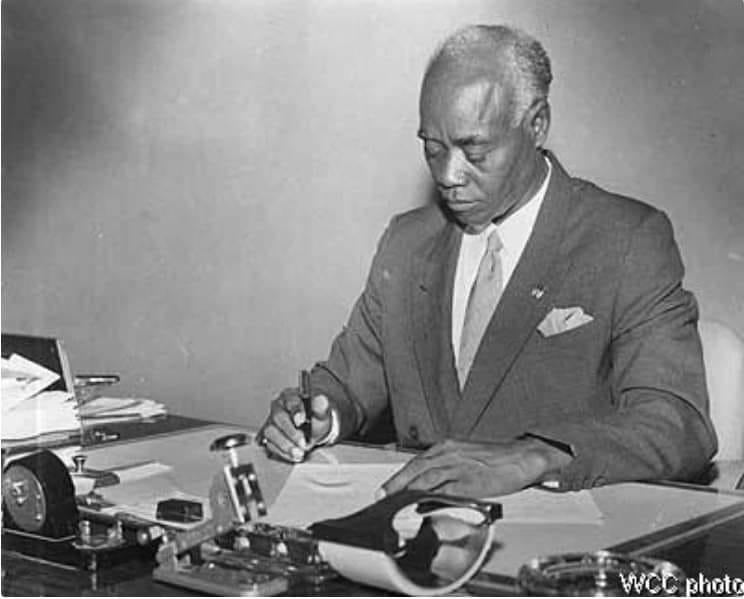
In the quiet hills of Unwana, a small town in Ebonyi State, was born a man whose compassion would challenge an empire. His name was Sir Francis Akanu Ibiam; medical doctor, missionary, humanitarian, and nationalist. But to the Igbo, he was much more; a conscience in turbulent times, a man who proved that faith and justice could walk hand in hand.
The written record
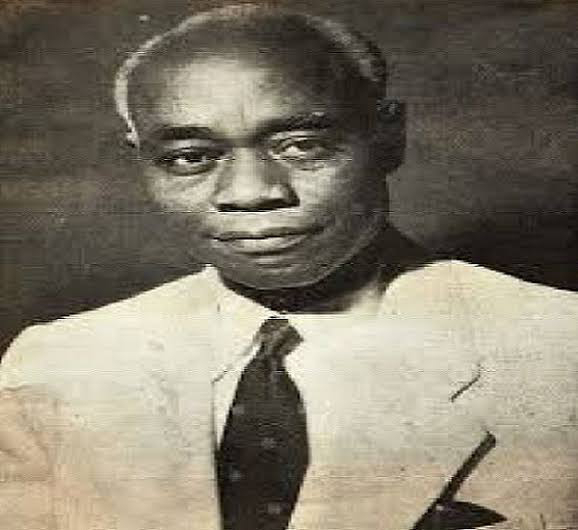
Historical context
From Unwana to Cambridge: The Making of a Healer
Born in 1906, Akanu Ibiam’s early life was steeped in both Christian faith and Igbo discipline. His parents, early converts of the Church Missionary Society (CMS), nurtured in him a sense of humility, education, and service. The young Ibiam excelled in school, earning a scholarship to study medicine at the University of St. Andrews and Cambridge, a rare achievement for an African of his era.
In Britain, he witnessed firsthand the condescension of colonial superiority, but he also absorbed the intellectual rigor of Western medicine. By the time he returned to Nigeria in 1934, Ibiam was not only armed with medical knowledge, he was determined to heal his people in more ways than one.
Healing Beyond the Body
Dr. Ibiam served as a medical missionary in Uburu, where he built hospitals, trained local health workers, and pioneered community medicine. Yet, for him, healing the sick went beyond prescribing medicine, it meant restoring dignity to the African soul.
He often said: “The body cannot be well if the spirit is broken.” In his practice, he blended Western medicine with the communal empathy of Igbo culture, treating patients not as statistics but as kin. His compassion earned him the love of the people and the respect of the British establishment. In 1951, he was knighted by Queen Elizabeth II for his humanitarian work, a rare honor for an African doctor.
But beneath the surface, Ibiam was restless. The same empire that crowned him was the one enslaving his people’s destiny through colonial rule. As the Igbo say: “Onye ji mmadụ n’aka, jiri onwe ya n’aka.” (He who holds another captive, holds himself captive too).
Governor and Conscience of a Nation
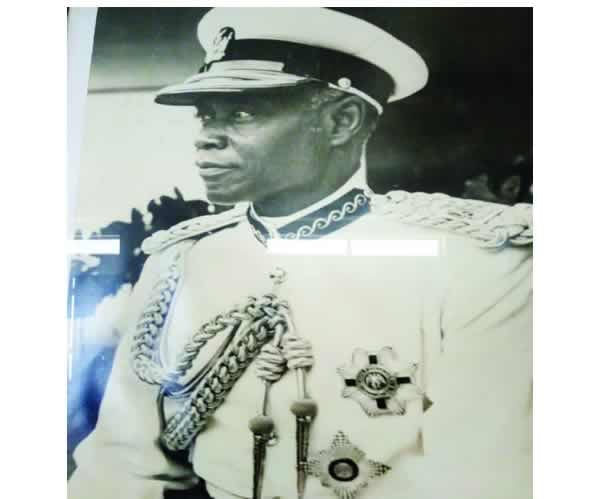
When Nigeria gained independence in 1960, Akanu Ibiam became the first Governor of Eastern Nigeria, serving alongside other nationalist figures like Nnamdi Azikiwe and Michael Okpara. His leadership was marked by humility, integrity, and an unwavering sense of justice. He promoted education, healthcare, and unity, often travelling across rural communities to meet the people directly. But when the dark clouds of the Nigerian Civil War (1967–1970) gathered, Ibiam faced his greatest test.
As federal troops bombed Eastern cities and humanitarian crises unfolded, Ibiam could no longer reconcile his knighthood with his conscience. In 1967, in an act of moral defiance, he renounced his British knighthood, returning his insignia to Queen Elizabeth II with a scathing letter condemning Britain’s support for the Nigerian military government. He wrote: “I cannot continue to wear honours from a government that aids in the destruction of my people.” It was one of the most courageous symbolic acts of anti-colonial resistance in modern African history, a moment that stunned both Lagos and London.
Faith as Resistance
Throughout the war, Ibiam used his voice to advocate for peace, humanitarian aid, and the recognition of the suffering of the Biafran people. Though deeply Christian, he understood the power of Igbo spirituality and resilience.
He often reminded his fellow Ndi Igbo that faith was not submission but strength. As elders would say: “Mmiri anaghị egbu onye mụrụ ya.” (Water does not drown the one who knows its source). Ibiam knew his source. Whether standing in a hospital ward or before colonial officials, he remained unshaken in his belief that truth and justice must guide leadership.
After the war, he continued his work as a peace advocate, serving in global ecumenical organisations such as the World Council of Churches, where he championed African unity, social justice, and postwar healing.
The Doctor Who Became a Prophet
Those who met Ibiam often described him as gentle but firm, a man whose soft-spoken words carried the weight of conviction. His Christianity was not the imported kind of piety, it was rooted in community, compassion, and courage.
He refused to live as a man of privilege in a country of poverty. He donated much of his wealth to missions, scholarships, and hospitals. To him, medicine and faith were two sides of the same mission: the restoration of life. His favourite saying was one drawn from Igbo wisdom: “Ndụ bụ isi; ma ọ bụrụ na e chekwaghị ya, ihe niile efu.” (Life is the essence; if it is not preserved, all else is lost).
Legacy of a Moral Giant
Sir (later Dr.) Akanu Ibiam passed away in 1995, leaving behind a legacy that transcends politics and religion. The Akanu Ibiam Federal Polytechnic and Akanu Ibiam International Airport bear his name, but his true memorial lives on in the countless lives he touched.
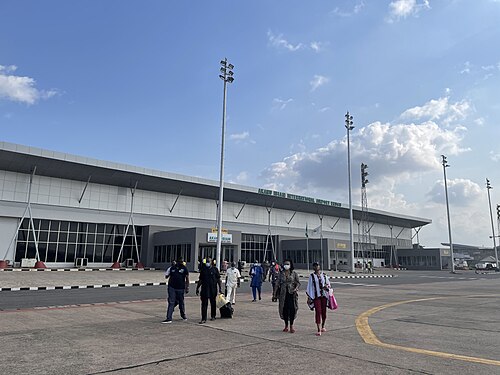
- Photo credit: Wikimedia Commons — image titled “Akanu Ibiam International Airport”
He remains a rare example of what leadership could mean when rooted in conscience. His story teaches that standing for truth may cost titles and honors—but it gains the respect of generations. “E jiri eziokwu na-agba ọsọ, n’agwụghị mmadụ n’ụzọ.” (He who runs with truth never loses his way). Akanu Ibiam ran with truth and the path he cleared still guides those who seek justice, service, and peace.
Sources and references
- Biography.igbopeople.org. (n.d.). Francis Akanu Ibiam.
- DACB. (n.d.). Ibiam, Akanu (1906–1995). Dictionary of African Christian Biography.
- Scielo.org.za. (2015). Sir Francis Akanu Ibiam and the Witness of the Church in Postcolonial Africa. HTS Theological Studies, 71(3), 1–9.
- Wikipedia. (2024). Akanu Ibiam.
Cite this article
Discussion
Sign in to join the discussion
Comments are checked by an editor before they appear. Leave a source or a correction and it is read first.
Continue reading
No comments yet
Nothing has been approved on this record yet. Comments are checked by an editor before they appear, so one written now shows on this page after that check.