 Ozikoro
 Ethnohistory · Published history
Aro Merchant Network: Historical Trade Integration in the Cross-Niger Region
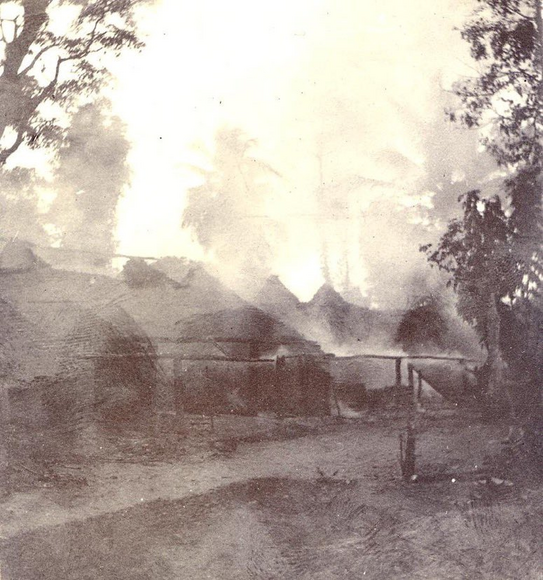
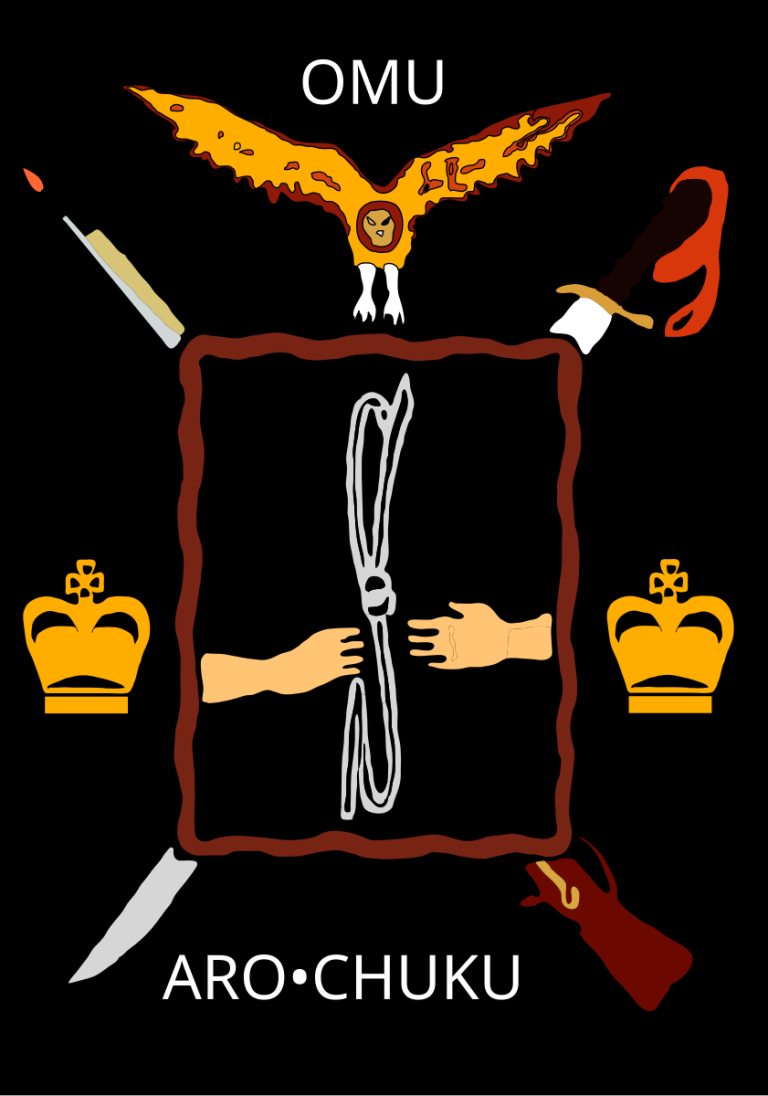
The history of pre-colonial West Africa is often characterized by the sophisticated movement of goods, people, and ideas across vast ecological zones. At the center of this historical complexity was the Aro Merchant Network, a sprawling commercial and religious hegemony that dominated the Cross-Niger region from the mid-17th century until the British military intervention in 1902. The Aro people, based in Arochukwu in present-day Abia State, Nigeria, constructed a network that was “unparalleled in its organizational depth and geographical reach.” By integrating the sacred authority of their oracle, the Ibin Ukpabi, with a mercantile prowess that spanned from the Atlantic coast to the northern grasslands, the Aro created a unified economic zone. This article explores the structural mechanics of the Aro trade network, the religious legitimization of their commerce, and the enduring impact of their integration on the Cross-Niger region.
The written record
Historical context
The Genesis of Aro Hegemony: The Birth of a Diaspora
The Aro Merchant Network was not built through centralized military conquest, but through a “strategic diaspora” that placed Aro agents at the crossroads of every major trade route;
The Arochukwu Foundation: Following the “Aro-Ibibio Wars,” a confederation of Igbo and Akpa (Cross River) elements formed the Aro state. This ethnic synthesis provided the Aro with a “multicultural fluency” that allowed them to act as intermediaries between different ethnic groups.
Establishment of Colonies (Umu-Aro): The Aro expanded by establishing over 100 “satellite colonies” across Southeastern Nigeria. These settlements, such as Arondizuogu, Ajalli, and Ndikelionwu, served as “trading depots” and administrative outposts.
The Merchant-Priest Identity: Every Aro trader was seen as a representative of the Ibini Ukpabi. This dual identity granted them “diplomatic immunity,” allowing them to travel through hostile territories where others feared to tread.
The Structural Mechanics of the Trade Network
The integration of the Cross-Niger region was achieved through a “sophisticated logistics system” that managed the flow of diverse commodities;
- The Long-Distance Trade Routes: The Aro controlled the “arteries of commerce” connecting the hinterland to the coastal ports of Bonny, Calabar, and Opobo. They specialized in the exchange of “salt, textiles, and firearms” from the coast for “slaves, ivory, and palm oil” from the interior.
- The Relay System: Trade was not conducted in a single journey but through a “relay of markets.” Goods moved from one Aro outpost to another, with each station providing “security and storage.” This system reduced the risks associated with long-distance travel in a region without a centralized police force.
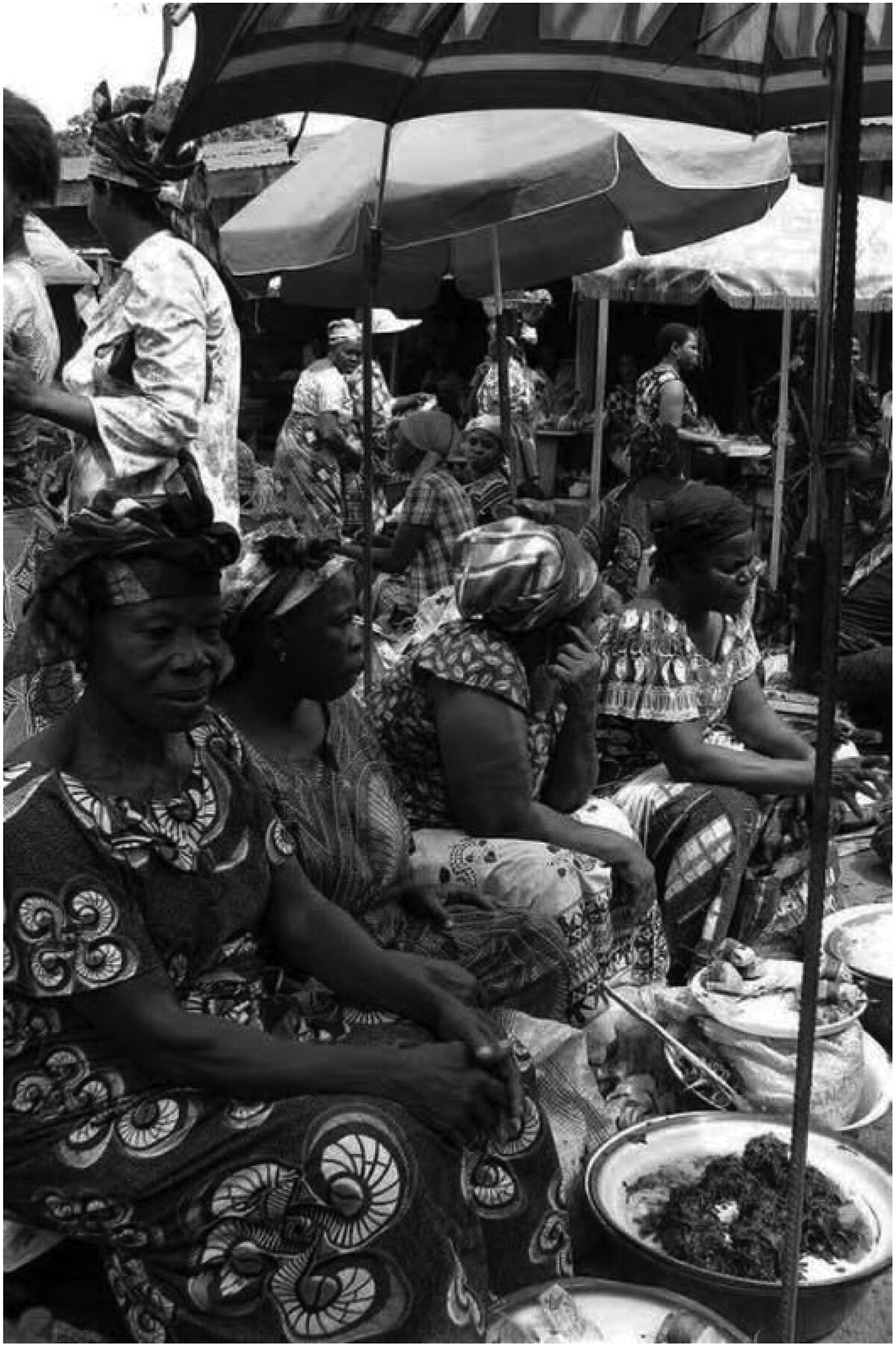
- Credit and Currency: The Aro were masters of the “Ikpa-ego” (monetary exchange) using cowries, manillas, and brass rods. They operated an “advanced credit system,” providing goods to local hinterland merchants on trust, which they would later collect in the form of exportable produce.
Religious Legitimization: The Role of Ibin Ukpabi
The “secret weapon” of the Aro Merchant Network was the Ibin Ukpabi (The Long Juju), an oracle whose influence bypassed physical borders;
- The Supreme Court of the Hinterland: The oracle functioned as a “final court of appeal” for disputes across the region. Litigants from far-flung communities traveled to Arochukwu for judgment. This gave the Aro “unprecedented intelligence” on the economic and political state of their neighbors.
- Slavery and Spiritual Sanction: Many who “lost cases” at the oracle were condemned to be “eaten by the spirits,” which in reality meant they were funneled into the Aro slave-trading machine. This provided a “steady supply of human capital” for the Atlantic and domestic markets under a cloak of religious inevitability.
- The Sacred Toll: Communities paid “tribute” to the oracle, which acted as a form of “taxation” that funded the Aro state and maintained the safety of the trade routes.
Cultural Integration and the “Aro-ization” of the Region
The network did more than move goods; it “standardized the culture” of the Cross-Niger region;
- The Spread of the Igbo Language: As the primary language of the Aro merchants, Igbo became the “lingua franca of commerce.” Even in non-Igbo areas like the Cross River, the ability to speak Igbo was a “mark of the merchant class.”
- Uniformity in Governance: Many communities adopted the “Aro model of title-taking” and secret societies (Ekpe and Okonko). These institutions provided a “shared social grammar” that facilitated trust between different groups within the network.
- Architecture and Aesthetics: The “Aro house style” and their preference for certain textiles and beads became the “standard of prestige” throughout the region, creating a “unified consumer culture.”
The British Intervention and the Fall of the Network
The integration of the region under the Aro was seen as a “stumbling block” to British colonial expansion;
- The Anglo-Aro War (1901–1902): The British launched a “coordinated military expedition” to destroy the Ibin Ukpabi and break the Aro monopoly. They viewed the Aro as “exploiters” who prevented direct British access to the palm oil-rich hinterland.
- The Destruction of the Oracle: In 1902, British forces blew up the sacred cave of Arochukwu. This was a “symbolic decapitation” of the network, intended to prove that the “British Maxim gun” was more powerful than the Aro spirits.
- The Transition to Legitimate Trade: While the political power of the Aro was broken, their “mercantile DNA” survived. Many Aro families transitioned into the “palm oil trade and modern civil service,” utilizing their old networks to navigate the new colonial economy.
Legacy: The Aro Network as a Precursor to Modern Regionalism
The historical trade integration achieved by the Aro serves as a “historical blueprint” for modern economic integration in West Africa;
- Indigenous Capitalism: The Aro network proves that “advanced capitalism and credit systems” existed in Africa long before European intervention. Their success was based on “trust, information, and spiritual capital.”
- Regional Connectivity: The trade routes mapped by the Aro merchants eventually became the “highways and rail lines” used by the colonial and post-colonial governments, proving the “geographical logic” of their network.
- The Diaspora Spirit: The modern “Igbo apprenticeship system” and the global reach of Nigerian merchants can be traced back to the “pioneering spirit of the Aro,” who taught that wealth is found by “traveling and building bridges.”
- The Aro Merchant Network: Historical Trade Integration in the Cross-Niger Region remains one of the most significant examples of indigenous African institutional building. By weaving together the “sacred and the secular,” Aro managed to unify a diverse and fragmented region into a “functional economic whole.” Their hegemony was not just about the exchange of commodities like palm oil or slaves; it was about the “exchange of culture and the creation of a shared identity.” Although the British military might eventually dismantle their political structure, the “sociological and economic infrastructure” laid by the Aro continues to influence the interactions of the peoples of Southeastern Nigeria and the Cross River. Aro taught the region that “commerce is the ultimate integrator,” a lesson that remains as relevant today as it was in the 18th century.
Sources and references
- Afigbo, A. E. (1981). “Ropes of Sand: Studies in Igbo History and Culture”. Oxford University Press. (Providing a critical analysis of the Aro expansion).
- Dike, K. O. (1956). “Trade and Politics in the Niger Delta, 1830-1885”. Oxford: Clarendon Press. (A foundational text on the interaction between hinterland merchants and coastal ports).
- Ekechi, F. K. (1989). “Tradition and Transformation in Eastern Nigeria”. Transaction Publishers.
- Isichei, E. (1976). “A History of the Igbo People”. London: Macmillan. (Detailing the religious influence of the Long Juju).
- Nwauwa, A. O. (1995). “The Aro State: A Case Study of State Formation in Southeastern Nigeria”. Cahiers d’Études africaines.
- Onwuejeogwu, M. A. (1981). “An Igbo Civilization: Nri Kingdom and Hegemony”. Ethno graphica. (Contrasting the Aro merchant hegemony with the Nri ritual hegemony).
Cite this article
Discussion
Sign in to join the discussion
Comments are checked by an editor before they appear. Leave a source or a correction and it is read first.
Continue reading
Related histories
 EthnohistoryGbam, Chai, Ewo: How Igbo Expressions Became the Language of Nigerian Pop CultureRead history →
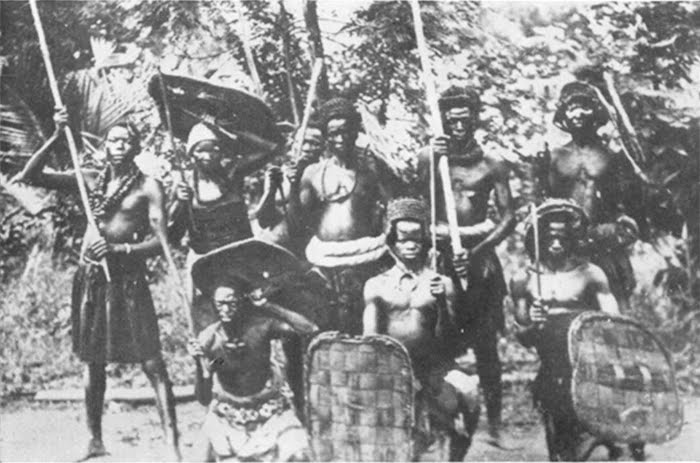 EthnohistoryTransition to Commodities in the aro confederacy(e.g., Palm Oil, Ivory, Cloth)Read history →
 EthnohistoryThe art of palm wine tapping and its social role in gatherings and ritualsRead history →
No comments yet
Nothing has been approved on this record yet. Comments are checked by an editor before they appear, so one written now shows on this page after that check.