 Ozikoro
 Ethnohistory · Published history
Transition to Commodities in the aro confederacy(e.g., Palm Oil, Ivory, Cloth)
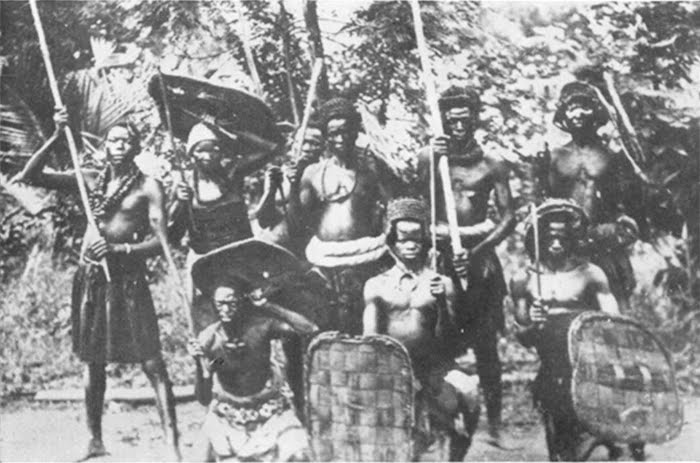
The mid-nineteenth century marked a pivotal “structural transformation” in the economic history of Southeastern Nigeria. For nearly two centuries, the Aro Confederacy had maintained a formidable hegemony over the hinterland by acting as the primary agents of the Trans-Atlantic slave trade. However, as Great Britain enforced the abolition of the slave trade and the Industrial Revolution spurred a demand for raw materials, the Aro were forced to recalibrate their vast commercial machine. This “Transition to Commodities in the aro confederacy(e.g., Palm Oil, Ivory, Cloth)” was not merely a change in cargo, but a total reorganization of labor, logistics, and social power. By successfully pivoting to “legitimate commerce,” the Aro demonstrated a “mercantile resilience” that allowed their confederacy to survive and thrive until the British military intervention of 1901. This article examines the commodities that defined this new era and the socio-economic adjustments required to sustain them.
The written record
Historical context
The Palm Oil Revolution: Lubricating the Industrial World
Of all the commodities that replaced the trade in human beings, palm oil was the most significant. It transformed the Igbo hinterland into the “Oil Rivers” protectorate’s economic engine;
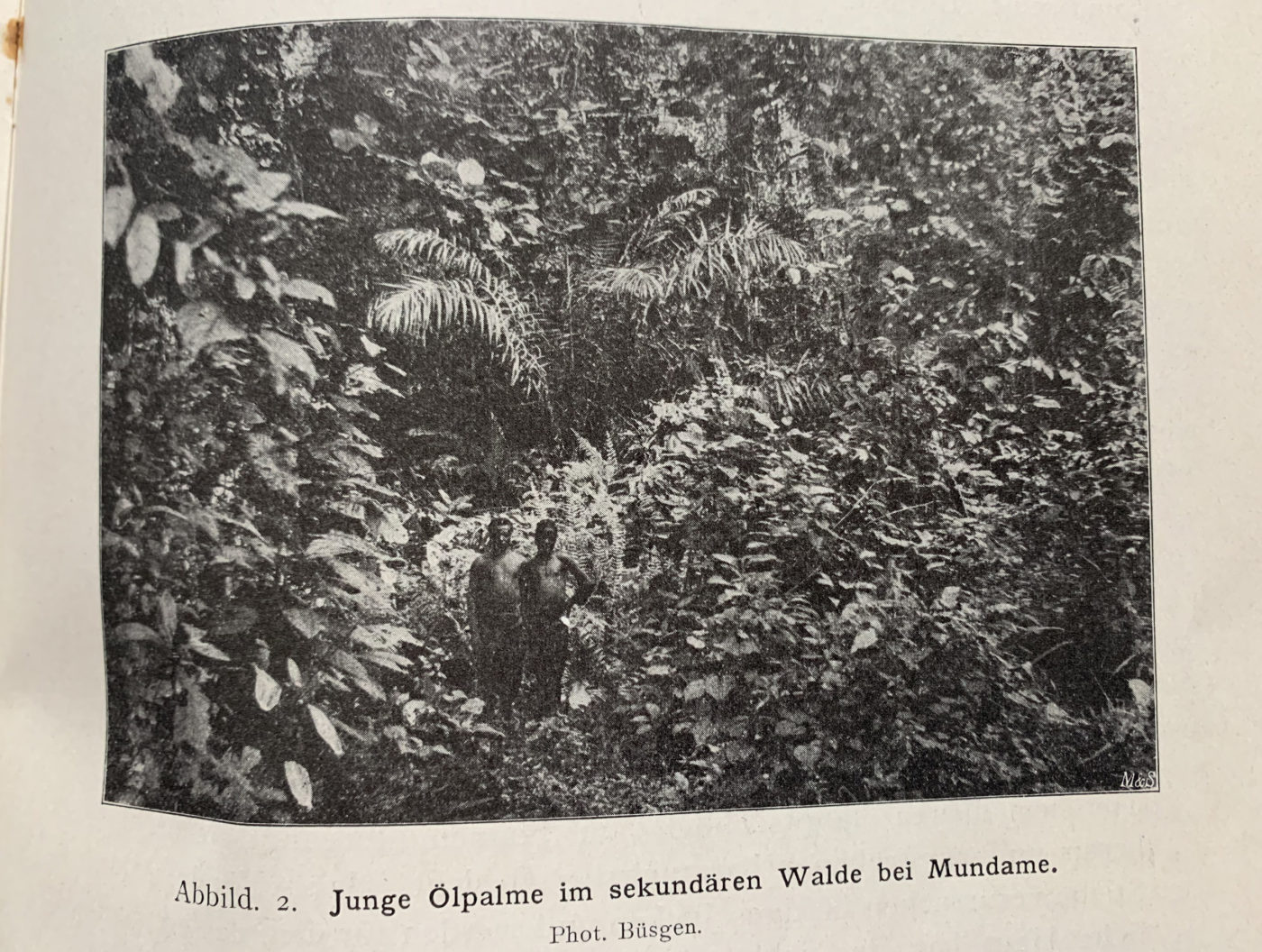
From Export to Production: Unlike the slave trade, which was purely “extractive,” the palm oil trade required “intensive production.” The Aro utilized their satellite colonies (Umu-Aro) to organize the collection of palm fruit and the processing of oil.
The Role of Domestic Labor: As the export of slaves declined, the Aro redirected “captive labor” toward the maintenance of palm groves and the transportation of oil. This led to a rise in “internal slavery” and debt bondage to meet the labor-intensive demands of the oil industry.
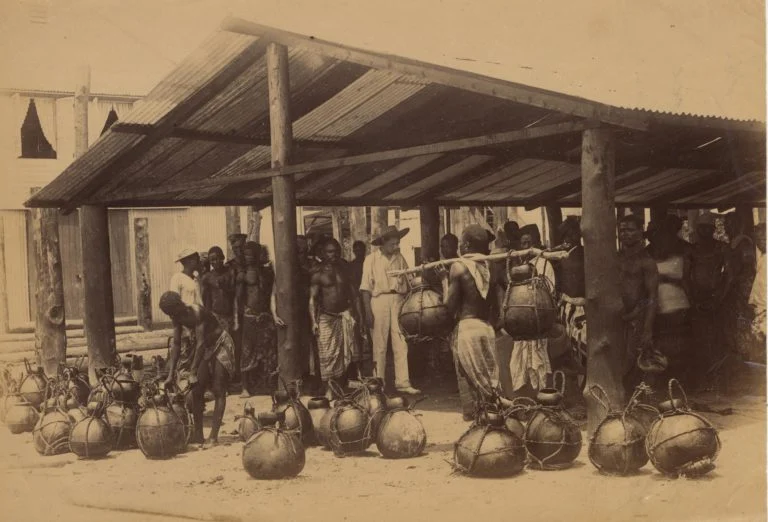
Logistical Superiority: The Aro utilized their established “caravan routes” to move heavy calabashes of oil from the interior to riverine depots. Their control over the “hinterland-to-coast” pipeline ensured that European firms like the Royal Niger Company remained dependent on Aro middlemen.
The Ivory Trade: Hunting for Global Luxury
While palm oil was the commodity of the masses, ivory remained the “luxury export” of the elite, connecting the Aro to high-end global markets;
The Ecology of Hunting: The Aro formed alliances with “specialized hunting guilds” in the Cross River basin. These hunters provided elephant tusks in exchange for firearms and salt provided by Aro merchants.
Symbol of Prestige: Ivory was not just an export; it was a “currency of status” within the confederacy. Titled men (Ozo) and Aro agents used ivory trumpets and ornaments to signal their “wealth and spiritual authority” derived from the Ibin Ukpabi oracle.
Atlantic Demand: In Europe and America, the demand for ivory for “piano keys, billiard balls, and combs” ensured that this commodity remained a high-margin business for the Aro, even when palm oil prices fluctuated.
The Cloth Trade: Indigenous Textiles and Imported Finery
The transition era saw a sophisticated “textile economy” where indigenous production met the rising demand for European imports;
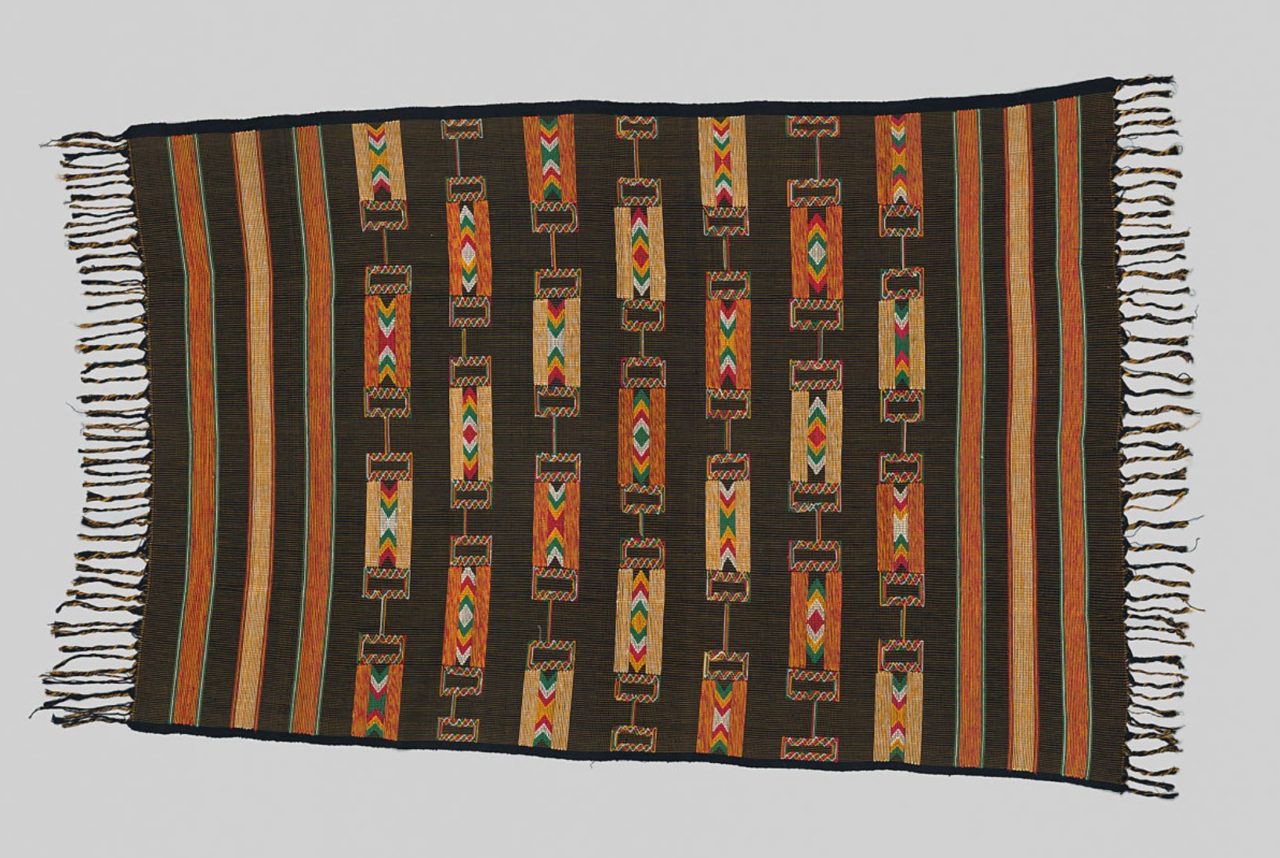
Akwete and Local Weaving: Aro facilitated the distribution of “Akwete cloth” and other locally woven textiles. They acted as the primary distributors for these fabrics, which were essential for “ritual dress and social ceremonies” across the Cross-Niger region.
The “George” and Madras Cloth: As the Aro traded oil and ivory at the coast, they brought back “European and Indian textiles” (popularly known as George). These became the “standard of wealth” in the hinterland, and the Aro maintained a monopoly on their distribution.
Clothing as Currency: In the absence of a unified colonial currency, specific types of “imported cloth” often functioned as a medium of exchange, further embedding the Aro in the daily economic life of every village.
Adjusting the “Oracle-Merchant” Model
The transition to commodities required a “theological and judicial adjustment” to ensure the continued relevance of the Ibin Ukpabi oracle;
Protecting Trade Routes: In the slave era, warfare was often encouraged to produce captives. In the commodity era, the Aro used the “fear of the oracle” to ensure “peace and safety” on the roads. A merchant carrying palm oil needed security, and the Ibin Ukpabi provided a “spiritual police force” to prevent highway robbery.
Settling Commercial Disputes: As credit systems became more complex with palm oil “trusts,” the oracle became the “supreme court of commerce.” It adjudicated disagreements over debts and the “quality of goods,” ensuring that the credit-based economy did not collapse.
Ritual Tax on Commodities: The Aro imposed “tolls and ritual fees” on the movement of legitimate goods, ensuring that the wealth generated by palm oil continued to fund the “central authority in Arochukwu.”
Social Transformation: The Rise of the “New Merchant Class”
The transition to legitimate trade led to a “democratization of wealth” that challenged traditional social hierarchies;
The Emergence of “New Men”: While the slave trade was often the preserve of powerful “warlords,” the palm oil trade allowed “commoners and smaller farmers” to participate in the global economy. This led to the rise of a “middle class” that was less dependent on the old military-ritual complex.
Women’s Economic Role: Women were central to the “processing of palm fruit” and the local marketing of cloth. The transition to commodities gave women a “greater degree of economic agency,” although the Aro men still controlled the high-level Atlantic brokerage.
Urbanization of Aro Colonies: Outposts that were once “military garrisons” transformed into “vibrant market towns.” This urbanization created a “cosmopolitan Igbo identity” that blended traditional values with the new realities of global trade.
The Conflict with British Imperialism
The very success of the Aro in transitioning to commodities eventually brought them into “fatal conflict” with British colonial interests;
The Monopoly Challenge: By the late 19th century, the British wanted to bypass Aro middlemen to deal “directly with the producers.” They viewed the Aro “trade network” as an illegal monopoly that stifled the growth of the British Empire.
The “Civilizing Mission” Pretext: To justify military intervention, British officials characterized the Aro “pawnship and domestic labor” systems as a continuation of slavery, ignoring the fact that these were the “foundations of the legitimate trade” the British had requested.
The 1901 Expedition: The Anglo-Aro War was the “final confrontation.” The British sought to replace the “Aro commodity system” with a “colonial administrative system,” leading to the eventual physical destruction of the Long Juju oracle and the formal annexation of the hinterland.
The Transition to Commodities in the Aro Confederacy(e.g., Palm Oil, Ivory, Cloth) remains a testament to the “economic genius” of pre-colonial African institutions. The Aro did not collapse when the slave trade ended; instead, they “reinvented their economy,” proving that indigenous systems were capable of sophisticated adaptation to global shifts. By turning the “oil of the palm” into the “new currency of power,” the Aro maintained their influence for nearly a century after the abolition. However, their very ability to “integrate the hinterland” into a functional commodity network made them a target for a British Empire that brooked no rivals. Today, the “legacy of this transition” is seen in the vibrant commercial spirit of Southeastern Nigeria, a spirit that was forged in the “markets and caravan routes” of the Aro commodity era.
Sources and references
- Dike, K. O. (1956). “Trade and Politics in the Niger Delta, 1830-1885”. Oxford: Clarendon Press. (A foundational work on the shift from slave trade to palm oil).
- Dike, K. O., & Ekejiuba, F. (1990). “The Aro of South-eastern Nigeria, 1650-1980”. University of Ibadan Press. (The most comprehensive study on Aro economic history).
- Ekechi, F. K. (1989). “Tradition and Transformation in Eastern Nigeria”. Transaction Publishers
- Latham, A. J. H. (1973). “Old Calabar, 1600-1891: The Impact of the International Economy upon a Traditional Society”. Oxford: Clarendon Press. (On the role of ivory and cloth in the regional trade).
- Northrup, D. (1978). “Trade Without Rulers: Pre-Colonial Economic Development in South-Easte rn Nigeria”. Oxford: Clarendon Press. (Detailing the “legitimate trade” expansion).
Cite this article
Discussion
Sign in to join the discussion
Comments are checked by an editor before they appear. Leave a source or a correction and it is read first.
Continue reading
Related histories
 EthnohistoryGbam, Chai, Ewo: How Igbo Expressions Became the Language of Nigerian Pop CultureRead history →
 EthnohistoryAro Merchant Network: Historical Trade Integration in the Cross-Niger RegionRead history →
 EthnohistoryThe art of palm wine tapping and its social role in gatherings and ritualsRead history →
No comments yet
Nothing has been approved on this record yet. Comments are checked by an editor before they appear, so one written now shows on this page after that check.