 Ozikoro
Biography · Published history
Ben Enwonwu: An Igbo Icon in Modern African Art
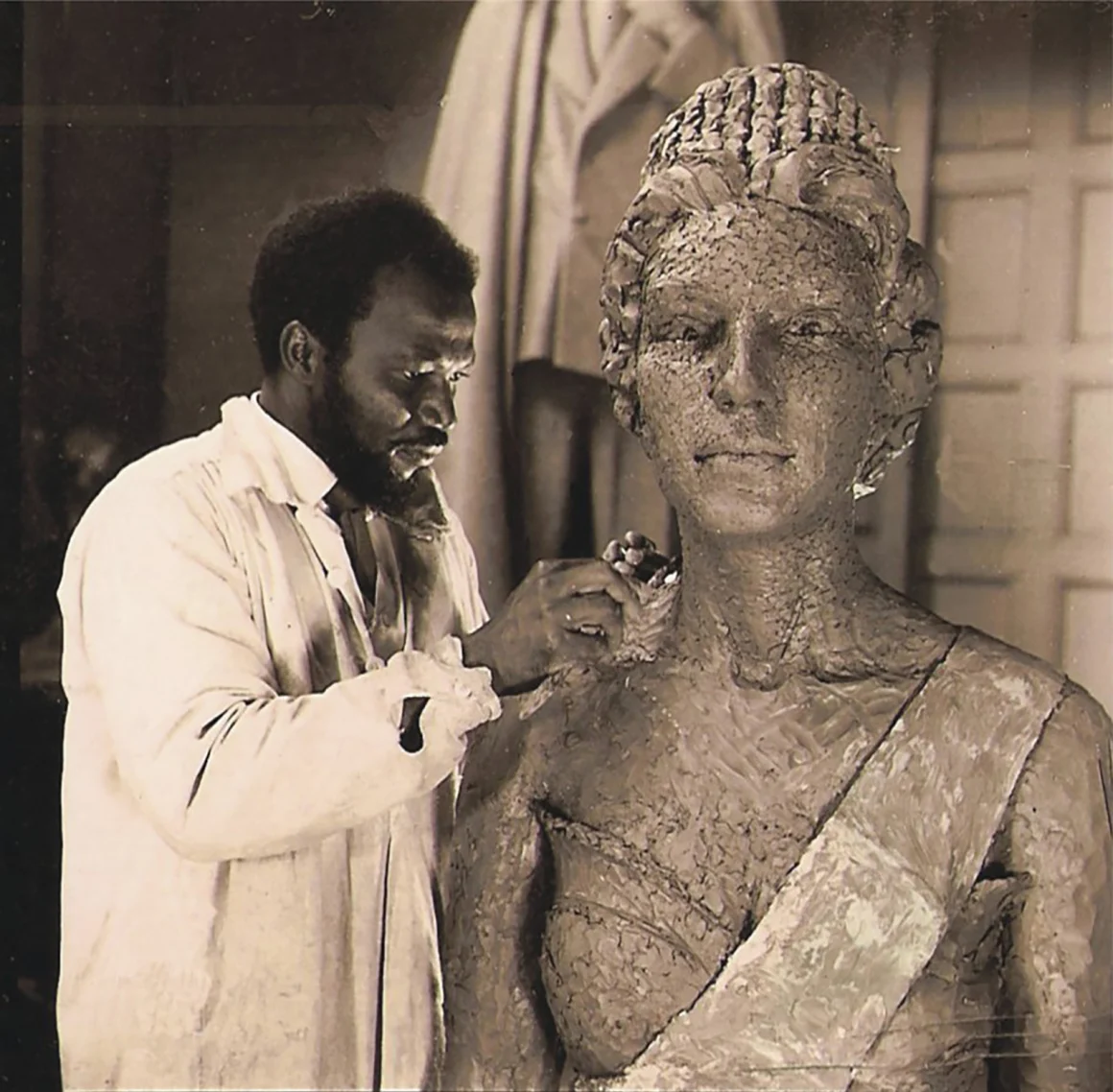
In the quiet heart of Onitsha, beside the flowing waters of the Niger, a young boy once molded clay into shapes his imagination whispered to him. His name was Benedict Chukwukadibia Enwonwu, born in 1917, a child destined to become the bridge between ancient Igbo creativity and global modernism.
The written record
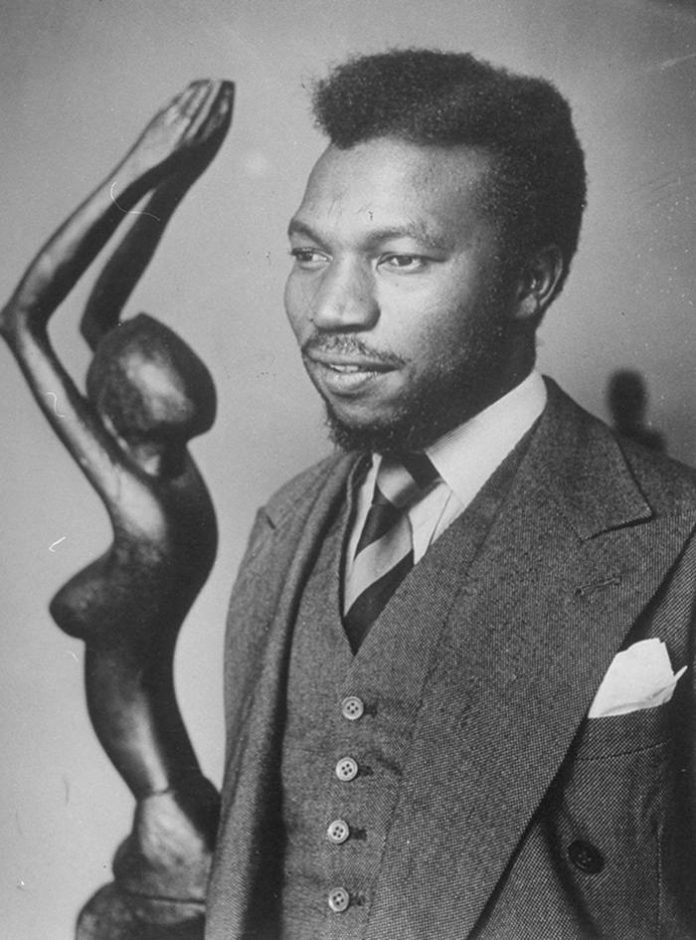
His father, a traditional sculptor who carved masks and ancestral figures for spiritual festivals, passed to him not only the gift of art but also its sacred purpose, the ability to speak for the ancestors. The young Enwonwu watched as his father’s chisel moved with reverence, guided by a truth the Igbo express simply: “Aka aja aja na-ebute onu mmanụ mmanụ.” (Dusty hands lead to oily mouths; hard work brings reward). Those dusty hands would soon shape history.
Historical context
The Birth of a Visionary
When colonial missionaries introduced Western education in Onitsha, they saw in Ben a rare spark. He was encouraged to pursue art, though many still viewed it as a craft for the poor. Yet, under the mentorship of Kenneth C. Murray, Nigeria’s first art education officer, Enwonwu’s talent found new expression; blending the symbolic lines of Igbo uli designs with the realism of European sculpture.
By 1944, he had won a scholarship to study at Goldsmiths College and Slade School of Fine Art in London. There, surrounded by the greats of European modernism, Enwonwu stood tall, confident in his roots. He once said: “My art must speak of who I am not merely as a Nigerian, but as an Igbo man who knows that the spirit lives in all things.” While others painted portraits of the empire, Enwonwu painted Africa, dignified, spiritual, and alive.
The Dance Between Tradition and Modernity
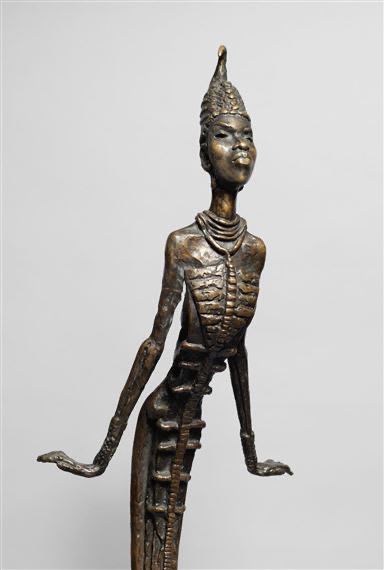
In the 1940s and 1950s, Enwonwu emerged as one of Africa’s most important modern artists. His sculptures, like Anyawu (1954–55), inspired by the Igbo earth goddess Ani, fused movement, divinity, and human grace. Installed at the United Nations headquarters in Lagos, Anyawu became a symbol of hope, rising like the sun over newly independent Nigeria.
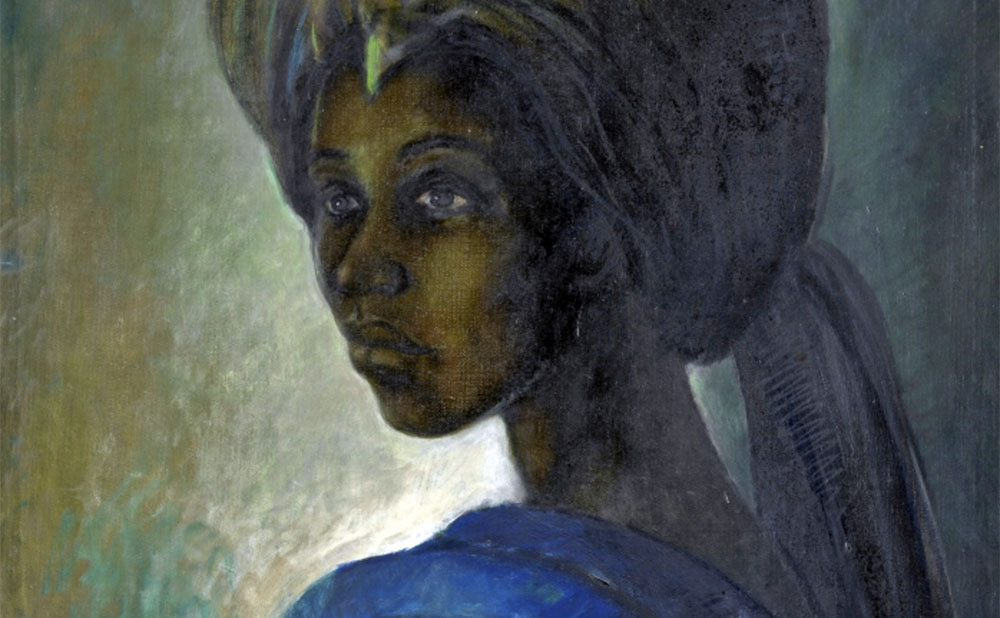
He described Anyawu as a tribute to “the strength of African womanhood”, a theme that would culminate in his later masterpiece, Tutu (1974), the portrait of Adetutu Ademiluyi, often called “the Nigerian Mona Lisa.”
“A na-ama atụ n’aka onye na-agba egwu.” (You do not direct the hands of a dancer; a master finds his rhythm within.) Enwonwu’s rhythm was the spirit of Igbo philosophy itself, harmony between man, nature, and the divine.
Global Recognition
By the mid-20th century, Ben Enwonwu had become a household name. He exhibited across Europe, the U.S., and Africa, and was commissioned to sculpt the portrait of Queen Elizabeth II in 1957, a powerful reversal of colonial dynamics. The sculptor, once from a colonised land, now immortalised the monarch herself.
He walked through the art world not as a mimic of Western style, but as a master of synthesis. He declared that African art must not be provincialised but seen as equal, sophisticated, and philosophical. His works reflected Ọmenka, the Igbo idea of the artist as a mediator between visible and invisible worlds. For Enwonwu, art was never decoration; it was destiny. “Onye kwe, chi ya ekwe.” (When one agrees, their personal god agrees too). Through conviction and artistry, Enwonwu’s chi opened the doors of galleries once closed to Africans.
Legacy: The Spirit that Never Fades
Even after his passing in 1994, Enwonwu’s presence continues to shape global art history. His works now adorn major museums, from the Tate Britain to the National Gallery of Modern Art in Lagos. His influence extends to the Nsukka School and contemporary artists like El Anatsui and Njideka Akunyili Crosby, all inheritors of his bold fusion of heritage and innovation.
In 2018, when Tutu resurfaced after four decades, it sold for over $1.6 million, not merely as art, but as a rediscovery of African soul. “Ihe onye metere ka ọ ga-eri.” (What a person sows is what they will reap). Truly, Ben Enwonwu reaped immortality.
Through brush, bronze, and vision, he proved that Igbo art and by extension African art, was not primitive but profound, not forgotten but eternal. His life remains a testament to the truth that modernity and tradition are not enemies, but partners in creation.
Reflections: The Igbo Artist and the World
Enwonwu’s story is not just about art; it is about cultural reclamation. In his journey, we find the enduring rhythm of Igbo resilience: the ability to adapt, create, and transcend. He made the world see that African beauty needed no translation.
As the elders say: “Mmiri mara n’elu, o dikwa n’ala.” (When water is clear at the surface, it is also clear at the bottom). Ben Enwonwu was that clarity, a mirror through which the world finally saw Africa as luminous, not shadowed.
Sources and references
- Benuri Gallery & Museum. (n.d.). Ben Enwonwu biography. Retrieved from https://benuri.org/artists/493-ben-enwonwu/biography/
- Enwonwu, B. C. (1954). Anyawu. Lagos: National Museum of Modern Art.
- IgboPeople Biography. (2024). Professor Ben Enwonwu. Retrieved from https://biography.igbopeople.org/biography/professor-ben-enwonwu/
- Ottenberg, S. (1982). New traditions from Nigeria: Seven artists of the Nsukka group. Smithsonian Institution Press.
- Wikipedia. (2024). Ben Enwonwu. Retrieved from https://en.wikipedia.org/wiki/Ben_Enwonwu
Cite this article
Discussion
Sign in to join the discussion
Comments are checked by an editor before they appear. Leave a source or a correction and it is read first.
Continue reading
No comments yet
Nothing has been approved on this record yet. Comments are checked by an editor before they appear, so one written now shows on this page after that check.