 Ozikoro
 Cultural Heritage · Published history
Blood and Water: Inter-ethnic Marriages and the Blurring of Itsekiri-Urhobo Lineages
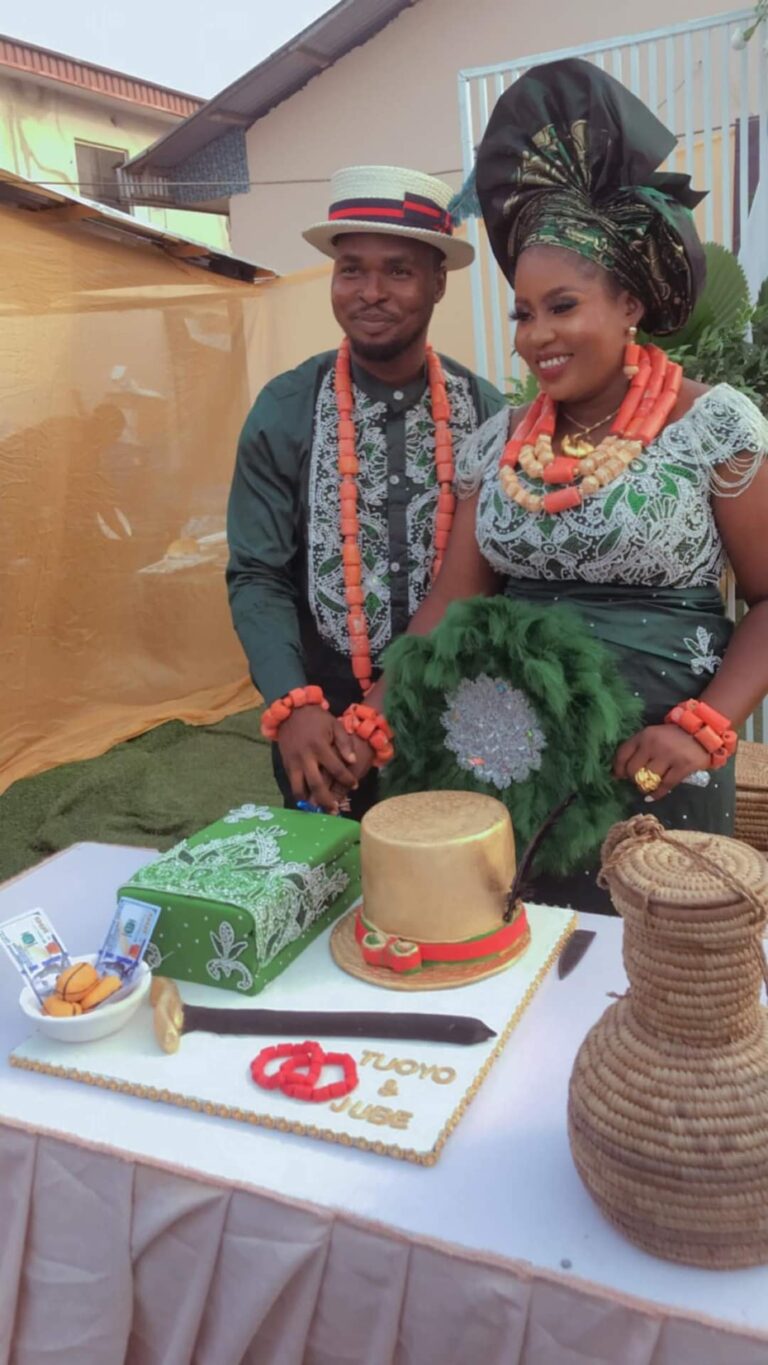
The socio-political history of the Western Niger Delta is often portrayed as a series of disputes over land, “middleman” rights, and political supremacy. However, beneath the surface of these documented rivalries lies a deep and complex web of “consanguinity” that has tied the Itsekiri and Urhobo peoples together for centuries. Through the institution of inter-ethnic marriage, the boundaries between these two groups, one maritime and the other agricultural, have become so porous that many prominent lineages in the region can claim ancestry from both. These family ties acted as “diplomatic bridges,” ensuring that even during times of commercial tension, the biological and cultural survival of the communities remained intertwined. This article explores how marriage functioned as a strategic, economic, and social tool that blurred the lines between the Itsekiri and Urhobo lineages.
The written record
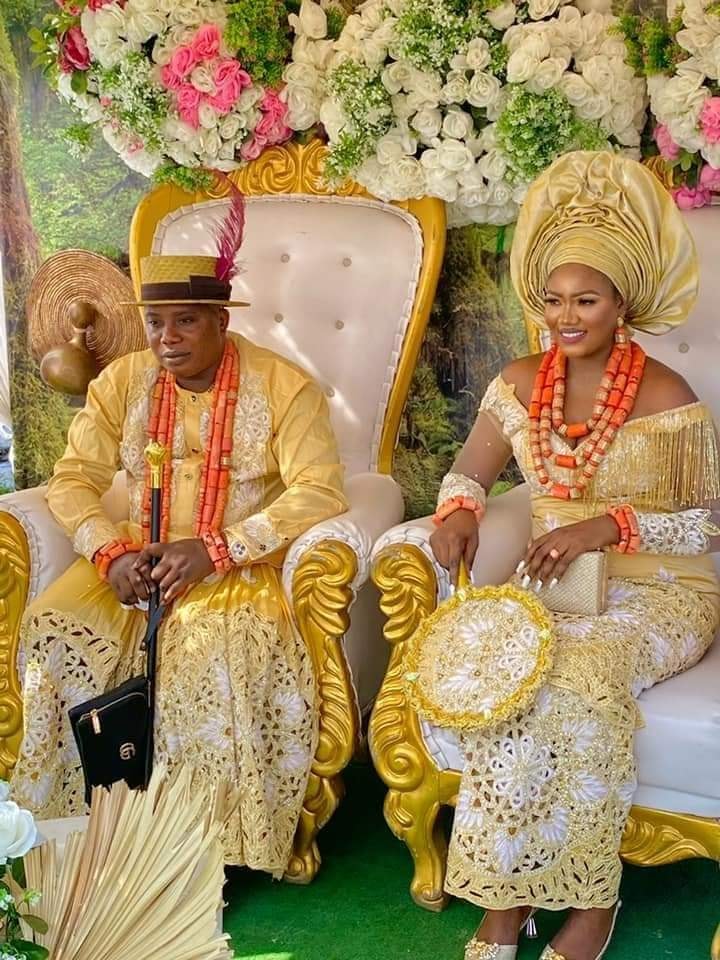
Photo Credit: G. I. Jones Archives / Museum of Archaeology and Anthropology, Cambridge.
Historical context
The Socio-Economic Drivers of Inter-marriage
Inter-ethnic marriages in the Niger Delta were rarely purely romantic endeavors; they were often calculated “strategic alliances” designed to facilitate trade and ensure regional security;
- Securing Trade Routes: Itsekiri “merchant princes” frequently married the daughters of Urhobo community leaders in the hinterland. By establishing “in-law” relationships, Itsekiri traders secured “safe passage” for their goods and guaranteed a steady supply of palm oil and food crops.
- The “House System” Integration: In the Itsekiri House System, wealth and power were expanded by incorporating outsiders. Marrying into an Urhobo family allowed an Itsekiri Chief to extend his “commercial empire” into the freshwater regions, effectively creating a “trans-ethnic” corporate entity.
- Ecological Balance: As the Itsekiri lived in salt-water swamps where farming was impossible, having Urhobo kin ensured a reliable supply of “hinterland staples” like yams and cassava through familial gift-exchange rather than just market transactions.
Bilateral Descent and the Complexity of Identity
One of the most significant factors in the blurring of these lineages is the “bilateral” nature of heritage in the Niger Delta, where an individual often claims identity based on both the paternal and maternal sides;
Dual Citizenship: It is common for a person to be “Itsekiri by father” and “Urhobo by mother” (or vice versa). In such cases, the individual often holds “titles” or land rights in both ethnic territories. This “dual identity” made it difficult for colonial administrators to draw clear ethnic boundaries.
Naming Conventions: The presence of Urhobo names in Itsekiri royal and noble families, and Itsekiri names among Urhobo clans, serves as a living record of these unions. Many “Itsekiri” families today are, in biological reality, a “genetic fusion” of both groups.
The Case of Chief Nana Olomu: Even the legendary Chief Nana Olomu, the epitome of Itsekiri power, had deep ancestral links and marital connections that spanned beyond a “pure” ethnic definition. His success as a “Governor of the Benin River” was partly due to his ability to navigate both Itsekiri and Urhobo social structures.
Marriage as a Tool for Conflict Resolution
In pre-colonial times, “marriage” was the most effective “peace treaty.” When two communities were on the brink of war over fishing rights or land, a high-level marriage was often brokered to “cool the ground;
- Biological Peace-Building: Once a marriage produced children, the two groups became “one blood.” It was considered “taboo” to spill the blood of a community where one’s own grandchildren resided.
- The Role of Women as Intermediaries: Women married into the “other” group often acted as “diplomats.” During trade disputes, these women could travel between their “natal homes” (Urhobo) and “marital homes” (Itsekiri) to negotiate settlements that men, restricted by political pride, could not.
- Refuge and Sanctuary: During the British “punitive expeditions” of the late 19th century, many Itsekiri families found “sanctuary” in the Urhobo hinterland with their maternal kin, highlighting the “protective function” of these inter-ethnic ties.
Cultural Syncretism: Language and Tradition
The blurring of lineages inevitably led to the “blurring of cultures.” The daily intimacy of inter-ethnic households resulted in a shared cultural vocabulary;
- Bilingualism: Historically, many residents of border towns like Sapele, Warri, and Okere were “fluent in both the Itsekiri and Urhobo languages.” This linguistic overlap facilitated smoother commercial negotiations and deeper social integration.
- Shared Culinary Traditions: The “Itsekiri-Urhobo symbiosis” is most evident in the kitchen. Dishes like “Banga soup and Starch” are claimed by both groups, having evolved through centuries of mothers from one group cooking for children in the other.
- Religious and Titling Overlap: Certain “deities” and traditional religious practices are shared across the ethnic divide. The “Oghu” and “secret societies” often had members from both groups, further eroding the idea of “ethnic purity.”
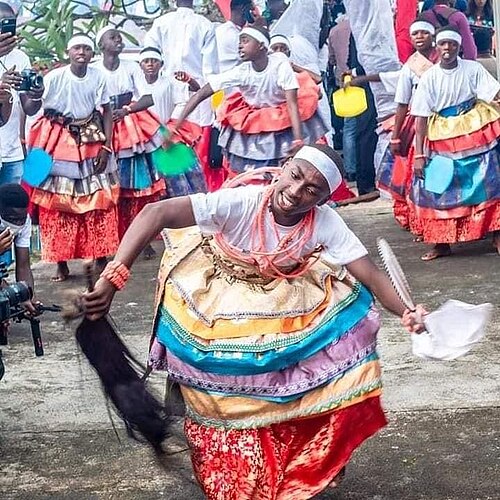
Photo Credit: Pitt Rivers Museum, University of Oxford.
Colonialism and the Hardening of Ethnic Lines
If marriages blurred the lines, colonial policy often sought to “sharpen” them. The British administrative style required “neat categories” for taxation and governance;
- Administrative Mapping: The British created “Districts” and “Native Authorities” based on perceived ethnic boundaries. This forced individuals who had previously lived with “fluid identities” to choose one “official” ethnicity for the sake of the colonial census.
- Land Litigation: As land became a “titled commodity” under British law, families began to emphasize “paternal lineage” over “maternal ties” to secure legal ownership. This led to a “politicization of ethnicity” that had not existed in the same way during the pre-colonial era.
- The Rise of Modern Rivalry: Despite the hardening of political identities in the 20th century, the “underlying reality” remains one of deep inter-connection. Most “modern disputes” between the groups are viewed by elders as “quarrels between brothers” rather than conflicts between strangers.
The Itsekiri and Urhobo lineages are not two parallel lines that never touch; they are a “braided rope,” intertwined by centuries of shared life, love, and labor. While political narratives often highlight “ethnic differences” for the sake of power or resource allocation, the “biological reality” found in the homes of Warri, Sapele, and Koko tells a different story. Inter-ethnic marriage was the “silent architect” of the Western Niger Delta, creating a “hybrid society” that was resilient, adaptable, and profoundly interconnected. To understand the “commercial empire” of the Benin River is to understand the “family empire” that sustained it. In the end, the “blood” that flows through the lineages of the Delta is far more “mixed” than the political maps would suggest.
Sources and references
- Dike, K. O. (1956). Trade and Politics in the Niger Delta, 1830-1885. Oxford: Clarendon Press.
- Ekeh, P. P. (2007). History of the Urhobo People of Niger Delta. Urhobo Historical Society.
- Ikime, O. (1969). Niger Delta Rivalry: Itsekiri-Urhobo Relations and the European Presence 1884-1936. Longmans.
- Lloyd, P. C. (1974). Power and Prestige in African Society. Westview Press. (Discussing the Itsekiri House System).
- Otite, O. (1973). Autonomy and Dependence: The Urhobo Kingdom of Okpe in Modern Nigeria. Northwestern University Press.
- Sagay, I. (1980). The Itsekiri: A History of the Warri Kingdom. Togbi Press.
Cite this article
Discussion
Sign in to join the discussion
Comments are checked by an editor before they appear. Leave a source or a correction and it is read first.
Continue reading
Related histories
 Cultural HeritageEleven Days of Nwafor Ogidi: Inside the Festival Keeping an Old Igbo Tradition AliveRead history →
 Cultural HeritageIli Ji Nkpor Obododike: The Indigenous Agricultural Ritual CycleRead history →
 Cultural HeritageMusic and Drum Traditions: Tracing the “Igbo Drum” in the AmericasRead history →
No comments yet
Nothing has been approved on this record yet. Comments are checked by an editor before they appear, so one written now shows on this page after that check.