 Ozikoro
 Biography · Published history
C.C. Onoh – Life and Legacy
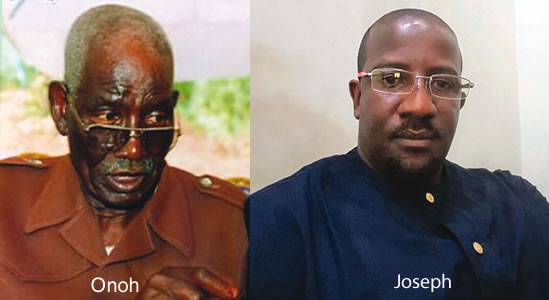
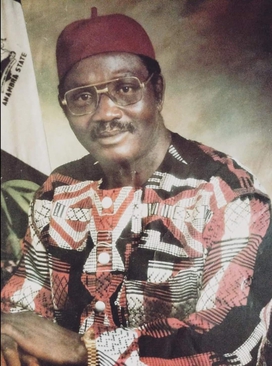
Chief Christian Chukwuma Onoh, popularly known as C.C. Onoh, was a distinguished Nigerian lawyer, businessman, politician, and statesman whose life and career left a significant imprint on the political landscape of post-colonial Nigeria. He is best remembered as a former Governor of old Anambra State, a pioneer in Nigerian public administration and an advocate for the socio-political interests of the Wawa people of southeastern Nigeria. His journey from humble beginnings to national prominence encapsulates the challenges and possibilities of leadership in Nigeria’s evolving democratic and political history. This article provides a comprehensive overview of Onoh’s life, his contributions in governance, his legacy, and the impact of his career on southeastern Nigerian politics.
The written record
Historical context
Early Life and Education
Christian Chukwuma Onoh was born on 27 April 1927 in Enugu-Ngwo, now part of Enugu State, Nigeria, into the family of Chief Gabriel Okwor Onoh and Esther Nude Onoh. He lost his father at a young age, and this circumstance influenced his early resilience and ambition. He began formal education at Central School, Ngwo, and later attended St Peter’s School, Enugu, followed by the College of Immaculate Conception, Enugu. These institutions were among the most prestigious in southeastern Nigeria during the colonial era, offering solid foundational education to aspiring leaders. Driven by academic excellence, Onoh pursued higher education abroad. He earned a law degree from the University of Wales at Aberystwyth in 1957 and was called to the bar upon completion. His education in the United Kingdom equipped him with legal training and exposure to global political thought, setting the stage for his subsequent roles in law, business, and politics.
Early Career: Business, Law, and Public Service
Upon returning to Nigeria after his education, Onoh embarked on a multifaceted career that combined legal practice, business enterprise, and public service. Initially, he established H I Onoh & Co, a law firm that enabled him to engage in litigation, corporate affairs, and political advocacy. His legal background soon positioned him for leadership roles in both private and public sectors.
In the late 1950s and early 1960s, Onoh transitioned into influential administrative roles. He became the first indigenous Chairman of the Nigerian Coal Corporation (NCC) in Enugu, a position he held from 1959 to 1966. The NCC was a central institution in Nigeria’s industrial economy, responsible for managing the nation’s coal resources, especially important given Nigeria’s early dependency on coal for energy and industrial development. His leadership was marked by efforts to indigenize corporate governance in mining and ensure greater Nigerian participation in management and operations. This role established him as a key figure in Nigeria’s early industrial administration.
He also served on the board of the Nigeria Railway Corporation from 1961 to 1966, further consolidating his experience in transportation economics and public infrastructure. During the unfortunate outbreak of the Nigerian Civil War (1967–1970), Onoh was appointed administrator of Enugu Capital Territory, reflecting his trusted leadership in crisis and governance.
Political Ambitions and Governorship
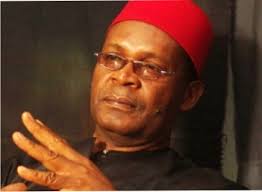
After the civil war, Onoh returned to business but retained active engagement in politics. He was a founding member of Club 13, a group that evolved into the Nigerian People’s Party (NPP), one of the major political parties during the Nigerian Second Republic (1979–1983). Although he initially aligned with the NPP, Onoh later joined the National Party of Nigeria (NPN), reflecting political strategies that prioritized his vision for governance and national unity.
In 1979, he contested for Governor of Anambra State but was unsuccessful. However, in the 1983 gubernatorial election, he stood again on the NPN platform and defeated the incumbent Jim Nwobodo of the Nigerian People’s Party. The election, held on 13 August 1983, was fiercely contested and followed by intense legal battles due to allegations of intimidation and vote-rigging. The Supreme Court ultimately upheld Onoh’s victory, making him the duly elected governor of old Anambra State. Onoh’s governorship, though short-lived lasting only three months, was regarded as formative in challenging entrenched political power and in asserting democratic change. His administration focused on revitalizing state institutions and strengthening public services, even in the face of national instability. However, on 31 December 1983, a military coup led by Major General Muhammadu Buhari dissolved civilian governments across Nigeria, including Onoh’s, ending his tenure prematurely.
Advocate for Regional Interests and the Wawa People
Throughout his career, C.C. Onoh was considered a political champion for the Wawa people, a subgroup of the Igbo ethnic group in southeastern Nigeria known for their distinct cultural identity and economic dynamism. His commitment to representing their interests in national politics earned him the reputation of being the “Godfather of Wawa politics.” One of Onoh’s long-standing political aims was the creation of a separate state for the Wawa people, a movement rooted in aspirations for greater administrative autonomy and development focus. This goal was eventually realized when Enugu State was carved out of old Anambra State in 1991 by the administration of General Ibrahim Babangida, fulfilling a dream that had been central to Onoh’s political advocacy.
Personal Life, Family, and Influence
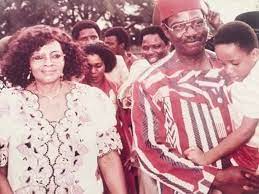
Christian Onoh’s personal life was deeply intertwined with Nigeria’s political and cultural elite. He married Chief Mrs Caroline Chinweolu (née Eke) Onoh, a woman remembered for her moral support and domestic influence, which helped anchor the Onoh family’s public service orientation. Their partnership produced children who have themselves become notable in Nigerian public life.
Among his children is Bianca Odumegwu-Ojukwu, a celebrated beauty queen, international personality, and Nigeria’s former Ambassador to Spain. She is also known for her relationship and marriage to General Chukwuemeka Odumegwu-Ojukwu, leader of the Biafran secessionist government, an alliance that brought national attention to the Onoh family. Another daughter, Lilian Onoh, has pursued a diplomatic career, serving as Nigeria’s ambassador to Namibia. His son Josef Umunnakwe Onoh is a politician and public figure in Enugu State.
Onoh’s family legacy reflects a blend of public service, diplomacy, and cultural influence that continues to shape Nigerian society.
Business and Landed Interests. Beyond politics, C.C. Onoh was also a successful businessman and property owner. Beginning as a contractor in the late 1940s and early 1950s, he invested widely in property across Enugu, Lagos, and Abuja, anticipating the economic potential of real estate decades before urban expansion. He established Rockonoh Property Company Limited and served as its managing director, developing residential estates, commercial properties, and housing units in major cities. Many of his properties were leased to tenants with a reputation for fair treatment and consistent maintenance, earning him admiration within the communities where his estate businesses operated. His property ventures were important because they diversified the Onoh family’s influence and demonstrated how indigenous elites could participate in Nigeria’s real estate economy while retaining social responsibility toward communities.
Death and Posthumous Recognition
C.C. Onoh died on 5 May 2009 at his country home in Ngwo, Enugu State, at the age of 82. His death was widely reported as the passing of a dynamic politician, property magnate, and regional champion whose influence spanned decades of Nigerian public life.
In subsequent years, commentators, scholars, and community leaders have reflected on Onoh’s contributions to Nigerian politics, especially his role in shaping southeastern political identity, advocating for state creation, and pioneering democratic contestation in provincial politics. Historians describe him as a figure whose tenacity and vision extended beyond his own tenure and into the broader struggles for representation, equity, and regional self-determination.
Legacy
Despite a governorship cut short by a military coup, C.C. Onoh’s legacy remains significant in several respects:
- Political Pioneer: As a respected lawyer and elected governor, his success in the 1983 election demonstrated the viability of democratic competition in challenging established incumbents.
- Regional Advocate: His lifelong advocacy for the Wawa people contributed to the eventual creation of Enugu State, a major administrative milestone in southeastern Nigeria.
- Public Administrator: His leadership in organisations like the Nigerian Coal Corporation and the Railway Corporation helped advance Nigerian participation in key economic sectors during the post-colonial era.
- Family Influence: Through his children, especially those in public service and diplomacy, his values and influence continue to be felt in Nigeria’s cultural and political arenas.
Overall, C.C. Onoh’s life embodies a blend of resilience, ambition, and dedication to public service during a period of rapid political change in Nigeria.
Sources and references
- Agajelu, U. (2020). Chief Christian Chukwuma Onoh. UZU Journal, 9(3).
- BLERF. (2017). ONOH, Chief Christian Chukwuma. Biographical Legacy and Research Foundation.
- 1983 Anambra State gubernatorial election. (2024). Wikipedia.
- Historical Nigeria. (2025). Onoh Caroline: Quiet Strength and Grace.
Cite this article
Discussion
Sign in to join the discussion
Comments are checked by an editor before they appear. Leave a source or a correction and it is read first.
Continue reading
No comments yet
Nothing has been approved on this record yet. Comments are checked by an editor before they appear, so one written now shows on this page after that check.