 Ozikoro
Biography · Published history
Celestine Ukwu: Igbo Highlife, Legacy, and the Making of a Legend
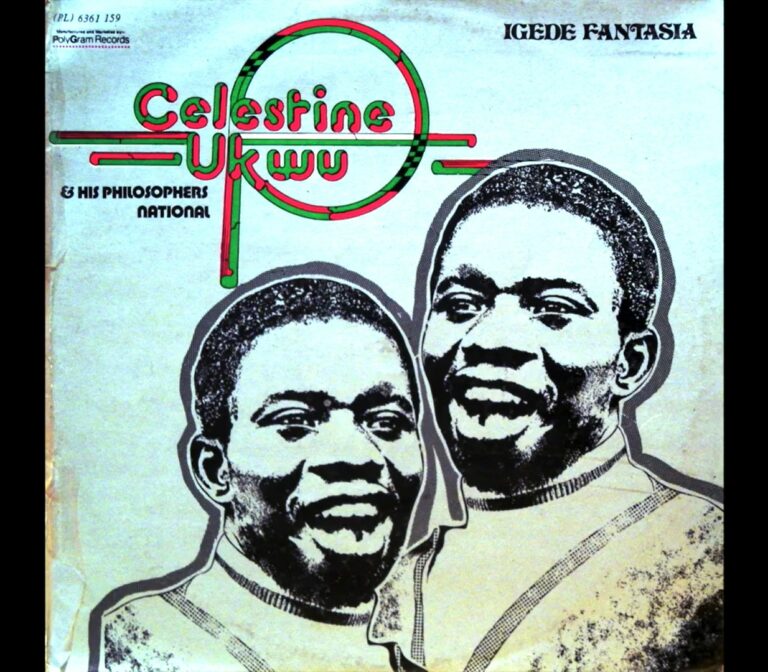
Celestine Ukwu is one of those musicians you can’t listen to without feeling something deep in your chest. His sound wasn’t just music, it was philosophy, emotion, and cultural storytelling wrapped into smooth, deliberate highlife melodies. Even decades after his passing, his voice still carries a calm wisdom that makes you pause and think.
The written record
Historical context
Early Life and Musical Beginnings
Celestine Ukwu was born in 1940 in Enugu State, into a family where music was already part of daily life. He learned the basics of traditional music from his parents, especially the use of local instruments. But it wasn’t until he joined Mike Ejeagha’s band that he began to shape his own style.
A smart, cheerful, honest, soft spoken but hyperactive boy. He took much interest in music. In his primary school days at St. Peters Primary School, Abor, he was the head of the shakpala music group; played with bottles and other local instruments, and later became the leader of Amakekwu Music group formed by his age grade, then in his community, Umuavulu-Abor. He garnered much of his traditional music skills and wisdom from his father and uncles.
Growing up, Celestine Ukwu was a lovable, smart and teachable young boy. His attributes endeared him to many, especially his parents and relatives which was one of the reasons, one of his uncles Vincent Ukwu of the blessed memory took him from the village to live with him in Port Harcourt.
After his primary education, Celestine moved to Maiduguri with another of his uncles, Mr. Felix Okololagwu Ukwu, (a teacher) where he advanced in his education and got his Standard Six Certificate in 1958. He was recruited into the teaching service in Maiduguri. Upon the transfer of his uncle, he moved with him this time to Zaria, where worked for a while more and also acquired a Teachers Training Certificate.
Coming back to the East from Zaria, he co-founded a band named Republic Knight Band. He took greater interest in music in September, 1960, which made him join Mike Ejeagha, shortly after which he took off to Congo Brazaville. He garnered and equipped himself with more and more experience from the then Music Icons like Mr. Picollo, Herbert Udemba, etc, and later moved back to Maiduguri and set up Freedom Jazz Band, with some friends.
Ukwu’s early exposure to highlife musicians helped him develop a calm, reflective sound, one that would later define his career. In an era when most bands were chasing fast rhythms, Ukwu embraced something more relaxed, something “philosophical.”
Celestine Ukwu is known as one of Igbo highlife’s most outstanding philosophical composers. His music first gained prominence around the end of the civil war in 1970 and remains popular today.
His musical heritage armed him with a fundamental grasp of the knowledge, reality, and wisdom deeply rooted in his Igbo identity. Ukwu’s mother was a singer, and his father performed Igbo traditional music, while his grandmother was a folk musician and dancer.
In 1966, Ukwu formed his first band, The Music Royals, which played regularly at the Phoenix Hotel in the commercial city of Onitsha in southeastern Nigeria. After the civil war in 1970, he established a new band, the Celestine Ukwu and His Philosophers National. With this band, Ukwu composed “a relaxed and sensuous form of highlife” that greatly distinguished him from other Igbo highlife musicians of his time. This style of music continued till his abrupt death in a car accident in 1977.
Philosopher and bard
One thing that makes Celestine Ukwu special is his ability to sing like a teacher having a quiet conversation with you. His songs were full of proverbs, deep thoughts, and Igbo wisdom. Tracks like “Ije Enu”, “Igede”, “Elege”, and “Onwu Ama Eze” show a man who understood life’s ups and downs and turned them into melodies. His music didn’t rush. Instead, it made listeners breathe, think, reflect, and appreciate. People often describe Ukwu’s style as “philosophical highlife,” and they’re right. He wasn’t just singing for entertainment; he was teaching lessons. He used: Igbo idioms and proverbs Calm rhythms and soft horns, Deep messages about life, wealth, death, and destiny, A soft, soothing voice that made the message sink in. For example, in “Onwu Ama Eze,” he reminds listeners that death doesn’t recognize kings, everyone is equal in the end. That’s the kind of truth he put into his music.
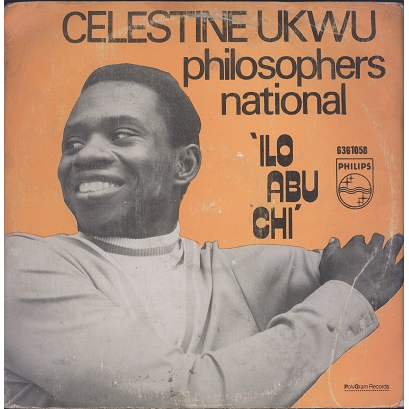
Ukwu’s musical corpus established him as a prodigiously talented and pre-eminent Igbo poet-musician, storyteller, philosophical music composer, and oral musical historian. Between 1971 and 1976, he released six albums; “True Philosophy,” “Tomorrow is so Uncertain,” “Ndu Ka Aku” (Life is greater than wealth), “Ilo Abu Chi” (Enmity is no God), “Ejim Nk’onye” (I’m not holding anyone’s [property]) and “Igede Fantasia.” He has a compilation and eleven singles to his credit, some of which are: “Ejina Uwa Nya Isi”(Do not gloat over worldly possessions), “Ilo Oyi” (The hatred of a friend), and “Ije Enu” (The walk of life).
Nonetheless, it was “Grade by Grade” (“Igede” album), “Ego Eju Aka” (“Ndu ka Aku” album), and the single, “Ije Enu” that notably stamped Ukwu’s genius as a bard, philosopher, and an extraordinary highlife musician.
In “Grade by Grade,” part of the 1975 album “Igede Fantasia,” Ukwu praises the Igbo’s egalitarian spirit that promotes industry and detests the determinism of a premeditated destiny. He emphasized that no one was destined to be poor or rich. Therefore, it was through providence and hard work, that Igbo people have made their way up the ladder of fame or wealth.
A Legacy Built on Authentic Igbo Culture
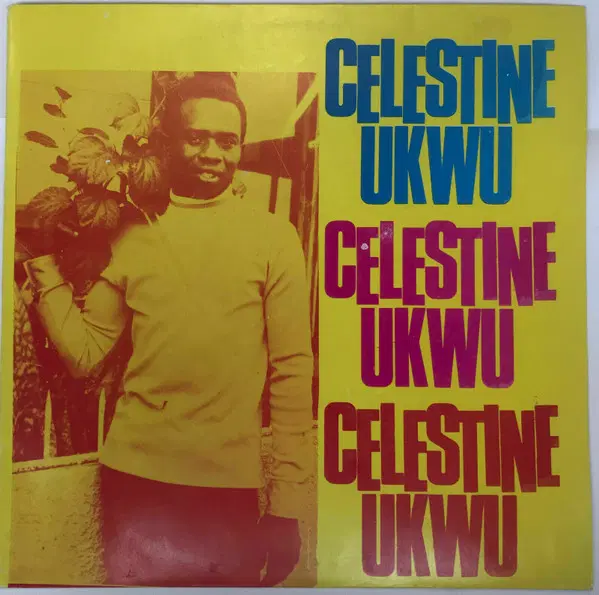
Celestine Ukwu was proudly Igbo. He didn’t try to westernize his sound or chase trends. Instead, he preserved Igbo wisdom in a modern form people could dance to. He showed that a musician could stay rooted in culture and still be nationally celebrated. That’s part of why his songs remain timeless. Celestine Ukwu was a man of the people, a lover of sports, a man of intelligence, a peacemaker and iconic philosopher. With his meditative and curative music, he endeared himself to very many, young and old inclusive. His music knows no bounds and serves as an elixir, guide, comfort, counsel and antidote to social vices, to his numerous fans. A legend, Custodian of culture, African Mythologist, the Igede exponent, an astute philosopher and an outstanding gospel preacher. Celestine Ukwu believed that he came to this world to preach the gospel and tell the truth about life for the betterment of mankind. In all his works, he preaches the basic laws of life and living; love for God and love for neighbors. Despite the profound philosophical messages in his songs, he also modelled, garnished and applied very unique sounds and beats, with the use of even local musical instruments, the end product of which challenges even the most chronic lame to dance.
As a composer, he was very prolific and outstanding with philosophies, centering on all social aspects of life and co-existence. He advocates for peace, love, harmony, forgiveness, patience, hope, faith, hard work, understanding, perseverance, name it. As a singer, he championed his course with immense conviction, empathy and simplicity.
Celestine Ukwu was very soft spoken, gentle, humble, loving and lovely, all of which reflect in all his works. His music took over the stage in the Seventies. He spoke Igbo, English, Hausa, Efik and Pidgin English fluently. He was a very hardworking, happy and contented man. He had about 7 albums and some of his greatest hits include; Ije Enu, Tomorrow is so Uncertain, Ejim Nke Onye, Elege, NduKa Aku, Uwem Ereri Mbot Emi, Igede, Grade by Grade, Asili, Adamma, Uso Ndu, Money Palaver, Akwa Ana Ebelu Ego, Okwukwe Na Nchekwube, Okwu Eji N’elo, Ife Uwa Si Na Chi, Ilo Oyi, etc. In 1976, Celestine Ukwu married Josephine Uzoyibo Okereke-Attah, from a neighboring hamlet, Umuozo-Uwani, of his town. At that time Josephine was schooling at the School of Health, Oji-River, in Enugu State.
He was a very loving and caring husband. Even though he was always touring for his music shows, he would always make out time to visit his wife in school. And he embraced and treated his in-laws with so much love, care and respect as well. Even today, new generations discovering him on streaming platforms or through their parents still appreciate the calmness and depth of his sound.
Sadly, Celestine Ukwu died in a car accident in 1977 at the young age of 37. His career was short, but incredibly impactful. Many believe that if he had lived longer, he would be spoken of alongside the greatest African musicians of all time. But even in his short time, he left behind a catalog that carries wisdom for anyone willing to listen. Celestine Ukwu lived quietly, sang wisely, and left a legacy that refuses to fade. His blend of calm rhythms, reflective lyrics, and deep cultural pride makes him a legend in Igbo highlife. In a world full of loud voices, his soft, thoughtful approach continues to shine.
He may have left early, but his music keeps speaking.
Sources and references
- Okafor, C. (2012). The legacy of highlife music in Nigeria. Lagos: West African Press.
- Uzochukwu, O. (2018). Highlife philosophy and the music of Celestine Ukwu. Enugu: CultureWorks Publishers.
- Nwankwo, F. (202 0). Igbo music heritage: Sounds, identity, and storytelling. Onitsha: Heritage Books.
Cite this article
Discussion
Sign in to join the discussion
Comments are checked by an editor before they appear. Leave a source or a correction and it is read first.
Continue reading
No comments yet
Nothing has been approved on this record yet. Comments are checked by an editor before they appear, so one written now shows on this page after that check.