 Ozikoro
Biography · Published history
Chioma Ebinama: Weaving Igbo Myth and Modern Freedom in A Spiral Shell
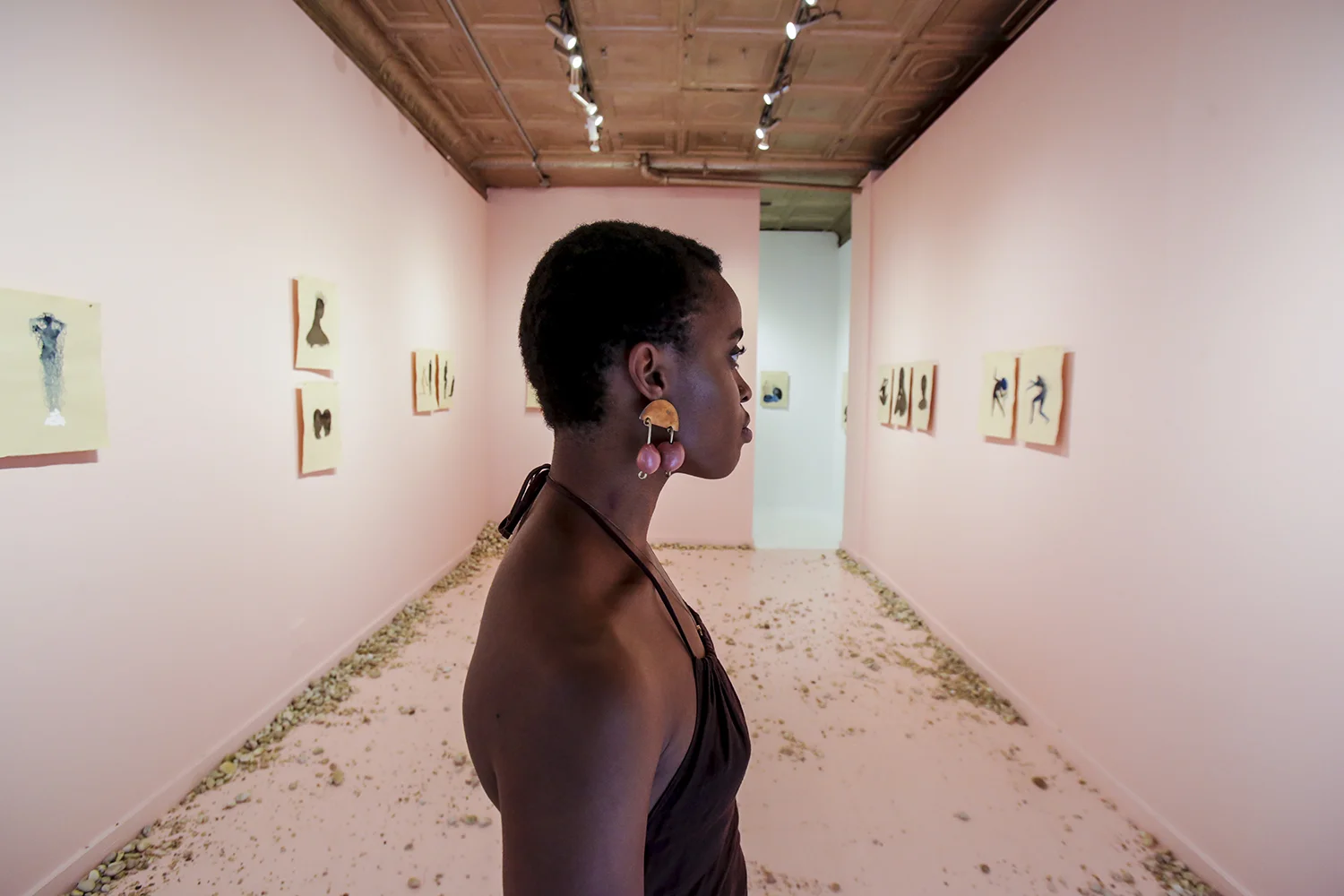
In a quiet gallery in New York, soft watercolour hues meet the gaze like whispers from another realm. Figures float between the real and the ethereal, brown-skinned, adorned in cosmic symbols, their faces serene yet defiant. This is A Spiral Shell, the creation of Chioma Ebinama, the Nigerian-born, U.S.-based artist who has emerged as one of the most evocative interpreters of Igbo spirituality and modern freedom.
The written record
Historical context
The Artist as Storyteller
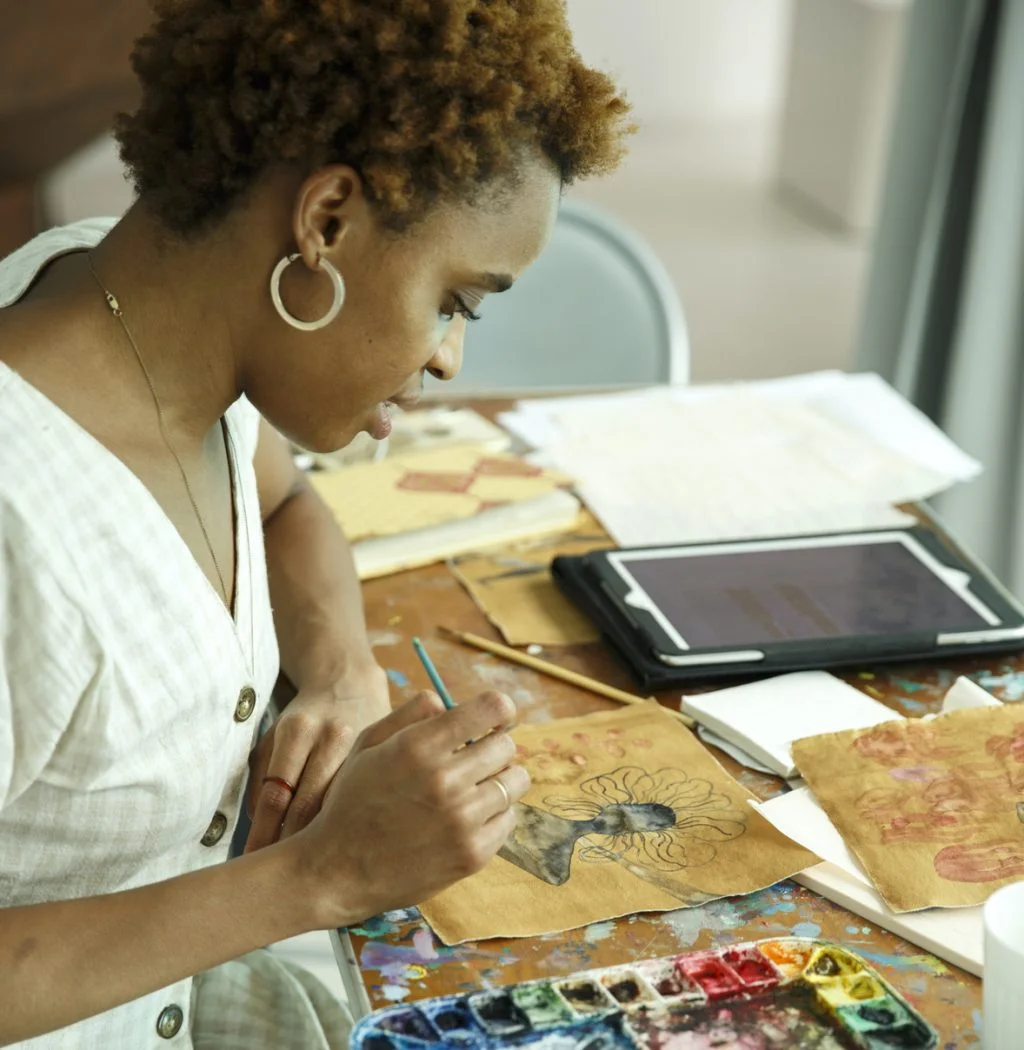
Chioma Ebinama is not just an artist; she is a storyteller who paints in whispers of myth and motion. Through her delicate yet assertive brushstrokes, she transforms the gallery into a sacred grove; ụzọ ndichie, the path of the ancestors. Her works explore themes of gender, spirituality, and transformation, offering a modern interpretation of Igbo cosmology that is both deeply personal and profoundly universal.
Her 2022 solo exhibition, A Spiral Shell, at the Maureen Paley Gallery, London, became a meditation on return, to self, to ancestry, to spirit. In her own words, Ebinama described the “spiral” as “a symbol of life’s cyclical journey, where endings are beginnings.” The shell, a motif rooted in Igbo spirituality, reflects both continuity and rebirth, echoing the Igbo understanding that ndụ bụ ịgagharị (life is a continuous movement).
“Ụwa bụ ofufe chi,” the Igbo say (the world is the worship of the divine). For Ebinama, art itself becomes prayer; her watercolour figures are like spirits dancing between dimensions, inviting viewers to contemplate their own relationship to identity and transcendence.
A Bridge Between Worlds
Born in the diaspora but rooted in Igbo cultural philosophy, Ebinama stands at the intersection of two worlds: the seen and unseen. Her art reclaims indigenous imagination from colonial distortion, presenting African spirituality not as relic, but as living wisdom.
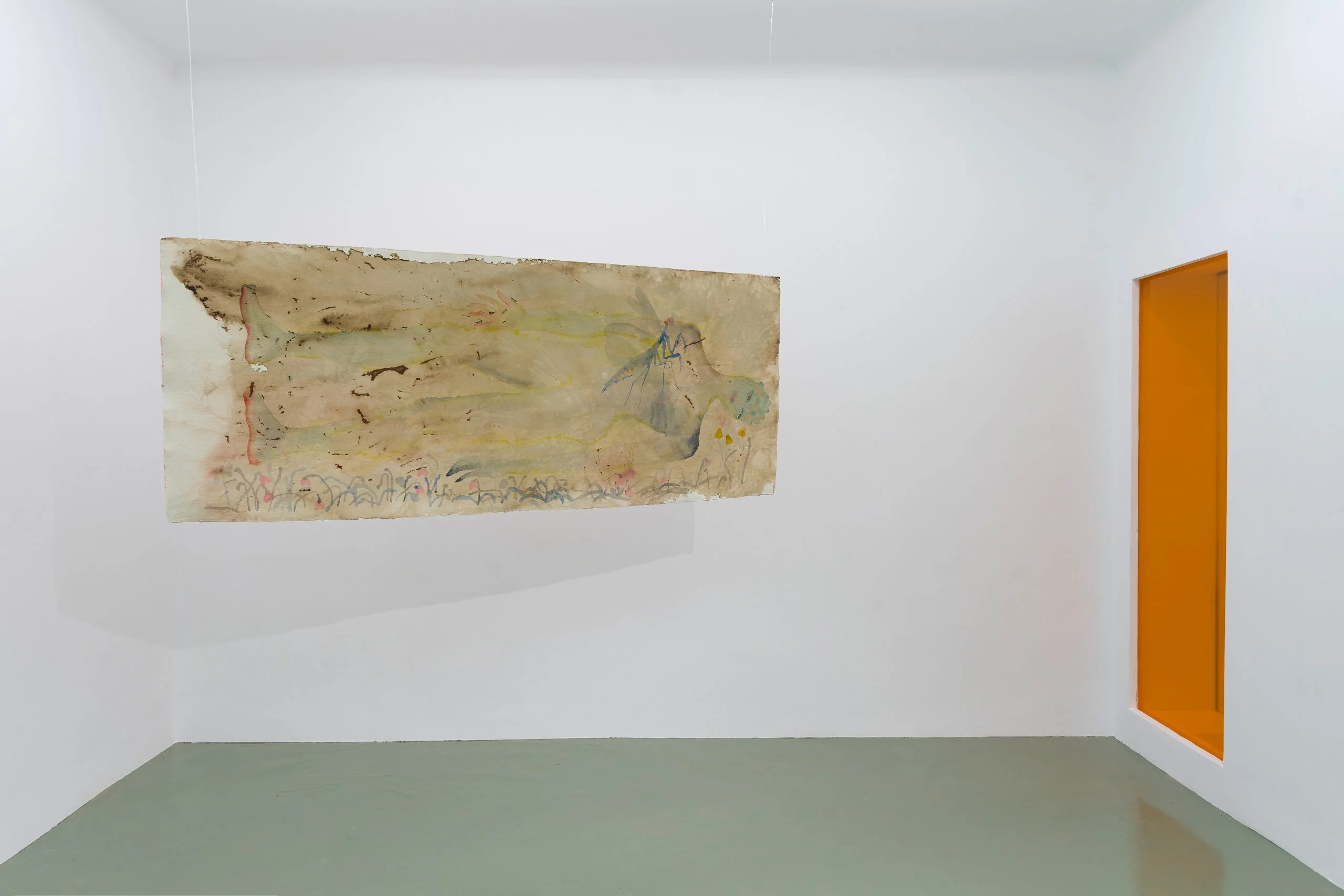
In A Spiral Shell, she portrays figures that seem suspended in time;half-human, half-spirit, invoking Chukwu (the Supreme Being), Ani (the Earth goddess), and the cosmic harmony of duality. Her imagery resists Western binaries, embracing fluidity of gender, of faith, of form. In doing so, she joins a lineage of artists like Ben Enwonwu and Nsikak Essien, yet her voice remains distinctly feminine, ethereal, and quietly rebellious.
Her work embodies the proverb: “Onye mara ihe nna ya kwere, o buru onye n’ọma.” (He who remembers the ways of his ancestors becomes wise). This remembering icheta ihe gara aga is the pulse of her art. Through ancestral memory, she creates new vocabularies of freedom.
The Spiral as Freedom
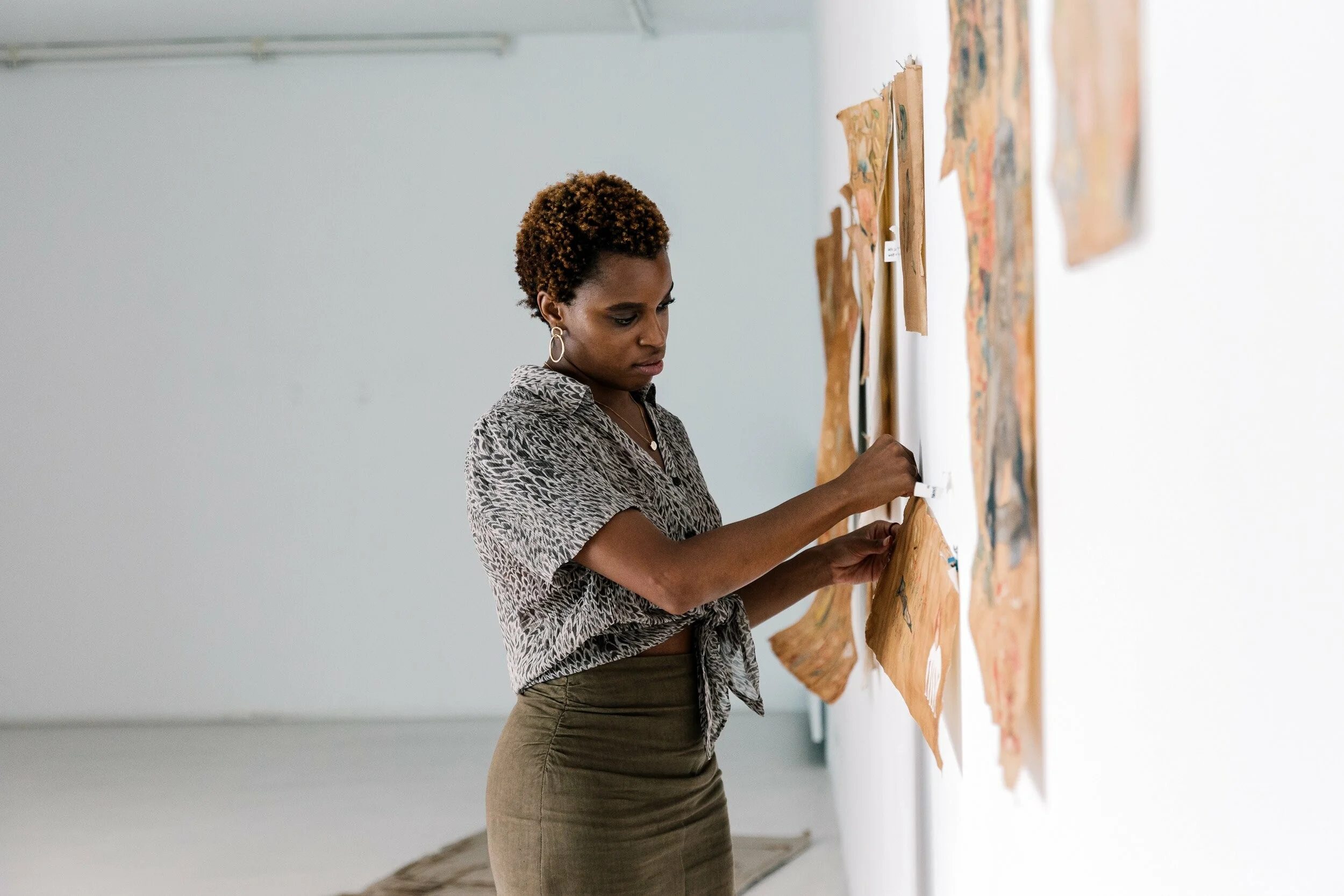
At the heart of A Spiral Shell lies a quiet revolution, a redefinition of freedom. For Ebinama, liberation is not just political; it is spiritual, internal, and cyclical. She dismantles linear Western notions of progress and instead proposes a more Igbo worldview, where time moves in spirals and identity unfolds like the shells that inspire her.
Each figure she paints embodies mmụọ (spirit). They seem to breathe, to float, to question. Her art asks: what does it mean to be free? To return to one’s essence? To belong, not through borders, but through being?
In many ways, her art mirrors the Igbo proverb: “A sị na chi onye bụ ụzọ ya.” (A person’s destiny is their path). The spiral becomes that path; unpredictable, organic, sacred. Through it, Ebinama tells a universal story of return and renewal, one that resonates with both the diaspora and those at home.
Between Feminism and Ancestral Wisdom
Ebinama’s voice also reflects a feminine reclamation, one that merges womanhood with sacred authority. Her women are not passive muses; they are priestesses, healers, dreamers, nwaanyị dị nsọ (sacred women). In her world, to be female is to hold the power of creation, mirroring Ani, the goddess of the earth and morality.
Her fluid lines and gentle palettes invite calm but also confrontation, a challenge to systems that once silenced African women. She paints the freedom of being soft yet strong, rooted yet cosmic.
This artistic duality, balancing tenderness and rebellion, is what makes Ebinama’s work universal. Whether one sees it as feminist art, African modernism, or spiritual abstraction, her essence remains Igbo: relational, cyclical, alive.
Legacy and Reflection
As the exhibition A Spiral Shell continues to travel, it invites global audiences into an Igbo worldview, where spirituality, art, and identity intertwine. Through her work, Ebinama reaffirms what Kenneth Dike, Adiele Afigbo, and other intellectual ancestors began: reclaiming African narratives from the margins.
Her paintings are not just visuals; they are invocations. They whisper that freedom is remembrance, that art is prayer, and that to know oneself is to return home.
Or as the Igbo proverb beautifully puts it: “Onye na-amaghị ebe mmiri bidoro mụọ ya, agaghị ama ebe ọ ga-akwụsị.” (He who does not know where the rain began to beat him will not know where it will stop). Through A Spiral Shell, Chioma Ebinama remembers and teaches the world to remember with her.
Sources and references
- Ebinama, C. (2022). A Spiral Shell . Maureen Paley Gallery, London.
- Falola, T., & Heaton, M. M. (2008). A history of Nigeria. Cambridge University Press.
- Igbo Journal Review. (2022, January). Legendary Folklorist: Chioma Ebinama and the Spiritual Vision of A Spiral Shell . Retrieved from https://www.igbojournalreview.com/2022/01/chioma-ebinama-spiral-shell-at-maureen.html
- Okeke-Agulu, C. (2015). Postcolonial modernism: Art and decolonisation in twentieth-century Nigeria. Duke University Press.
Cite this article
Discussion
Sign in to join the discussion
Comments are checked by an editor before they appear. Leave a source or a correction and it is read first.
Continue reading
No comments yet
Nothing has been approved on this record yet. Comments are checked by an editor before they appear, so one written now shows on this page after that check.