 Ozikoro
 Biography · Published history
Christy Essien-Igbokwe: The Voice of Nigeria’s Musical Golden Age
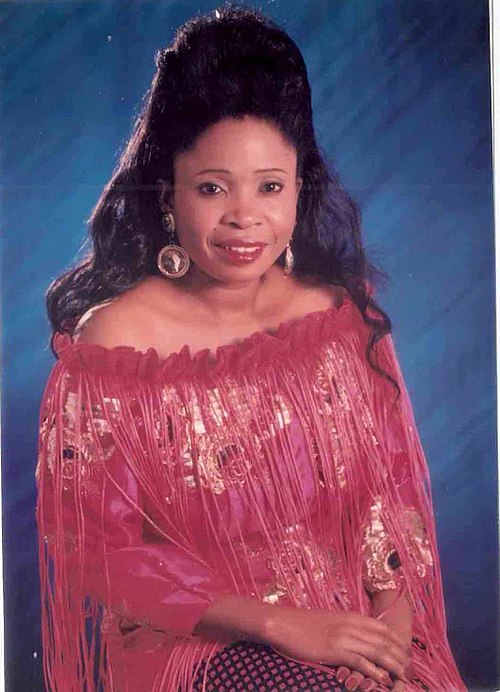
Christy Essien-Igbokwe (1960–2011) remains one of the most celebrated icons in Nigerian music and entertainment. Known widely as the “Lady of Songs,” she combined linguistic versatility, cultural storytelling, and social advocacy to transform the landscape of modern Nigerian pop and highlife. Her contributions to music, film, and institutional reform within the creative industry solidified her place as a central figure in West African cultural history.
The written record
Historical context
Early Life and Cultural Influences
Born on November 11, 1960, in Akwa Ibom State, Christy Essien lost her mother at a young age, a childhood experience she later described as foundational to her emotional depth and artistic expression. She grew up in Aba, in the present-day Abia State, where exposure to Igbo culture and eastern Nigerian musical styles shaped her earliest creative instincts.
Her multilingual environment mixing Ibibio, Igbo, Yoruba, and Hausa, would later empower her to sing across ethnic lines, contributing to her national appeal.
Rise to Musical Stardom
Early Career and Breakthrough;
Christy Essien’s career began in her teens. She first gained public attention through the popular Nigerian television series “New Masquerade,” where she played the role of Apena. Her acting visibility helped launch her music career.
Her debut album, “Freedom”, introduced her powerful voice and emotional range. However, it was her subsequent albums especially “Give Me a Chance” and “Ever Liked My Person?” that established her as a major star in the Nigerian music industry.
The ‘Lady of Songs’;
Essien earned her famous title for her unmatched ability to sing in multiple Nigerian languages. Her hits such as “Seun Rere,” “Tete Nula,” “Akwa Ibom Ayaya,” and “Ife”, became national anthems. “Seun Rere,” in particular, marked her as a socially conscious artist, addressing parental discipline, child welfare, and moral upbringing.
Her music blended highlife, Afro-pop, folk rhythms, and soul, creating a style that appealed across generations and regions.
Themes and Significance in Her Music
Cultural Unity and Multilingual Expression;
Christy Essien’s bilingual and quadrilingual performances promoted national cohesion. By singing in Yoruba, Igbo, Hausa, and Ibibio, she embodied the multicultural vision of post-civil-war Nigeria.
Her songs often addressed child neglect and discipline (“Seun Rere”), women’s vulnerability, the importance of love and unity, and the emotional resilience of Nigerians.
Her ability to marry social messaging with danceable melodies earned her respect both as an entertainer and a social voice.
Although she did not label herself a feminist, many of Christy Essien-Igbokwe’s works championed the rights and dignity of women. She advocated publicly for improved rights for female artists and protection from exploitation in the entertainment industry
Acting Career;
Beyond music, Essien-Igbokwe featured in several pioneering Nollywood films, including Flesh and Blood, Scars of Womanhood, and A Brighter Future. Her acting roles often mirrored the themes of her songs, emphasizing family values, women’s experiences, and social responsibility.
Founding Member of PMAN;
One of her greatest contributions was her role in establishing the Performing Musicians Association of Nigeria (PMAN) in 1981. Alongside King Sunny Ade and Sonny Okosuns, she pushed for an organization that would protect artists’ rights, welfare, and intellectual property.
She later became PMAN’s first female president (1996–1999), leading reforms in copyright protection and creative-industry regulation.
Photo credit: Connect Nigeria.
International Recognition and Influence
Christy Essien-Igbokwe represented Nigeria at numerous cultural festivals and international events, including FESTAC ’77, which showcased African and diaspora creativity. Her music gained listeners across West Africa and in the diaspora, enhancing Nigeria’s cultural diplomacy during the late twentieth century.
Her songs have been sampled and reinterpreted by contemporary Nigerian artists, reflecting her enduring relevance.
Despite declining health in her final years, Essien remained active in advocacy and mentorship within the entertainment sector. She passed away on June 30, 2011, in Lagos. Her death prompted widespread national mourning, with tributes from musicians, actors, government officials, and fans.
Christy Essien-Igbokwe’s legacy is evident in her pioneering multilingual style, her elevation of Nigerian highlife and pop, her role in institutionalizing artists’ rights, and her position as a model for female success in a male-dominated industry.
Many female Nigerian artists including Onyeka Onwenu, Tiwa Savage, and Yemi Alade, cite her as a trailblazer who opened doors for women in entertainment.
Her cultural contributions earned her multiple awards, including national honors and industry commendations. Today, she is remembered as one of the voices that defined Nigeria’s artistic golden age.
Christy Essien-Igbokwe was more than a singer; she was a cultural bridge, social advocate, and guardian of Nigeria’s moral and artistic heritage. Her life and music illustrate the transformative potential of artistry rooted in cultural pride and social commitment. Through her songs, films, activism, and leadership, she helped shape Nigeria’s creative industries and left a legacy that continues to inspire new generations.
Sources and references
- Oboh, G. A. (2014). Music, identity, and nation-building in Nigeria. Lagos Academic Press.
- Okafor, R. C. (2015). Nigerian musical heritage and contemporary popular music. Nsukka: University of Nigeria Press.
- Udo, E. (2013). Christy Essien-Igbokwe and the evolution of Niger ian popular music. Nigerian Music Review, 12(2), 45–59.
Cite this article
Discussion
Sign in to join the discussion
Comments are checked by an editor before they appear. Leave a source or a correction and it is read first.
Continue reading

No comments yet
Nothing has been approved on this record yet. Comments are checked by an editor before they appear, so one written now shows on this page after that check.