 Ozikoro
Biography · Published history
Chukwurah Philip Emeagwali: Igbo Genius of Innovation
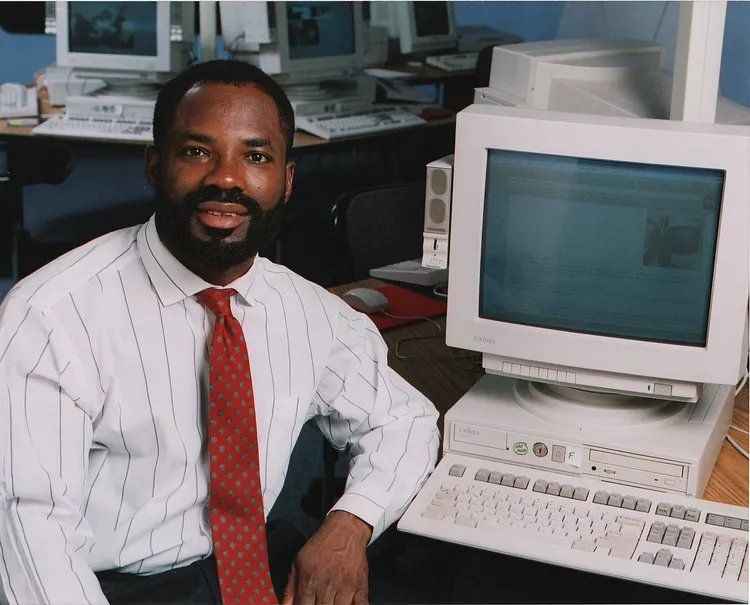
In the heart of Onitsha, where the River Niger whispers stories of resilience and destiny, a boy named Chukwurah Philip Emeagwali was born in 1954. His journey began humbly, shaped by the spirit of the Igbo saying, “Nwata kịrị n’aka nne ya, adịghị ama na ọ na-agba ọsọ.” (A child carried by the mother does not realize he is running.) This proverb captures Emeagwali’s early years; he did not yet know that his inquisitive mind would one day race beyond the boundaries of continents.
The written record
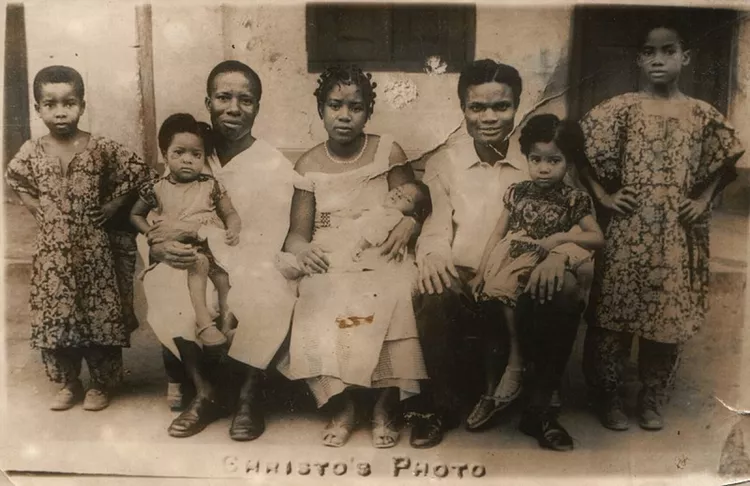
His father, James Emeagwali, a diligent civil servant, saw education as the key to unlocking the greatness within his children. At a young age, Philip displayed an extraordinary love for numbers and patterns. The Nigerian Civil War disrupted his schooling, forcing his family into hardship and exile. Yet, from the ashes of conflict rose an unyielding desire for knowledge. He constructed simple machines from discarded materials, using curiosity as his lamp in the dark.

Historical context
Education and the Road to Discovery
Emeagwali’s academic pursuit began in Nigeria and later extended to the United States, where he studied at the University of Oregon and George Washington University, earning degrees in mathematics and civil engineering. He eventually obtained a PhD in Scientific Computing, making him one of the first Nigerians to reach that academic level in the field.
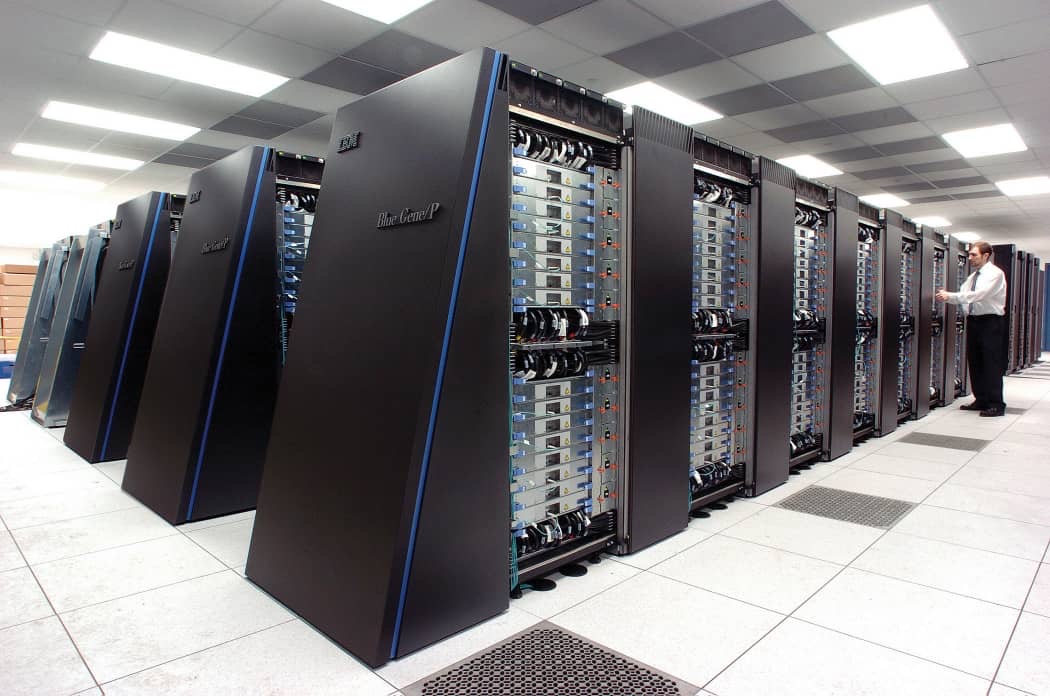
In his graduate studies, Emeagwali confronted one of the most complex problems in computer science: how to make computers think and work faster. Drawing inspiration from nature, particularly the behaviour of honeybees in a colony, he envisioned a way to enable multiple processors to communicate and collaborate simultaneously. This idea gave birth to what would later be known as parallel processing; the foundation for modern supercomputers and the technology behind cloud computing, search engines, and even artificial intelligence.
He famously stated, “The fastest computer is not built by speed, but by unity.” In his Igbo worldview, this reflected the proverb, “Igwe bụ ike.” (There is strength in unity). Just as the Igbo village thrives through collective effort, Emeagwali’s supercomputer thrived through interconnected processors working together.
The Revolutionary Discovery
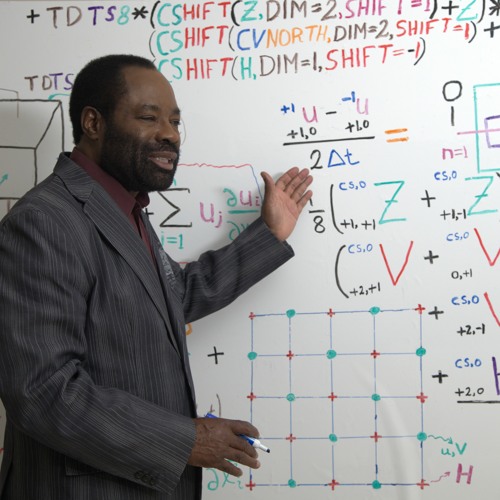
Emeagwali’s breakthrough came when he discovered a mathematical formula that enabled 65,000 processors to communicate effectively, simulating the motion of fluids such as oil within the earth. His work contributed immensely to the petroleum industry by helping engineers locate and manage oil fields more efficiently.
This discovery earned him the Gordon Bell Prize in 1989, often described as the “Nobel Prize of Computing.” The world took notice; the boy from Onitsha had transformed into an international symbol of African intellectual power. His invention was not merely scientific; it was philosophical. It reflected the Igbo principle of ụmụnne na ezi omume (kinship and righteous purpose). For Emeagwali, technology was not an end in itself but a bridge between the human mind and the natural order.
Recognition and Legacy
Emeagwali’s genius drew global attention, earning him numerous accolades, honorary degrees, and recognition from world leaders. He was once described by former U.S. President Bill Clinton as “one of the great minds of the Information Age.” His achievements challenged Western perceptions of Africa, showing that intellectual excellence thrives equally in Onitsha as it does in Oxford.
Despite controversies that later surrounded his claims, one truth remains unshaken: Philip Emeagwali’s story ignited pride in African innovation. He became a symbol of what an Igbo child could achieve with determination, resourcefulness, and vision.
His legacy continues to inspire a new generation of African scientists, reminding them of the saying, “Ọ bụghị ebe mmadụ si malite ka ọ dị mkpa, kama ebe ọ na-aga.” (Where one starts from is not as important as where one is going). Today, his work on computational models remains foundational in data science, artificial intelligence, and digital simulation, fields that define our modern world.
The Igbo Spirit of Innovation
Emeagwali’s success cannot be separated from his Igbo heritage. The Igbo are a people defined by ingenuity, trade, and the constant quest for progress. From the blacksmiths of Awka to the inventors of Nnewi, the Igbo tradition honours those who create solutions from scarcity.
In that lineage, Emeagwali stands tall. His story embodies the Igbo virtue of ịgbalịsie ike (hard work and perseverance). His innovations mirror the communal rhythm of Igbo life, where progress is shared and wisdom is passed through generations.
In his narrative, we see the meeting of two worlds: the traditional Igbo belief in interconnectedness and the modern pursuit of computational intelligence. Both seek order in complexity; both aim to harmonize many parts into one functioning whole.
Chukwurah Philip Emeagwali’s life is more than a biography of scientific success; it is a testament to the limitless potential of the human spirit when guided by culture, curiosity, and courage. His journey from the dusty streets of Onitsha to the halls of global recognition reminds us that innovation is not foreign to Africa; it is born from its soil.
His story whispers a message that echoes across generations: “Ka anyị na-achọ ihe ọhụụ, anyị echefula mgbọrọgwụ anyị.” (As we seek innovation, let us not forget our roots). Emeagwali remains not just a man of science but a son of Igbo heritage, one who transformed his people’s age-old wisdom into the algorithms that now shape the digital age.
Sources and references
- Biography.igbopeople.org. (n.d.). Chukwurah Philip Emeagwali.
- Emeagwali, P. (n.d.). Education Timeline.
- Wikipedia. (2024, October). Philip Emeagwali.
Cite this article
Discussion
Sign in to join the discussion
Comments are checked by an editor before they appear. Leave a source or a correction and it is read first.
Continue reading
No comments yet
Nothing has been approved on this record yet. Comments are checked by an editor before they appear, so one written now shows on this page after that check.