 Ozikoro
 Biography · Published history
Colonel Joseph Achuzie – Life and Legacy
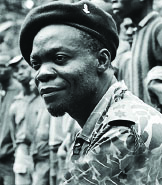
Colonel Joseph “Hannibal” Achuzie remains one of the most notable military figures associated with the Nigerian Civil War (1967–1970). Known for his bravery, controversial command style, and unwavering dedication to the Biafran cause, Achuzie played a significant role in several key military engagements during the conflict. Beyond the battlefield, his life reflected the complex political and social realities of Nigeria during a turbulent period in its history. His contributions as a soldier, engineer, and community leader continue to attract historical attention. This essay examines the life, military career, and enduring legacy of Colonel Joseph Achuzie.
The written record
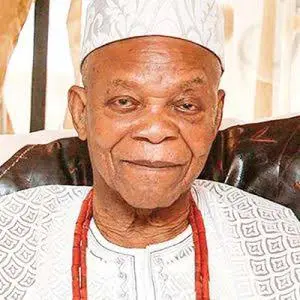
Historical context
Early Life and Education
Joseph Achuzie was born in 1929 in Asaba, in present-day Delta State, Nigeria. Growing up in colonial Nigeria, he experienced a period of major political and social transformations that shaped the aspirations of many young Nigerians. Achuzie pursued higher education in engineering and later became a British-trained aeronautical engineer. His technical training allowed him to work professionally as an engineer before his involvement in military affairs.
Before the outbreak of the Nigerian Civil War, Achuzie operated an engineering business in Port Harcourt. His professional background as an engineer distinguished him from many traditional military officers of the time and reflected the growing presence of educated African professionals in postcolonial Nigeria. However, political tensions and ethnic conflicts in Nigeria during the 1960s eventually drew him into military involvement.
Entry into the Nigerian Civil War
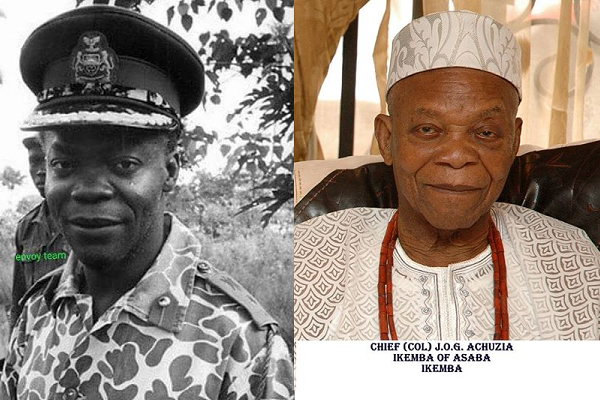
The Nigerian Civil War began in 1967 after the Eastern Region declared independence as the Republic of Biafra under the leadership of Chukwuemeka Odumegwu Ojukwu. Like many Igbo and Eastern Nigerians, Achuzie joined the Biafran Army following rising ethnic tensions and violence in Nigeria. Initially serving as a militia fighter, his leadership abilities quickly became apparent, leading to his commission as a Major in the Biafran Army. Achuzie’s military effectiveness earned him the nickname “Hannibal,” referencing the famous Carthaginian general known for his strategic brilliance. The nickname symbolized both his tactical boldness and the respect he commanded among fellow soldiers. Over time, Achuzie rose to command several units, including the Biafran 11th Battalion and the 11th Division.
Military Leadership and Battlefield Contributions
During the Nigerian Civil War, Achuzie participated in several major battles and military operations. His forces played roles in battles around Onitsha, Port Harcourt, and Owerri key strategic locations during the war. The First and Second Invasions of Onitsha were particularly significant engagements in which Biafran troops, including those under Achuzie’s command, attempted to resist Nigerian federal forces.
Achuzie was also involved in military operations such as Operation OAU and the Siege of Owerri. Operation OAU was a major confrontation between Nigerian federal troops and Biafran forces in 1968. Despite being heavily outnumbered, Biafran troops managed to hold strategic positions and temporarily recapture important cities such as Owerri and Aba. Achuzie’s leadership style was often described as fearless and aggressive. His military tactics sometimes relied on guerrilla warfare and rapid counterattacks, which allowed smaller Biafran forces to challenge larger Nigerian federal troops. These actions earned him both admiration and controversy, as some critics viewed his command style as uncompromising.
Despite numerous military setbacks faced by Biafra during the war, Achuzie remained a committed defender of the secessionist state until its final collapse in January 1970. When Biafra surrendered, he was among the senior officers involved in the negotiations that formally ended the conflict.
Post-War Life and Community Leadership
After the war ended in 1970, Achuzie was detained briefly before eventually returning to civilian life. Like many former Biafran soldiers, he had to rebuild his life in a reunited Nigeria. He returned to his hometown of Asaba, where he lived for the rest of his life.
In his later years, Achuzie became a respected community leader and traditional figure. He held the title “Ikemba of Asaba,” reflecting his status and influence within the community. Beyond local leadership, he also participated in Igbo socio-cultural organizations, including Ohanaeze Ndigbo, where he served in leadership roles advocating for Igbo interests and unity. Even decades after the war, Achuzie remained outspoken about issues affecting the Igbo people and Nigeria as a whole. His views often reflected his lifelong commitment to justice, fairness, and regional development.
Death and Tributes
Colonel Joseph Achuzie died on February 26, 2018, at the age of 90 at the Federal Medical Centre in Asaba. His death attracted widespread reactions across Nigeria, particularly among Igbo leaders and historians who recognized his role in the civil war and his contributions to community development.
Tributes described him as a courageous soldier, a patriot, and a man deeply committed to the welfare of his people. Leaders of Ohanaeze Ndigbo praised his courage and dedication to the Igbo cause, noting that his military exploits and leadership would remain an important part of Nigerian historical memory.
Legacy and Historical Significance.
The legacy of Colonel Joseph Achuzie is closely linked to the history of the Nigerian Civil War and the broader struggle for identity and political recognition in Nigeria. His military career reflects the complexities of the war, which involved issues of ethnicity, political power, and national unity.
For many Igbo communities, Achuzie represents courage and resistance during a period of profound hardship. His story illustrates the experiences of many individuals who were drawn into conflict by historical circumstances beyond their control.
At the same time, his life highlights the broader themes of reconciliation and reintegration after conflict. After the war, Achuzie returned to civilian life and became involved in community leadership, demonstrating the possibility of rebuilding society after devastating conflict. Colonel Joseph Achuzie’s life embodies the intersection of engineering expertise, military leadership, and community service. From his early career as an engineer to his role as a Biafran military commander and later as a respected community leader, Achuzie’s story reflects the challenges and transformations of Nigeria during the twentieth century. While debates about the Nigerian Civil War continue among historians, Achuzie’s contributions remain a significant part of the historical narrative. His courage, leadership, and dedication to his people ensure that his legacy will continue to be remembered in discussions of Nigerian history and the Biafran experience.
Sources and references
- Punch Newspapers. (2018). “Civil war veteran, Achuzia, dies at 90.”
- Independent Newspaper. (2018). “Okowa mourns Biafra hero, Achuzia.”
- Independent Newspaper. (2018). “Achuzie: The death of a Biafran war lord.”
Cite this article
Discussion
Sign in to join the discussion
Comments are checked by an editor before they appear. Leave a source or a correction and it is read first.
Continue reading
No comments yet
Nothing has been approved on this record yet. Comments are checked by an editor before they appear, so one written now shows on this page after that check.