 Ozikoro
 Cultural Heritage · Published history
Credit, Culture, and Control: Pawnship and the Regulatory Power of the Ekpe and Oghu Systems
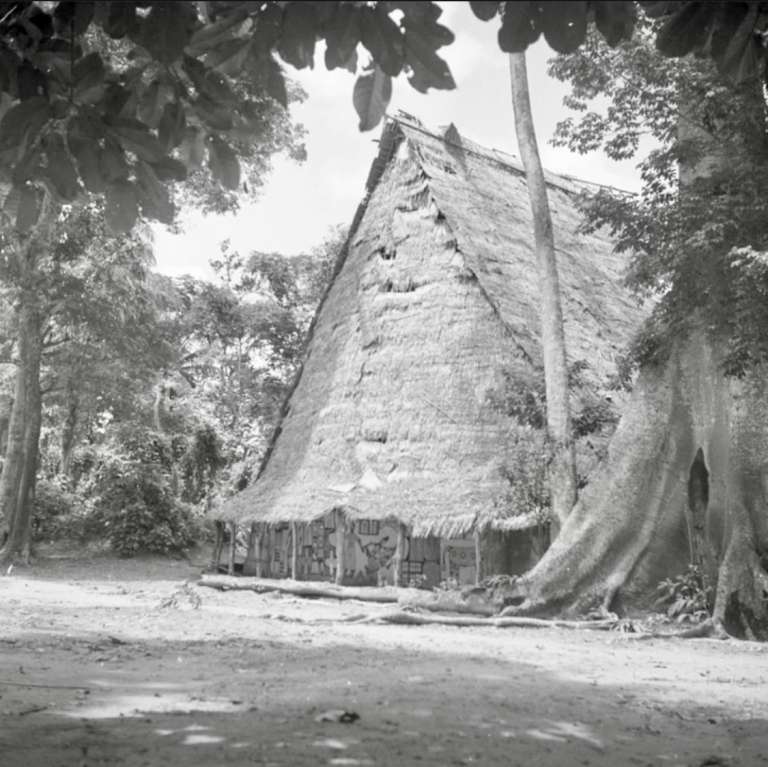
The pre-colonial and early colonial economies of the Bight of Biafra and the Niger Delta were built on a sophisticated bedrock of credit. In an era before standardized banking and colonial legal courts, the “commercial empire” of West Africa relied on indigenous institutions to ensure the sanctity of contracts and the repayment of debts. Central to this economic stability were the systems of “pawnship” and the regulatory oversight of secret and semi-secret societies, most notably the Ekpe (Leopard) Society among the Efik and Quas, and the Oghu system (and similar titling societies) among the Itsekiri and neighboring groups. These systems were not merely social clubs; they were the “judicial and executive arms” of the economy, ensuring that “trade debts” were honored and that the vast networks of palm oil commerce did not collapse under the weight of insolvency.
The written record
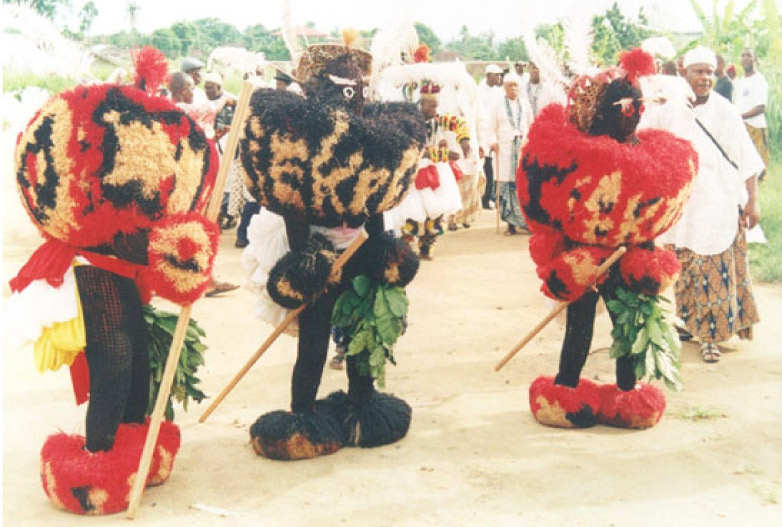
Photo Credit: G. I. Jones Archives / Museum of Archaeology and Anthropology, Cambridge.
Historical context
The Concept of Pawnship in West African Trade
Pawnship was a socio-economic arrangement where a person was given as collateral for a debt. It was fundamentally different from chattel slavery, although the two are often conflated in Eurocentric histories;
- Human Collateral: In the absence of a land-tenure system that allowed for the mortgaging of property, human beings often relatives or dependents of the debtor served as the “pawn.” The labor of the pawn usually represented the interest on the loan, while the principal remained to be paid.
- A Mechanism for Credit: This system allowed ambitious African merchants to secure large quantities of European goods (the “trust system”) by providing pawns to local creditors. It ensured that the creditor had a “physical guarantee” of the debtor’s commitment to the transaction.
Rights and Limitations: Under indigenous law, a pawn retained certain rights and could not be sold into overseas slavery unless the debt became “unredeemable” over generations, though the line became increasingly blurred during the height of the Atlantic trade.
The Ekpe Society: The Commercial Police of Old Calabar
The Ekpe (or Egbo) society was perhaps the most powerful regulatory body in the history of the Cross River region. It functioned as a trans-ethnic guild that transcended lineage loyalties to enforce “commercial law;
- The Enforcement of Debt Collection: One of the primary roles of Ekpe was to recover “trade debts.” If a merchant defaulted on a debt to another member, the society could “blow Ekpe” on the debtor. This effectively placed the individual under house arrest and brought all their commercial activities to a standstill until the debt was cleared.
- Graduated Authority: The society was divided into grades (such as Nyamkpe or Oku Akama). Higher grades required larger entry fees, meaning only the wealthiest and most successful traders could reach the positions of highest legislative power. This ensured that the “laws of trade” were written by those with the greatest stake in the economy.
- The “Messenger” of the Leopard: The society utilized masked figures known as Idem Ekpe to enforce its decrees. These figures could seize property or even execute offenders, providing a “physical deterrent” against the “bad faith” in commercial dealings.
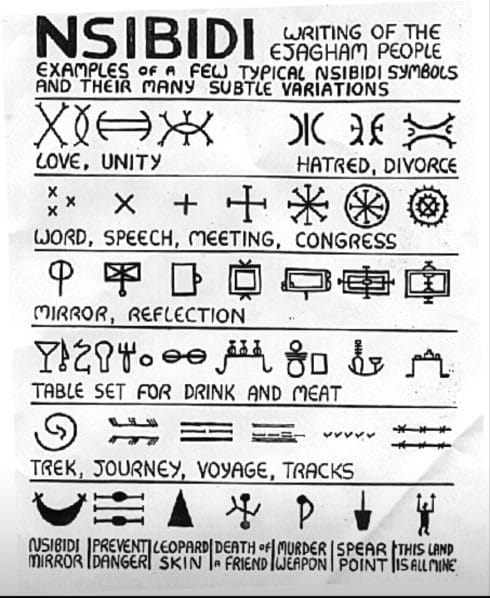
Examples of Nsibidi symbols, the secret script used by the Ekpe society to communicate laws and handle administrative matters.
Photo Credit: Pitt Rivers Museum, University of Oxford.
The Oghu and Titling Systems in the Niger Delta
In the western Niger Delta, particularly among the Itsekiri and Urhobo, the regulation of commerce and debt fell to institutions like the Oghu and various “House” leadership structures;
- Regulating the “Trust System”: European traders would often give goods to African middlemen on “trust” (credit), expecting palm oil in return months later. The Oghu system provided the social framework to ensure these “middlemen” did not disappear into the hinterland without fulfilling their obligations.
- Social Ostracism as a Tool: If a merchant failed to pay his debts or violated the “customary laws of the market,” the Oghu or the community elders could impose a ban on trading with that individual. In a society where survival depended on the “House” network, being ostracized was a financial death sentence.
- Chiefly Arbitration: Leaders like Chief Nana Olomu utilized these indigenous regulatory frameworks to consolidate power. By being a primary patron within these societies, a Chief could ensure that his own debts were collected with the “full weight of tradition” while simultaneously mediating the debts of others.
The Intersection of Debt and Social Hierarchy
The use of Ekpe and Oghu to regulate commerce created a unique “plutocratic” social structure;
- Wealth as Political Power: Because entry into these regulatory societies required significant capital, wealth was directly converted into “legal authority.” This created a stable environment for “long-distance trade,” as a merchant from Calabar could trust a merchant from the interior if both were members of the same Ekpe grade.
- Protection of the “House” System: These systems protected the integrity of the “House.” If a member of a House incurred a debt, the entire House was often held responsible. The Ekpe or Oghu systems provided the “litigation framework” to settle these collective liabilities without resorting to inter-communal warfare.
Colonial Encroachment and the Decline of Indigenous Regulation
With the arrival of formal British rule in the late 19th century, the “sovereignty” of the Ekpe and Oghu systems was viewed as a threat to the Crown’s authority;
- The Suppression of “Secret Societies”: British officials often characterized Ekpe as a “barbaric secret society” to justify its suppression. In reality, the British wanted to replace Ekpe’s “commercial courts” with colonial “Native Courts” presided over by British District Officers.
- The Abolition of Pawnship: The British passed ordinances against “human collateral” (pawnship), viewing it as a form of slavery. While humanitarian in rhetoric, this move also served to “disrupt the local credit system,” forcing African merchants to rely on British banks and colonial legal structures for their commercial needs.
- The Shift to Individualism: The colonial legal system favored individual liability over the “collective responsibility” enforced by the House and the Oghu, leading to the fragmentation of the traditional commercial empire. The Ekpe and Oghu systems represent a sophisticated chapter in African economic history. They proved that pre-colonial societies possessed the “institutional capacity” to manage complex, international trade networks through a blend of social prestige, religious awe, and physical enforcement. Pawnship provided the “liquidity” needed for expansion, while the societies provided the “regulatory oversight” that prevented systemic collapse. Understanding these systems is essential to appreciating the “resilience and complexity” of African commerce before it was subsumed by the administrative mandates of the British Empire.
Sources and references
- Bassey, M. O. (1998). Missionary Rivalry and Educational Expansion in Nigeria, 1885-1932. Peter Lang Publishing.
- Dike, K. O. (1956). Trade and Politics in the Niger Delta, 1830-1885. Oxford: Clarendon Press.
- Falola, T., & Lovejoy, P. E. (1994). Pawnship in Africa: Debt Bondage in Historical Perspective. Westview Press.
- Latham, A. J. H. (1973). Old Calabar, 1600-1891: The Impact of the International Economy upon a Traditional Society. Clarendon Press.
- Northrup, D. (1978). Trade Without Rulers: Pre-Colonial Economic Development in South-Eastern Nigeria. Oxford University Press.
Cite this article
Discussion
Sign in to join the discussion
Comments are checked by an editor before they appear. Leave a source or a correction and it is read first.
Continue reading
Related histories
 Cultural HeritageEleven Days of Nwafor Ogidi: Inside the Festival Keeping an Old Igbo Tradition AliveRead history →
 Cultural HeritageIli Ji Nkpor Obododike: The Indigenous Agricultural Ritual CycleRead history →
 Cultural HeritageMusic and Drum Traditions: Tracing the “Igbo Drum” in the AmericasRead history →
No comments yet
Nothing has been approved on this record yet. Comments are checked by an editor before they appear, so one written now shows on this page after that check.