 Ozikoro
 Cultural Heritage · Published history
Cultural Resistance in Umulumgbe’s Odo Ritual: The Spirit Still Dances
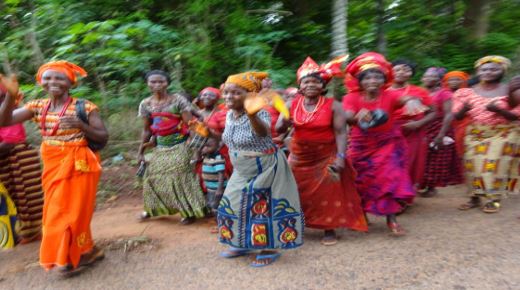
In Igbo, they always say, “One who doesn’t know when the rain started will not know when it stopped.” This wise statement accurately describes what the Umulumgbe Odo masquerade has been facing since the colonial people came to shake the land with their Christianity and Western lifestyle. The Odo masquerade ritual, a sacred tradition in the Umulumgbe people, has walked a long journey from pure tradition to the new blend that we see today.
The written record
Before the British people came, the Odo masquerade wasn’t just for entertainment purposes. It’s a serious spiritual and social practice. It represents the spirit of the dead that comes back among the living to remind people that the afterlife still exists. Odo rituals help to bind the community together, promote unity, enforce discipline, and keep peace. The masquerade serves as a reminder that the land watches, the ancestors watch, and no one can misbehave without facing the consequences.
But as colonialism landed in Umulumgbe, everything began to adjust. Christianity was first used to break the backbone of the Odo ritual. As scholar Elísio Macamo said, they didn’t just colonize land; they colonized the mind as well. They now began to preach that anything that’s not a Christian way is darkness. Plenty of people began to see their own culture as primitive, and they started to abandon the Odo ritual with the ‘light’ of Christianity.
Historical context
Education, urbanization, and modern industries were included. Youths began to travel, go to school, and adopt new ways of thinking that were different from their ancestors’ beliefs. The idea of individuality and personal freedom began to replace the communal belief system. People began to reason that “I have my life; not ancestors will decide my future.”
But even with all these problems, Odo Masquerade refused to die. Instead, it began to transform. It started to wear modern clothes, enter new spaces, change the time at which it was performed, and even accept a new audience that does not strictly follow tradition. This is what they call culture change —when two different cultures combine, and a new style of life or performance begins to emerge.
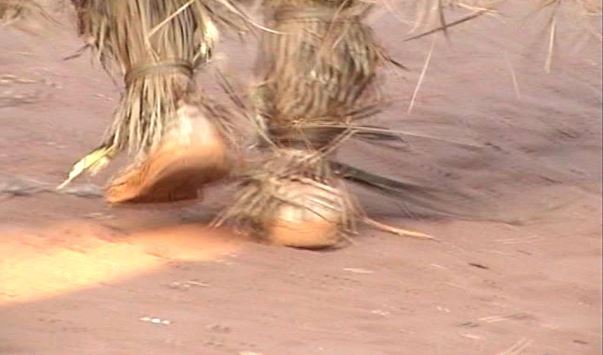
This transformation has made the Odo masquerade relevant to this day. The performance structure has changed, yes, but the spirit is still there. Youths who know modern life still perform the ritual. The costumes are now flashy, sometimes even influenced by Nollywood or hip-hop styles. The space is not just a sacred grove again—sometimes, they will perform at an open field, town square, or even online for people to watch. The language has now changed little—English and Pidgin are also combined in the chants and songs.
Even for costumes, the red attire some women still wear carries deep meaning. As Mama Okechi explained, the red cloth means danger and death, and it shows that the person still has strong beliefs in the afterlife and the power of the land. They do wear it like a badge of honour. It is not ordinary cloth—it’s a mark of spiritual loyalty.
Christianity still causes problems, too. People like Mama Ugwuotube say that even if she’s a traditionalist, she baptizes all her children because she believes that the “light” has come. She doesn’t want them to miss the so-called modern life, but deep down, she still holds on to her roots. This shows that the tension between tradition and modernity is still extreme in Umulumgbe.
Some elders complain that the amount of respect that their children used to give to their parents has been reduced. Before, someone could not talk back to an elder. Crime isn’t common because the fear of the land grips everyone. Now, Christianity has made many people feel that the land cannot catch them again. But elders like Mama Okechi disagree. She believes that the land still watches, and any wrong one does will still bounce back.
Even with all the modern influences, the Odo masquerade still promoted cultural pride. As scholar Dani Cavallaro said, a performance like the Odo masquerade shows that the aesthetic values of culture still have power. It is a sign of resistance and survival. The blending of old and new has brought new energy, a new audience, and even a new purpose to the masquerade.
So, the Odo masquerade never died. It is now mixed but did not break. It now absorbs shock and takes in modernity, but still holds the spirit of the ancestors strong. It still talks to the people and shows them the power of community, the fear of the land, and the presence of the dead among the living.
Today, as youths take over the performance, there’s hope that the tradition will continue. It will not look like before, but it will still carry the same weight. This type of survival, this type of adaptation, shows that the Umulumgbe Odo masquerade has strong bones.
Sources and references
- Gloria Nwandu Ozor1, Prof. Chesaina, Ciarunji2 & Dr. Masumi Oda
- The Contemporary Performance of Umulumgbe Odo Masquerade Ritual.
Cite this article
Discussion
Sign in to join the discussion
Comments are checked by an editor before they appear. Leave a source or a correction and it is read first.
Continue reading
Related histories
 Cultural HeritageEleven Days of Nwafor Ogidi: Inside the Festival Keeping an Old Igbo Tradition AliveRead history →
 Cultural HeritageIli Ji Nkpor Obododike: The Indigenous Agricultural Ritual CycleRead history →
 Cultural HeritageMusic and Drum Traditions: Tracing the “Igbo Drum” in the AmericasRead history →
No comments yet
Nothing has been approved on this record yet. Comments are checked by an editor before they appear, so one written now shows on this page after that check.