 Ozikoro
 Biography · Published history
Demas Nwoko and the Evolution of Nigerian Architecture
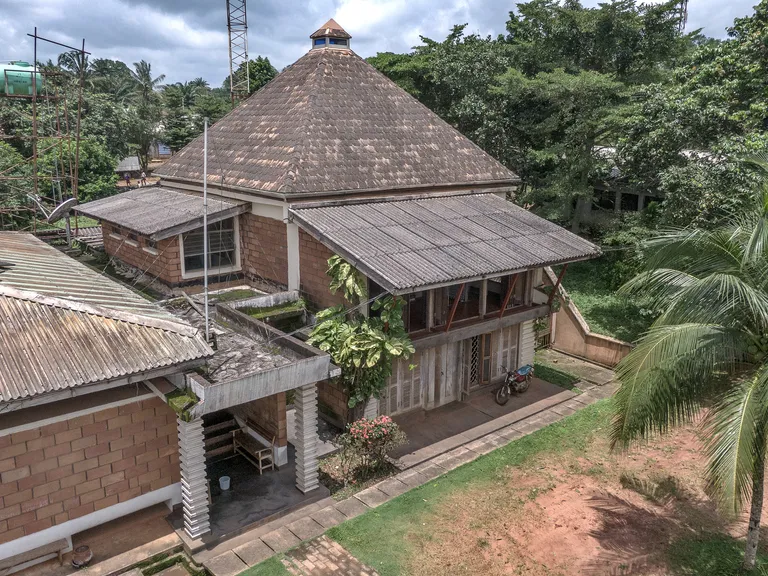
Demas Nwoko stands as one of Nigeria’s most innovative and influential cultural figures, an architect, sculptor, painter, designer, playwright, and thinker whose work helped define the trajectory of modern Nigerian aesthetics. Although not formally trained as an architect, Nwoko’s structures and design philosophy reshaped how architecture in postcolonial Nigeria could reflect indigenous culture, climate, and artistic identity. His approach, often described as “organic modernism,” blends traditional building techniques with modern engineering, producing some of the most iconic architectural spaces in Nigeria.
The written record
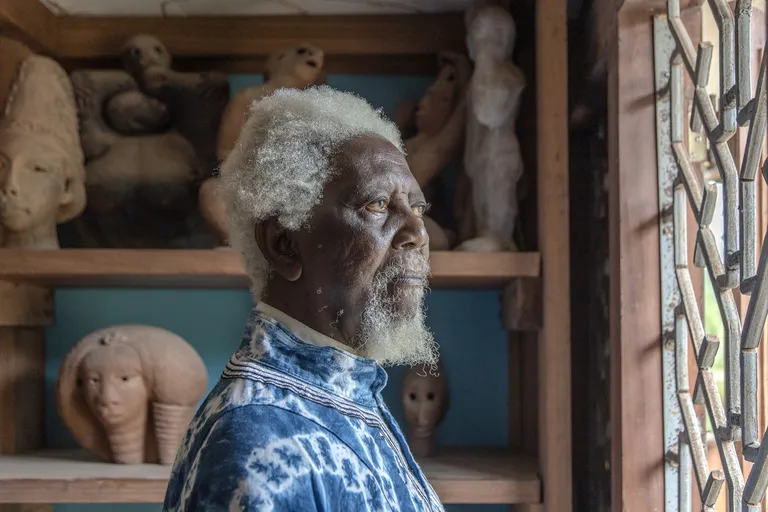
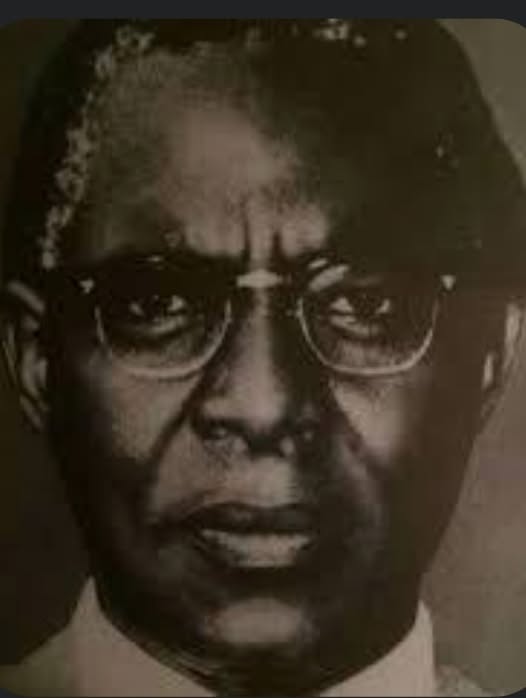
Photo credit; Wallpaper.
Historical context
Early Life and Education
Demas Nwoko was born in 1935 in Idumuje-Ugboko, a town in present-day Delta State, into a royal lineage. Growing up in a culturally rich Igbo environment exposed him early to traditional architecture, sculpture, and community aesthetics.
He studied at the College of Arts, Science and Technology in Zaria (later Ahmadu Bello University), where he was part of the famous Zaria Art Society also known as the “Zaria Rebels.” This group, which included Uche Okeke, Yusuf Grillo, and Bruce Onobrakpeya, championed “Natural Synthesis,” the blending of indigenous Nigerian art traditions with modern techniques.
Nwoko’s architectural sensibilities were deeply influenced by this philosophy.
Nwoko’s Architectural Philosophy
1. Organic Modernism;
Nwoko believed that architecture must emerge naturally from a people’s environment, culture, and historical experience. His buildings integrate mud and laterite walls, reinforced concrete, locally sourced materials, natural ventilation systems, sculptural forms inspired by traditional Igbo aesthetics.
This fusion creates spaces that are simultaneously modern and deeply rooted in Nigerian identity.
2. Climate-Responsive Design;
One of Nwoko’s major contributions is his commitment to environmentally conscious design long before “sustainability” became a global conversation.
He prioritized cross-ventilation, orientation for minimal heat gain, shading through deep eaves, and courtyards for airflow.
These principles reduce dependence on artificial cooling and reflect indigenous building techniques.
3. Architecture as Total Art;
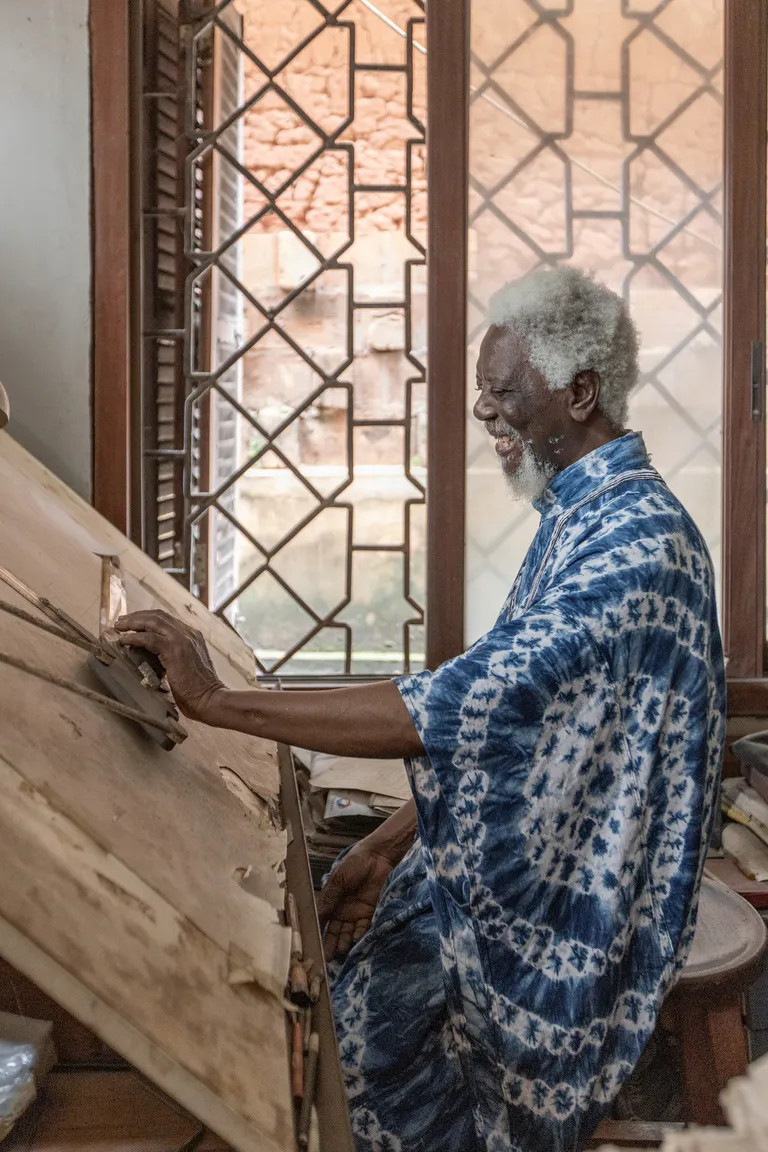
A sculptor and painter as well as a designer, Nwoko believed architecture was an artistic experience. His buildings contain carved motifs, dramatic spatial arrangements, and theatrical configurations that reflect his work in stage design.
Major Architectural Works
The Dominican Institute, Ibadan (1970s);
One of Nwoko’s most celebrated works, the Dominican Institute exemplifies his design philosophy. The structure features rhythmic brick patterns, ventilated façades, terraced levels, dramatic light and shadow, a seamless blend of sculpture and architecture.
It has been widely praised for its energy efficiency and unique aesthetics.
New Culture Studios, Ibadan;
Nwoko built this space as a performance and artistic center. The design emphasizes flexible interior spaces, natural ventilation, and sculptural spatial forms, reflecting his dual career as both an artist and architectural innovator.
Residential Buildings;
Nwoko designed several private homes with sun-control screens, natural cooling systems, adobe-inspired walls, interiors shaped like living sculptures. These residences reflect his desire to re-center African aesthetics within modern living spaces.
Contribution to Nigerian Architectural Evolution
1. Breaking Away from Colonial Styles
Postcolonial Nigerian architecture initially depended heavily on European models of cement blocks, air-conditioned boxes, and rectangular international-style buildings.
Nwoko challenged this trend by reintroducing traditional materials, tropical design principles,indigenous aesthetics.
He helped redirect architectural thinking toward local relevance rather than foreign imitation.
2. Pioneer of Sustainable Architecture
His climate-responsive methods foreshadowed contemporary green architecture trends. Today, as Nigeria faces ecological and energy challenges, Nwoko’s designs appear visionary.
3. Cultural Revival Through Architecture
Nwoko insisted that Nigerian buildings must tell Nigerian stories. His work demonstrated that architecture could be an expression of history, spirituality, and communal identity.
4. Influence on Younger Architects
Architects such as Kunlé Adeyemi, Papa Omotayo, and Tosin Oshinowo often reference Nwoko’s integration of culture and modern design. His work continues to appear in architectural lectures, exhibitions, and global discussions on modern African aesthetics.
Demas Nwoko has received numerous honors, including the 2023 Golden Lion for Lifetime Achievement at the Venice Biennale of Architecture, one of the world’s highest architectural prizes.
This award cemented his status as a global figure whose work transcends Nigeria, placing him among the great innovators of 20th-century architecture.
Demas Nwoko’s contributions to Nigerian architecture are profound and enduring. By merging indigenous building traditions with modern engineering, he created a distinct architectural language that is aesthetically compelling, environmentally responsive, and deeply connected to Nigerian identity.
His philosophy of “organic modernism” continues to influence architects, cultural critics, and artists across Africa and beyond. Nwoko’s legacy demonstrates that architecture in Nigeria can be both modern and authentically African rooted in local experience, shaped by history, and visionary in its engagement with the future.
Sources and references
- Adeyemi, K. (2013). African modernism and the legacy of Demas Nwoko. Architectural Review, 234(1399), 72–79.
- Enwezor, O., & Okeke-Agulu, C. (2010). Contemporary African art since 1980. Damiani.
- Nwoko, D. (2016). The organic tradition in Nigerian architecture. The Guardian Nigeria.
- Ogbu, L. (2023). Demas Nwoko and the reimagining of African modernism. Journal of African Architecture, 5(2), 21–38.
- Okeke-Agulu, C. (2015). Postcolonial modernism: Art and architecture in Nigeria, 1950–1970. Duke University Press.
- Yaro, K. (2020). Climate, culture, and form: The a rchitectural innovations of Demas Nwoko. Nigeria Design Review, 12(1), 55–70.
Cite this article
Discussion
Sign in to join the discussion
Comments are checked by an editor before they appear. Leave a source or a correction and it is read first.
Continue reading
No comments yet
Nothing has been approved on this record yet. Comments are checked by an editor before they appear, so one written now shows on this page after that check.