 Ozikoro
 Biography · Published history
Dr. Nwafor Orizu: Statesmanship, Education, and the Foundations of Nigeria’s First Republic
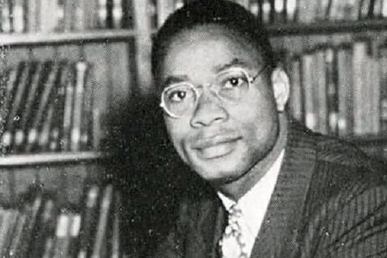
Dr. Nwafor Orizu was one of the most influential political figures of Nigeria’s First Republic and a key architect of the country’s early parliamentary democracy. A nationalist, educator, and statesman, Orizu played a crucial role in shaping Nigeria’s post-independence political institutions. As the first President of the Nigerian Senate and later Acting President of the Federal Republic of Nigeria, he stood at the intersection of constitutional governance and national crisis. His life and career reflect the aspirations, achievements, and vulnerabilities of Nigeria’s early postcolonial leadership.
The written record
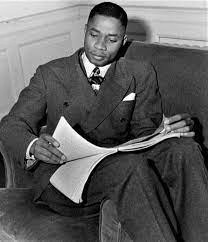
Photo credit; biography.Igbopeople.Org.
Historical context
Early Life and Educational Formation
Nwafor Orizu was born on December 4, 1914, in Nnewi, present-day Anambra State, into a family that valued education and public service. His early schooling took place in Nigeria before he traveled abroad for higher education. Orizu studied in the United States, where he earned degrees in education and public administration.
His exposure to American academic and political institutions profoundly influenced his worldview. Scholars note that his education strengthened his belief in constitutionalism, federalism, and democratic governance. This international exposure also placed him among a generation of Nigerian elites who combined nationalist aspirations with Western political ideals.
Entry into Nationalist Politics
Upon returning to Nigeria, Orizu became actively involved in nationalist politics during the late colonial period. He joined the National Council of Nigeria and the Cameroons (NCNC), a major political party led by Nnamdi Azikiwe. The NCNC emphasized national unity, anti-colonial struggle, and constitutional reform.
Orizu’s intellectual background and administrative competence quickly distinguished him within the party. Rather than being known primarily as a mass mobilizer, he gained recognition as a policy-oriented politician with strong organizational skills. His work reflected a belief that independence required not only political freedom but also stable institutions.
Role in the First Republic
With Nigeria’s independence in 1960, Orizu emerged as one of the most powerful figures in the new republic. He was elected President of the Senate, a position that placed him at the center of legislative authority. As Senate President, he was responsible for guiding parliamentary procedure, maintaining constitutional order, and mediating political tensions.
In 1963, when Nigeria became a republic and replaced the British monarch with a ceremonial president, Orizu also became President of the Senate of the Federal Republic, reinforcing his status as one of the highest-ranking officials in the country.
His leadership style emphasized moderation, respect for parliamentary norms, and consensus-building. According to contemporary accounts, he believed that “the legislature must be the moral compass of the nation,” reflecting his commitment to democratic governance.
Acting President During the 1966 Crisis
Dr. Orizu’s most historically significant role came in January 1966, following Nigeria’s first military coup. After the assassination of Prime Minister Abubakar Tafawa Balewa and the collapse of civilian authority, Orizu, as Senate President, became Acting President of Nigeria.
In this capacity, he formally announced the transfer of power to Major General Johnson Aguiyi-Ironsi. This decision effectively ended the First Republic. Orizu later stated that his action was taken to prevent “a complete breakdown of law and order” and to avoid further bloodshed.
Historians continue to debate this moment, but many agree that Orizu faced an unprecedented constitutional crisis with limited options. His decision marked a turning point in Nigerian history and ushered in decades of military rule.
Political Philosophy and Ideals
Orizu was a firm believer in constitutionalism, federal balance, and elite responsibility. He viewed politics as a moral duty rather than merely a contest for power. Unlike some of his contemporaries, he rarely engaged in populist rhetoric, preferring dialogue and institutional process.
His writings and speeches emphasized education as the foundation of national development. He argued that “no nation can rise above the quality of its educated leadership,” a principle reflected in both his political and personal life.
Later Life and Withdrawal from Politics
Following the military takeover, Orizu withdrew largely from active politics. Unlike many politicians of the First Republic, he did not seek accommodation within military regimes. Instead, he devoted his later years to reflection, writing, and private life.
This withdrawal contributed to his relative absence from popular historical narratives, despite his central role in Nigeria’s constitutional history. Nevertheless, scholars increasingly recognize his importance as a stabilizing figure during one of Nigeria’s most volatile periods.
Dr. Nwafor Orizu’s legacy lies in his commitment to democratic institutions, legislative integrity, and peaceful governance. As Senate President and Acting President, he embodied the ideals of constitutional leadership during Nigeria’s early years of independence.
Although the First Republic ultimately collapsed, Orizu’s career highlights the challenges of nation-building in a deeply divided postcolonial society. His life offers valuable lessons on leadership, restraint, and the limits of constitutionalism in times of crisis.
Today, he is remembered as one of the most educated and principled leaders of his generation, an intellectual statesman whose influence continues to shape discussions about governance and democracy in Nigeria.
Sources and references
- Falola, T., & Heaton, M. M. (2008). A history of Nigeria. Cambridge University Press.
- Sklar, R. L. (2004). Nigerian political parties: Power in an emergent African nation. Africa World Press.
- Dudley, B. J. (1973). Instability and political order: Politics and crisis in Nigeria. University of Ibadan Press.
- Diamond, L. (1988). Class, ethnicity, and democracy in Nig eria: The failure of the First Republic. Syracuse University Press.
Cite this article
Discussion
Sign in to join the discussion
Comments are checked by an editor before they appear. Leave a source or a correction and it is read first.
Continue reading
No comments yet
Nothing has been approved on this record yet. Comments are checked by an editor before they appear, so one written now shows on this page after that check.