 Ozikoro
 Cultural Heritage · Published history
Ejima: Unraveling the Linguistic Roots of Twins in Igbo Culture

In Igbo language and culture, “Ejima” describes twins—two siblings born together from the same mother. Within Igbo traditions, twins hold a unique place, often regarded as a divine gift carrying profound spiritual significance. Beyond its basic meaning, “Ejima” also spurs the concept of a “mirror image” or “twin likeness” for many Igbo speakers today, capturing the remarkable similarity of identical twins. To uncover the roots of this word, let us delve into its possible linguistic origins.
The written record
The Proto-Igbo Meaning: Egirima
The first possibility comes from within Igbo dialects, particularly the Ekumenyi cluster (Ezza, Izzi, Ikwo, Mgbo). “In older Ekumenyi dialects such as Ezza and Izzi, the term Egirima (meaning ‘children’) may represent an ancestral form that gave rise to Ejima.”
Egirima to Ejima: This alternation reflects a palatalisation/de-palatalisation pattern found in several Igbo dialects. In Ekumenyi dialects, the sound “g” sometimes replaces “j.” For example, “Jide” (hold) becomes “Gide,” and “Jee” (go) becomes “Gye.” If “Egirima” follows this pattern, it could become “Ejirima” in other Igbo dialects. Breaking it down:
Eji: Means “two,” as seen in the other theories.
Rịma: In some Igbo dialects, like Ọratta, Agwa, and Ika, “Rịma” means “to continue” or “onwards.” It’s related to Igbo words like “dịba” or “dịwa,” which suggest ongoing action.
So, “Ejirima” could mean “two or more” or “two onwards,” pointing to the idea of multiple children. Over time, “Ejirima” might have been shortened to “Ejima” to specifically mean twins, while “Ụmụ” stayed as the general word for “children.” This theory is strengthened by cultural connections between the Ekumenyi cluster and other Igbo groups, like the Ọratta-Mbaise axis, who share similar theonyms such as Chileke, used in some Ọratta–Mbaise traditions to denote a creative deity. The absence of the verb “rị” in modern Ekumenyi dialects, replaced by “du,” suggests that “Egirima” is an older form that evolved differently across Igbo regions.
The kwa Connection: Eji + Ọma
One possible origin of “Ejima” lies in connections between the Igbo and other proto-Kwa language families. In this theory, “Ejima” can be broken into two parts: “Eji” and “Ma.”
- Eji: In Igala, “Eji” means “two.” This is similar to how some Igbo-related languages, like Ikwerre, use words that sound close to Yoruba ones. For example, Ikwerre uses “Kịnị” for “what,” similar to Yoruba’s “Kịnị,” while most Igbo dialects say “Gịnị.”
- Ma: This part might come from “Ọma,” a word meaning “child” or “children” in Yoruboid languages like Igala and Itsekiri. If we put these together, “Ejima” could mean “two children,” perfectly describing twins.
This idea is supported by comparing words across Igboid and Yoruboid languages. For instance, Yoruba says “Ọmọ” for “Child,” while northern Ikwerre says “Ọmụ,” and central Igbo says “Ụmụ.” These words sound similar, suggesting they might share a common root from the proto-Kwa word for “child.” Also, in Yoruba, twins is called Ibeji.
However, in Igala, a Yoruba-related language close to Igbo, twins are called “Ògú,” not “Ejima.” This difference raises questions about how the word developed, but the connection between “Eji” and “Ọma” remains a strong possibility.
Historical context
The Birth Connection: Eji + Mụ
Another explanation focuses on the Igbo language itself, linking “Ejima” to the idea of birth. In this theory, “Ejima” comes from “Eji” (meaning “two” in Yoruba but possibly shared in proto-Kwa) and “Mụ,” an Igbo verb meaning “to give birth.”
- Eji: As before, this could mean “two,” borrowed from a shared proto-Kwa root.
- Mụ: In Igbo, “Mụ” means “to birth.” It’s the root of words like “Ụmụ” (children) and “Ọmụ” (child in some dialects).
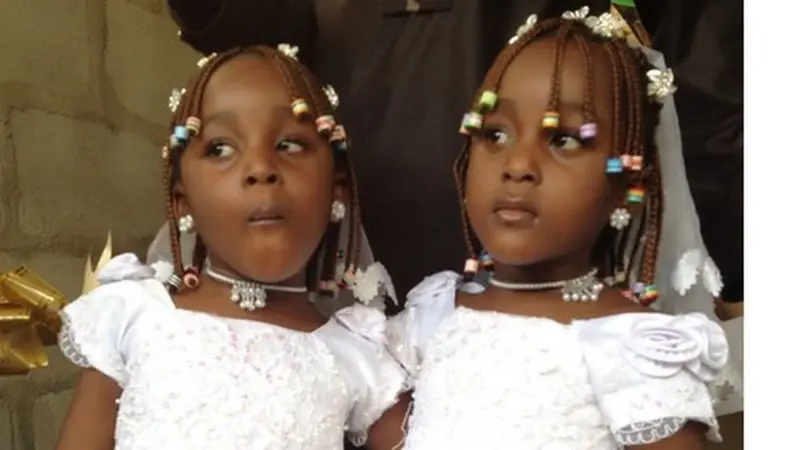
Together, “Ejima” could mean “to birth two” or “birth of two.” This matches the Yoruba word for twins, “Ibieji,” which also means “birth of two.” Additionally, some Igbo dialects use words like “Ụ́nwụ̀” (children) in northeastern Igbo or “Ụ́nwọ́” (child) in Ekpeye, which are close to “Mụ.” These words show how Igbo dialects might have evolved from older forms, maintaining the meaning of birth while changing sounds. For example, “Ṅwụa” (an older form) became “Nṅwa” (child) in many Igbo dialects, showing how language shifts over time but keeps core meanings.
Which Theory is Most Likely?
Choosing the most probable origin of “Ejima” is tricky, as all three theories have strong points. However, the Proto-Igbo Meaning: Egirima seems the most likely for a few reasons:
- Igbo-Centered Evidence: This theory relies entirely on Igbo dialects, particularly the Ekumenyi cluster, which makes it deeply rooted in Igbo language patterns. The shift from “Egirima” to “Ejima” fits known sound changes in Igbo, like “g” to “j.”
- Cultural Context: The idea of “two or more” aligns with Igbo cultural views of twins as special, representing multiplicity and abundance. This makes “Ejirima” (two onwards) a meaningful root for “Ejima.”
- Linguistic Simplicity: Unlike the Yoruboid connection, which requires borrowing from another language family, or the birth connection, which assumes a shared proto-Kwa root, the Egirima theory stays within Igbo’s internal evolution, making it simpler and more direct.
That said, the Yoruboid connection (“Eji + Ọma”) is also compelling because it shows how Igbo and Yoruba languages might have influenced each other long ago, sharing words like “Ọmọ” and “Ụmụ.” The birth connection (“Eji + Mụ”) is equally strong, as it ties directly to the Igbo verb “Mụ” and the concept of twin births. However, the Egirima theory feels more Igbo-centred and grounded in dialectal evidence, making it the most probable.
In conclusion, the word “Ejima” carries rich meaning in Igbo culture, pointing to twins as a symbol of doubling and blessing. The Igbo concept of birth (“Eji + Mụ”), or an older Igbo term for multiple children (“Egirima”). The Egirima theory, rooted in Igbo dialects and sound changes, seems the most likely, but all three show how Igbo language and culture are woven with history and neighbouring people. Exploring “Ejima” not only explains a single word but also opens a window into the Igbo people’s linguistic and cultural journey.
Sources and references
- Vitalis, A. (2025, June 6). EJIMA: A speculative etymological examination.
Cite this article
Idenze Ezeme. “Ejima: Unraveling the Linguistic Roots of Twins in Igbo Culture.” Ozikoro, 2025. https://ozikoro.com/ejima-unraveling-the-linguistic-roots-of-twins-in-igbo-culture/Discussion
Sign in to join the discussion
Comments are checked by an editor before they appear. Leave a source or a correction and it is read first.
Continue reading
Related histories
 Cultural HeritageEleven Days of Nwafor Ogidi: Inside the Festival Keeping an Old Igbo Tradition AliveRead history →
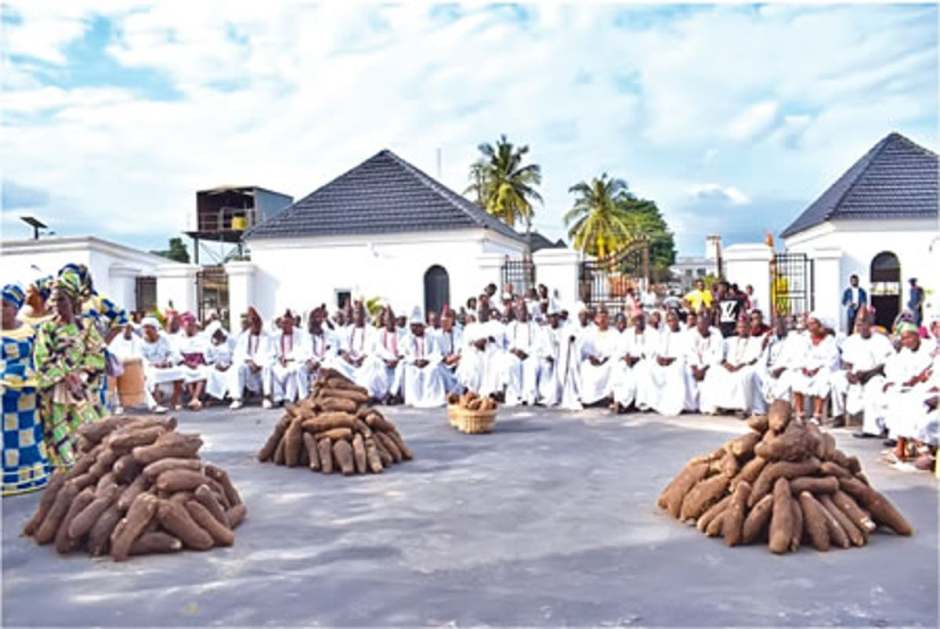 Cultural HeritageIli Ji Nkpor Obododike: The Indigenous Agricultural Ritual CycleRead history →
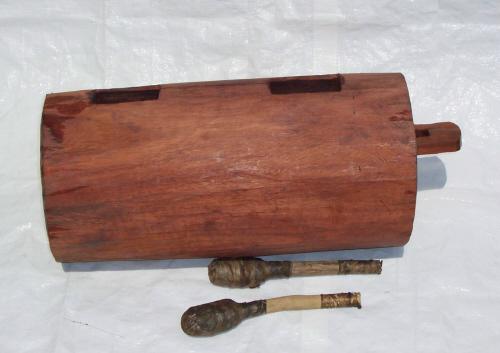 Cultural HeritageMusic and Drum Traditions: Tracing the “Igbo Drum” in the AmericasRead history →
No comments yet
Nothing has been approved on this record yet. Comments are checked by an editor before they appear, so one written now shows on this page after that check.