 Ozikoro
 Cultural Heritage · Published history
Enugwu-Ukwu: The Political and Spiritual Center of Ancient Igbo Society
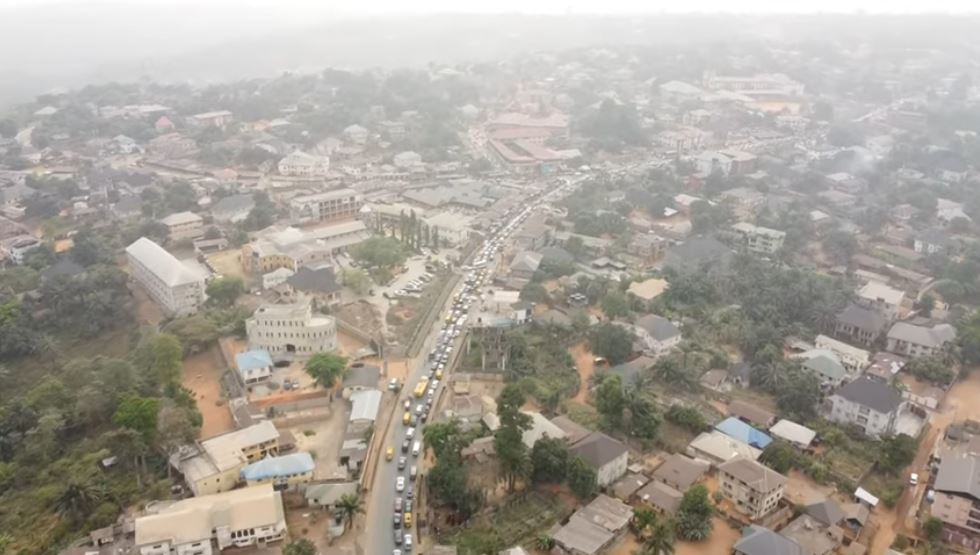
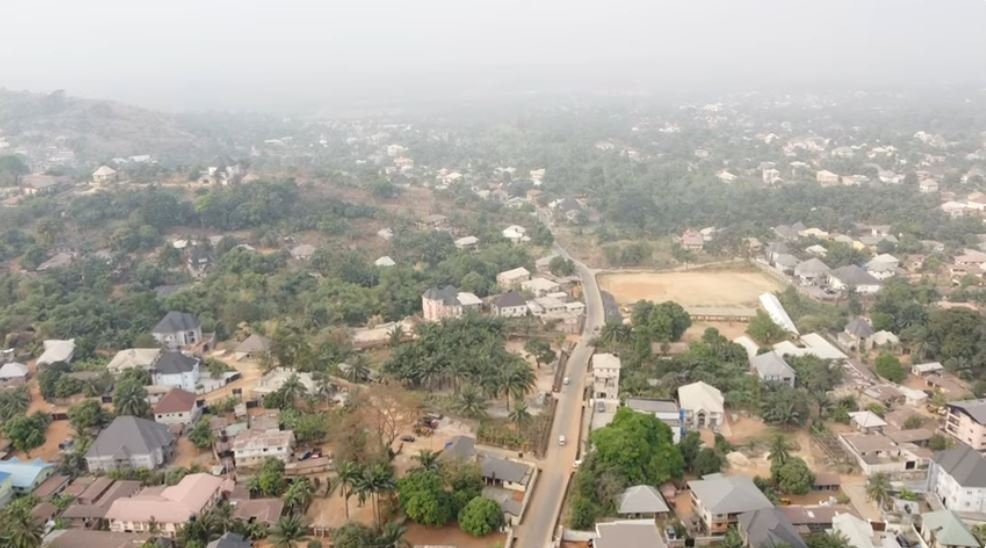
Enugwu-Ukwu is a great town on top of a big hill in Anambra State, Nigeria. It is the first son and Okpala (paternal head) of the UmuNri clan, and they call it “Igbo Heartland” because of the big role it played in the history of Igbo land. It is on top of a high hill,” and it is true because it is really in a hilly area in the Njikoka Local Government Area.
The written record
They said that as of 2009, Enugwu-Ukwu’s population had reached about 448,000. Most of the people there are Christians, and other important towns like Nawfia, Nise, Nimo, Agukwu-Nri, and Enugwu-Agidi surround them.
Historical context
One sweet thing about the Enugwu-Ukwu people is that wherever they see each other, whether abroad or in Nigeria, they greet each other with a powerful greeting: “Nwa-Nnaa.” This means “Son of the father.” It is a way to show brotherhood and unity, and people have begun to copy it in other Igbo towns.
Enugwu-Ukwu has a serious village organisation, like a confederation system. Village groups are involved, and they have their Ofo (symbol of authority and leadership). Leadership passes from father to son or is rotated among the same patrilineage.
They divided the village groups into two major parts: Ifite and Akaezi. Ifite is still divided into Ifite Enu (upper Ifite) and Ifite Ana (lower Ifite). They said that Ifite people were the earliest to settle, while Akaezi were the last to come, and they settled in the lower lands.
Whenever something is to be shared among the whole town, it is first divided into two. Ifite chooses first before Akaezi, which shows that Ifite is more senior than Akaezi.
In these village groups, we have names like Osili, Awovu, and Urukpeleke (in Ifite Enu) and Uruogbo, Urualo, Uruofia, Umuokpalaeri, Akiyi, Enuagu, etc. (in Ifite Ana). In contrast, Akaezi has villages like Urunnebo, Avomimi, Uruekwo and Orji.
Enugwu-Ukwu has produced many big names. People like Chief D. A. Nwandu and Chief D. O. Okafor started Eastern General Contractors Ltd (EGC), which built big projects like the University of Nigeria, Nsukka.
Chief Nwandu was the first director from Eastern Nigeria to sit on the board of the Central Bank of Nigeria and even became the Mayor of Enugu. They didn’t stop there; other heavyweights like Chief R.O. Nkwocha, Chief FGN Okoye, Chukwuemeka Udenze, and many others have put Enugwu-Ukwu on a national level.
But the biggest of them is His Royal Majesty Igwe Osita Agwuna III—the king who spoke about the “Call for Revolution” during the independence fight. British colonial people arrested him and put him in prison, yet Nigeria still gives him national honour today. People are angry that a person who fought for Nigeria’s freedom could walk and pass without recognition.
The people of Enugwu-Ukwu do not wait for the government. In 1962, they built the first General Hospital, which the community funded. That same year, the women contributed 72,000 pounds to the water project. They still built a post office and civic centre and helped set up the Assembly in the new Anambra State in 1991.
People from Enugwu-Ukwu established NGOs and foundations that supported others in health, education, farming, and business. Even recently, one of their sons, Dr Nkem Okeke, became a Deputy Governor of Anambra State alongside Gov. Willie Obiano.

Enugwu-Ukwu is not an ordinary town. The king who lived there didn’t rule Enugwu-Ukwu—he was Eze Enugwu-Ukwu Igwe Umunri, and they said his authority touched the ritual, political, and economic matters of the ancient Igbo.
It was from this same Enugwu-Ukwu migration that the early people from the Eri civilization passed to develop the Nri Kingdom. So, if a person wants to talk about the Nri story, he can’t forget Enugwu-Ukwu at all.
The current king is Igwe Ralph Obumnemeh Ekpeh (Okpalanakana-Ukabia Nri IV) – he would sit on top of a traditional stool that has deep cultural roots.
Culture, Christianity & Identity.
A strong message in this story is that history and culture are not things to throw away. As Nwaezeigwe said, “History is like a stream of life”—it is from there that you can know where you are from, who you are, and where you are going.
But Igbo people, according to the writer, forgot where they were from; they burnt sacred forests, abandoned rituals, and pursued Christianity as if their own culture didn’t matter. Meanwhile, other tribes like Yoruba, Edo, and even Hausa do carry their traditions and celebrate them.
The warning is clear: if you do not look at your past very well, your future will be weak. Christianity and culture are supposed to work hand in hand, not one killing the other.
Enugwu-Ukwu is not just a town; it is the root, the head of the UmuNri clan, and a place that symbolizes unity, tradition, and progress. As they say, no tree can forget the root that holds it down.
If we are to move forward as people, we must respect our past and our culture and honour those who built the path before us.
Sources and references
- Obiozor, W. (n.d.). The Umunri-Enugwu Ukwu ancestral connection: A historical perspective .
Cite this article
Discussion
Sign in to join the discussion
Comments are checked by an editor before they appear. Leave a source or a correction and it is read first.
Continue reading
Related histories
 Cultural HeritageEleven Days of Nwafor Ogidi: Inside the Festival Keeping an Old Igbo Tradition AliveRead history →
 Cultural HeritageIli Ji Nkpor Obododike: The Indigenous Agricultural Ritual CycleRead history →
 Cultural HeritageMusic and Drum Traditions: Tracing the “Igbo Drum” in the AmericasRead history →
No comments yet
Nothing has been approved on this record yet. Comments are checked by an editor before they appear, so one written now shows on this page after that check.