 Ozikoro
 Cultural Heritage · Published history
House Systems and Trade Empires: How the “Efik House” (Ufok) Functioned as Both a Family Unit and a Corporate Trade Entity
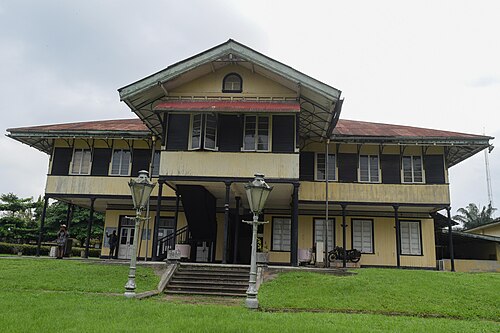
The Efik of Old Calabar developed one of West Africa’s most sophisticated socio-economic institutions: the “House system,” known in Efik as Ufok. Far more than a domestic family unit, the Efik House evolved into a political, commercial, and judicial structure that shaped the region’s economy for centuries. During the height of Atlantic trade, particularly from the seventeenth to the nineteenth centuries, these Houses became corporate trade empires, controlling access to European merchants, organizing commercial networks, and managing labor, dependents, and internal governance.
The written record
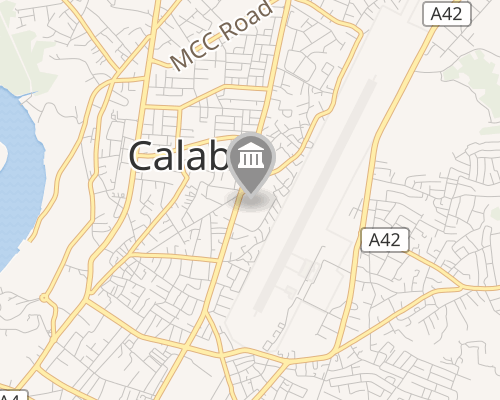
Photo credit; Wikipedia.
Historical context
Origins of the Efik House (Ufok)
The Efik House originated as a patrilineal extended family headed by a patriarch, usually the oldest or wealthiest male. With time, however, these Houses expanded far beyond blood relations. As Old Calabar grew into a major commercial center, particularly during the transatlantic slave trade, merchants adopted non-kin members slaves, clients, debtors, apprentices, and migrants into their Houses.
This broadened membership strengthened the economic base of each House and created an identity that blended lineage with commerce. Historical works describe the House not merely as a residence but as a political and economic corporation, each with its own leadership hierarchy, wealth, and obligations.
Structure and Leadership: The House Head (Uti-Ufok)
At the core of the system was the Uti-Ufok, the House Head, who acted as the executive authority. He managed trade negotiations, interacted with European merchants, settled disputes within the House, and determined strategies for expanding wealth. The House Head was both a paternal figure and a chief executive officer. Decisions were made through consultations with senior members, although authority ultimately rested with him. In successful Houses such as those of Duke Ephraim, Eyamba V, or Henshaw leadership was passed not only by inheritance but sometimes through adoption when a particularly capable trader or loyal dependent was chosen to continue the House’s prestige.
The House as a Corporate Trade Entity
By the eighteenth century, the Efik House had fully transformed into a commercial corporation. It controlled trade routes along the Cross River and monopolized interactions with visiting European ships. Each House engaged independently with British, Dutch, Portuguese, or Spanish traders, negotiating prices, duties, and the supply of goods. According to historical summaries, Efik Houses maintained warehouses, labor forces, and distribution networks, making them early examples of African mercantile corporations.
The wealth of a House depended on how well it managed its human resources canoe men, traders, porters, interpreters, and accountants. These members belonged to the House, owed loyalty to the House Head, and were maintained by House funds. In return, they contributed labor, part of their earnings, and allegiance.
Membership, Adoption, and Social Mobility
One of the most remarkable features of the Efik House system was its ability to absorb outsiders. Enslaved persons, war captives, dependents fleeing other communities, and even ambitious freeborn individuals from elsewhere in the Niger Delta could be integrated into a House. Through loyalty, marriage, or economic contribution, these individuals could rise in status, and in rare cases, even become House Heads themselves.
This flexibility promoted social mobility and ensured the survival of the House despite shifting economic and political conditions. It also created a strong internal solidarity: House members were considered family, even if not related by blood, and the House protected them in disputes with other Houses or external threats.
House Rivalries and the Commercial Hierarchy
The Efik city-states Creek Town, Duke Town, and Old Town were dominated by several powerful Houses. These Houses competed intensely for commercial advantage, political prestige, and European alliances. Trade monopolies, particularly during the palm oil boom after the decline of the slave trade in the 1840s, intensified these rivalries. Wealthy Houses used economic resources to sponsor festivals, maintain elaborate compounds, and support the Ekpe (Ngbe) society, which in turn enhanced their authority.
The hierarchy among Houses was fluid. Some rose to prominence due to skilled leadership and strategic trade decisions, while others declined due to internal disputes or unfavorable political alliances.
Judicial and Governance Functions
The Efik House system was not only a commercial structure but also a governance institution. Each House settled internal disputes, enforced discipline, and managed the affairs of members. Serious cases could be taken to the Ekpe society, where House representatives participated in regional governance, law enforcement, and diplomacy.
This combination of family governance and corporate management created a stable social structure that allowed the Efik to dominate the Cross River trade for centuries. The House system also ensured that the Efik maintained a centralized decision-making model, which Europeans found easier to negotiate with, thereby enhancing Efik commercial power.
Impact of Colonialism and the Transformation of the House System
With British colonial expansion in the nineteenth century, particularly after the establishment of the Niger Coast Protectorate (with Calabar as its administrative center), the authority of the Houses gradually eroded. British legal structures replaced many traditional judicial functions, and colonial officers regulated trade, diminishing the economic autonomy of the Houses.
Nevertheless, the legacy of the House system endures. Many prominent Efik families today trace their identity to historic Houses. The structure also influenced modern Nigerian socio-political associations, kinship networks, and local governance practices.
The Efik House (Ufok) system stands as one of Africa’s most remarkable socio-economic institutions. Blending kinship, commerce, governance, and social mobility, it functioned as a dual entity: a family group and a powerful corporate trade body. This unique structure enabled the Efik to dominate regional trade, negotiate effectively with European merchants, and maintain a cohesive political order. Understanding the House system provides crucial insight into Efik history, Niger Delta political economy, and the wider dynamics of precolonial African commerce.
Sources and references
- Hogan, C. M. (2024). Efik people. Wikipedia.
- Lovejoy, P. E. (2000). Transformations in Slavery: A History of Slavery in Africa. Cambridge University Press.
- Jones, G. I. (1963). The Trading States of the Oil Rivers. Oxford University Press.
- Aye, E. U. (1991). Old Calabar through the centuries. Apprint Nigeria.
- Latham, A. (1973). Old Calabar, 1600–1891: The impact of the international economy upon a traditional society. Oxford University Press.
Cite this article
Discussion
Sign in to join the discussion
Comments are checked by an editor before they appear. Leave a source or a correction and it is read first.
Continue reading
Related histories
 Cultural HeritageEleven Days of Nwafor Ogidi: Inside the Festival Keeping an Old Igbo Tradition AliveRead history →
 Cultural HeritageIli Ji Nkpor Obododike: The Indigenous Agricultural Ritual CycleRead history →
 Cultural HeritageMusic and Drum Traditions: Tracing the “Igbo Drum” in the AmericasRead history →
No comments yet
Nothing has been approved on this record yet. Comments are checked by an editor before they appear, so one written now shows on this page after that check.