 Ozikoro
 Religion and Spirituality · Published history
Ibini Ukpabi: The Arochukwu Long Juju
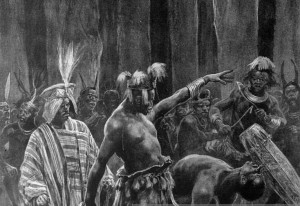
The Aro people, a branch of the Igbo ethnic group, founded the Arochukwu Long Juju shrine in the 17th century. A renowned Aro priest from Agbagwu, is credited with establishing the shrine. He is believed to have discovered the Long Juju (Ibini Ukpabi), a supernatural being, in a cave. The shrine developed into a hub for judicial and spiritual authority, acting as a court of law for the Aro people and the neighbouring tribes and villages.
The written record
Historical context
The Arochukwu Long Juju
The Long Juju, according to oral history and long-held beliefs had the supernatural ability to heal, defend, and punish erring individuals and villages. According to legend, villages or individuals who offended the Long Juju were usually punished severely.
Structure
The Arochukwu Long Juju shrine is encircled by thick vegetation and is located inside a cave. The shrine complex is made up of:
The Cave: This is the location of the major shrine and the purported home of the Long Juju.
The Tunnel: The cave is accessible through a little tunnel representing the passage from the material to the spiritual world.
The Inner Shrine: This part of the shrine is a sacred place that can only be entered by approved priests and initiates.
The Outer Shrine: The outside shrine is a public area used for ceremonies, rites, and meetings.
The Significance of The Long Juju
The Arochukwu Long Juju had enormous cultural, spiritual, and historical significance. It is generally held that the Long Juju was a powerful spiritual creature endowed with supernatural abilities. Decisions were taken and disputes resolved in the temple’s role as a court of justice. It also functioned as a shrine to preserve Aro customs, beliefs, and ways of life. In its prime, it attracted tourists and worshipers to the shrine and encouraged intercultural communication and trade.
From the eastern coast of Nigeria inland into the Cross River area, many tribes and villages would usually journey inland to Arochukwu through track roads and rivers to resolve personal, communal, and tribal conflicts, believing that Justice would be served when they reached Arochukwu and visit Ibini Ukpabi (the Long Juju).
The Aro Long Juju was highly revered amongst the Igbos, Ijaws, Efik, Ibibios, etc. The Aros usually introduced the Aro Long Juju to villages or tribes they constantly traded with as they expanded and migrated southward during the peak of the Trans Atlantic Slave trade and the palm oil trade.
In many southern Igbo areas like Ikwerre, Ngwa, Isuama, etc., the Aros established Ibini Ukpabi (Long Jugu) satellite shrines to settle civil and communal disputes. Aside from the core Igbo areas, the Aros also established shrines where they have a large presence and places where the Long Juju is revered.
In Kalabari (New Calabar), Crosbie Oates’ Family Journal written between 1853 and 1859, mentioned an incident between the King’s brother and an Aro Chief Priest who oversaw a shrine in Kalabari. The record gave an insight into the role the Aro Long Juju priests played. It recorded that they served as arbitrators for civil matters beyond the Royal House(s).
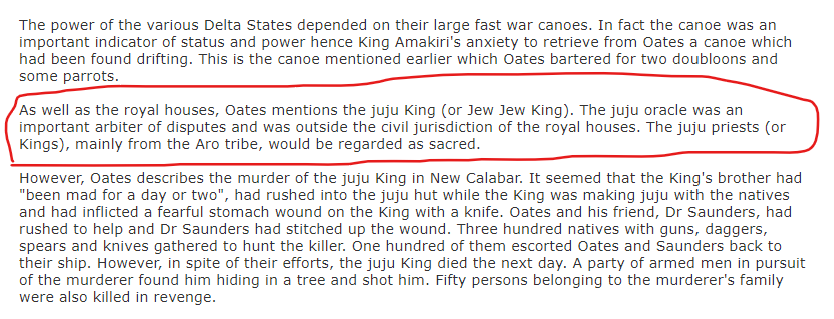
Rituals and ceremonies were held in locations where Ibini Ukpabi was venerated. Offerings were made to the Long Juju in order to promote peace, prosperity, and justice. Purification rites were done by Long Juju Chief Priests occasionally to purify individuals villages, clans, and tribes from wrongdoing. Annual festivals were organized in reverence to the Long Juju.
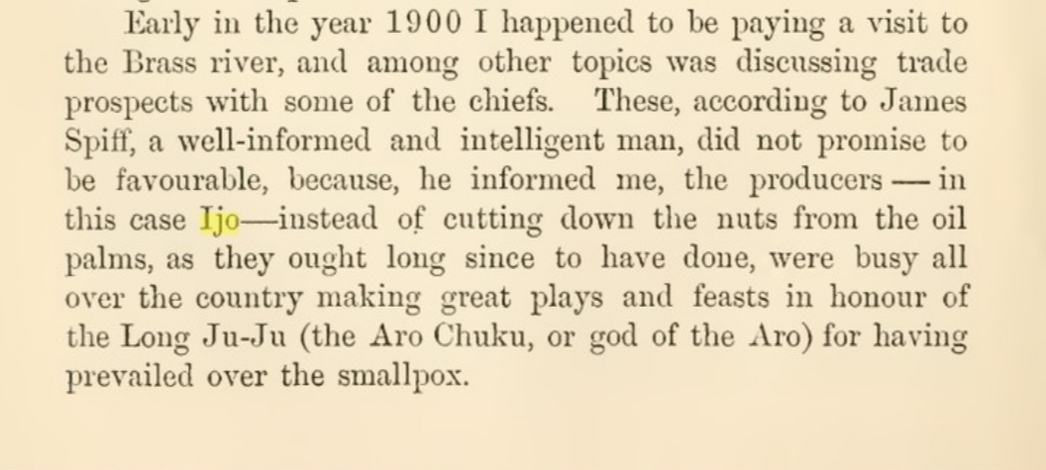
Arthur Glyn Leonard, in his book Lower Niger and its Tribes, recorded an incident where a village in the Brass River held “…great play and feast in honour of Aro the Long Juju…”
The Arochukwu Long Juju was an essential part of the Igbo cultural and spiritual landscape, attracting visitors and scholars seeking to understand its rich history and significance. The Long Juju shrine was destroyed by the British Expedition Force during the Aro-Anglo War (1901–1902). After the destruction of the Long Juju Shrine, many of its worshipers seized to revere it and replaced it with other deities. The arrival of Christianity and modernization also played a huge role in dissipating its influence and power.
Sources and references
- Crosbie Oates. (1853 – 1859). Introduction to the Crosbie Oates collection . Abolition & Emancipation – Part 2 & 3. https://www.ampltd.co.uk/digital_guides/abolition_emancipation_part_2_3/introduction%20to%20the%20crosbie%20oates%20collection.aspx
- Arthur Glyn Leonard. (1906). The Lower Niger and Its Tribes. Macmillan
Cite this article
Discussion
Sign in to join the discussion
Comments are checked by an editor before they appear. Leave a source or a correction and it is read first.
Continue reading
Related histories
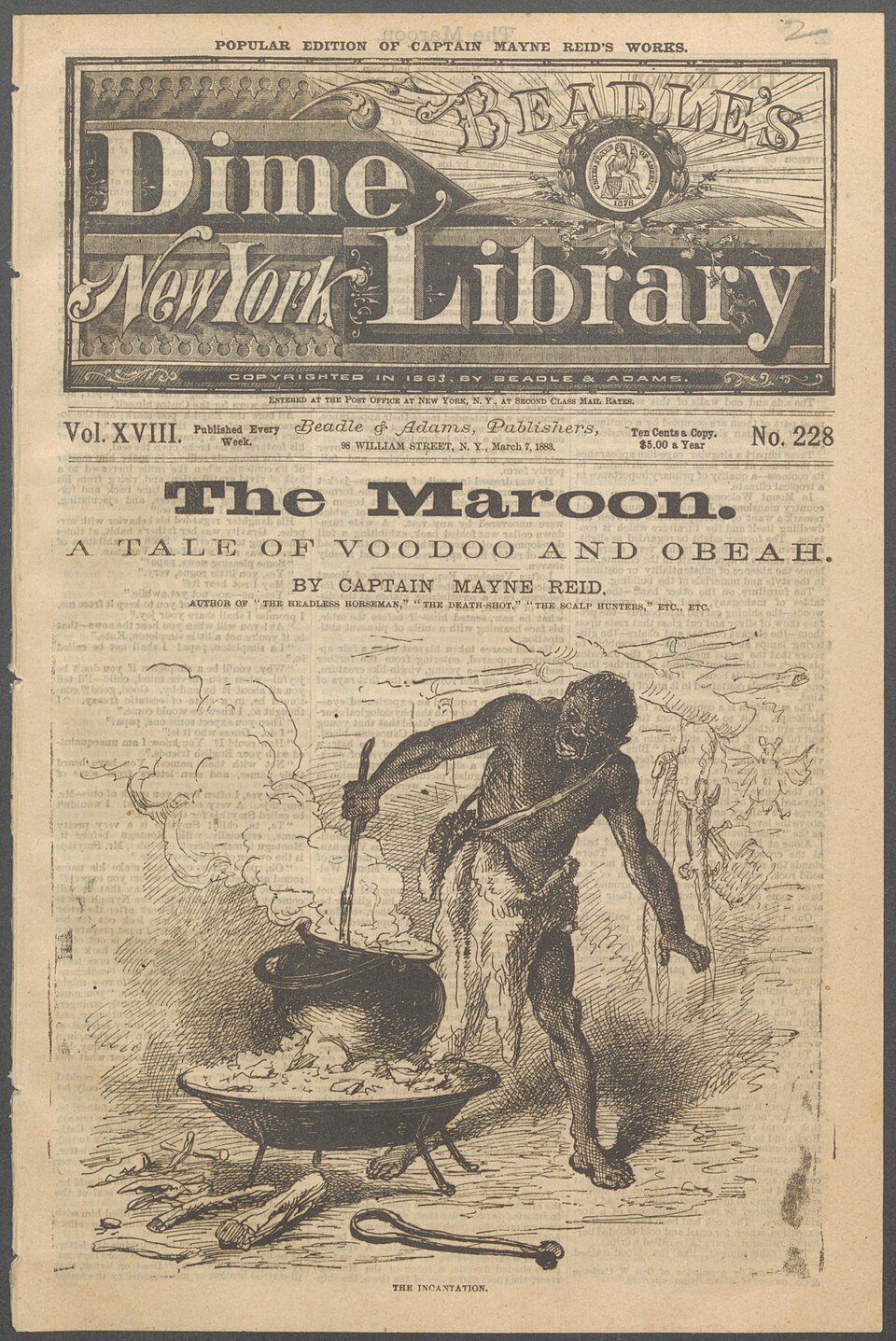 Religion and SpiritualityIgbo Religious Survivals in Caribbean Vodun and ObeahRead history →
 Religion and SpiritualityArobinagu: The Sacred Forest Spirit of Igbo Spirituality and Ancestral WisdomRead history →
 Religion and SpiritualityAnyanwu: The Radiant Igbo Sun God of Light and LifeRead history →
No comments yet
Nothing has been approved on this record yet. Comments are checked by an editor before they appear, so one written now shows on this page after that check.