 Ozikoro
Cultural Heritage · Published history
Igba Nkwu: Understanding Igbo Traditional Marriage Rites
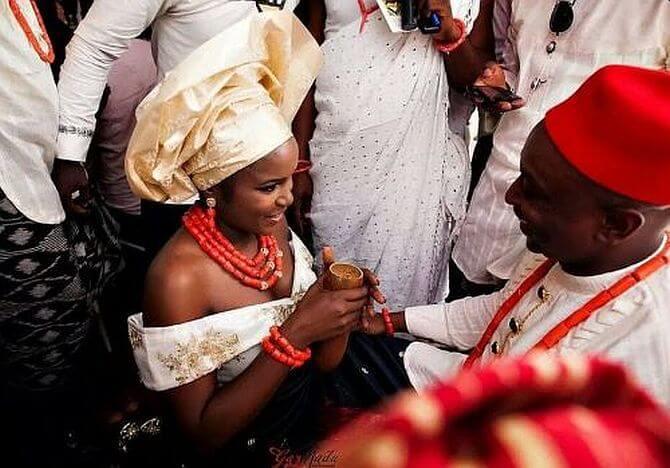
In Igboland, marriage is more than just two hearts joining; it’s the uniting of two families, two lineages, and two worlds. The ceremony known as ịgba nkwu nwanyi (the bride’s wine-carrying) remains one of the most cherished cultural expressions of love, respect, and community among the Igbo people.
The written record
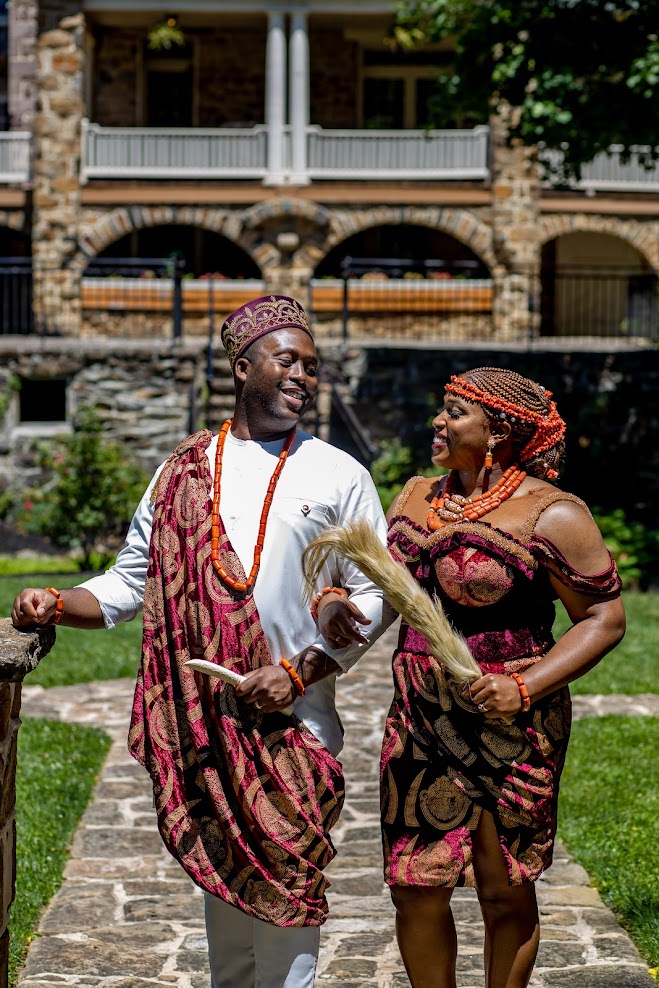
Historical context
A Ceremony Rooted in Meaning
The process begins long before the actual celebration. The groom’s family first pays a formal visit known as “iku aka na ọnụ ụlọ”, signalling their intention to marry from that household. This is followed by “ime ego” (the bride price discussion), where elders exchange laughter, proverbs, and gifts.
Importantly, the bride price is not seen as a purchase. It’s a token of appreciation, a way to honour the bride’s family for raising a woman of virtue. As the Igbo say: “A naghị ere nwaanyị ka ewu” (A woman is not sold like a goat).
The Heart of the Ceremony: The Palm Wine Ritual
During the main ceremony, held in the bride’s family compound, the atmosphere comes alive with drumming, singing, and dancing. The most symbolic moment arrives when the bride, holding a calabash of palm wine, walks through the crowd in search of her groom, a ritual known as “ịjụ ase.”
Her slow, graceful steps represent choice, consent, and commitment. When she finds her groom and offers him the drink, he accepts with joy, and the entire gathering erupts in cheers. It’s a powerful statement of unity and love witnessed by both families and the ancestors. “Mmanya dị n’akụkụ, e mee ka ọ sụpụta ụtọ” (Palm wine by the side becomes sweetest when shared with love).
Symbols of Family and Community
Every item exchanged, from yams and fowls to palm oil and wrappers, holds meaning. They symbolize fertility, prosperity, and unity. The ụmụada (daughters of the lineage) sing songs of advice and blessing, while elders offer prayers and kola nuts to seal the union.
The couple is reminded that marriage is built on patience and mutual respect: “Di na nwunye bụ otu anụ, ha na-eri nri n’otu efere.” (Husband and wife are one flesh; they eat from the same bowl).
Modern Expressions of Tradition
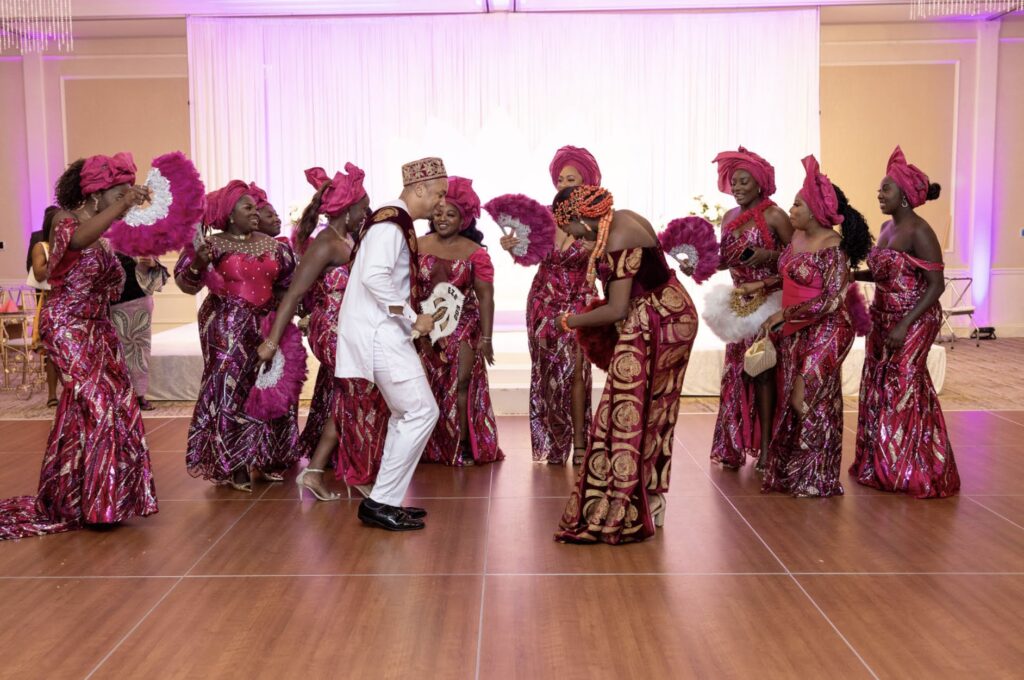
Even in today’s world, ịgba nkwu continues to thrive. Whether in Awka, Enugu, or London, Igbo families recreate this ritual with pride. Some blend traditional and modern elements; lace replacing aso-oke, DJs mixing with drummers, but the spirit remains unchanged. It’s a reaffirmation of identity and continuity.
The event isn’t just a wedding; it’s a live classroom in culture. It teaches younger generations what it means to be Igbo, that love is sacred, family is central, and heritage is strength. “Onye na-amaghị ebe mmiri bidoro mụọ ya, agaghị ama ebe ọ ga-akwụsị.” (He who does not know where the rain began to beat him will not know where it will dry).
Cultural Meaning and Enduring Relevance
At its core, ịgba nkwu reflects the Igbo philosophy of balance between individual and community, joy and duty, love and legacy. It reminds couples that marriage is not just romance but responsibility, guided by ọfọ na ogu (truth and justice). While the man is “di na-eche ụlọ” (the protector), the woman is “nwaanyị di mma n’ụlọ” (the nurturer of peace). Together, they mirror the cosmic harmony of Chi na Eke (creation and balance).
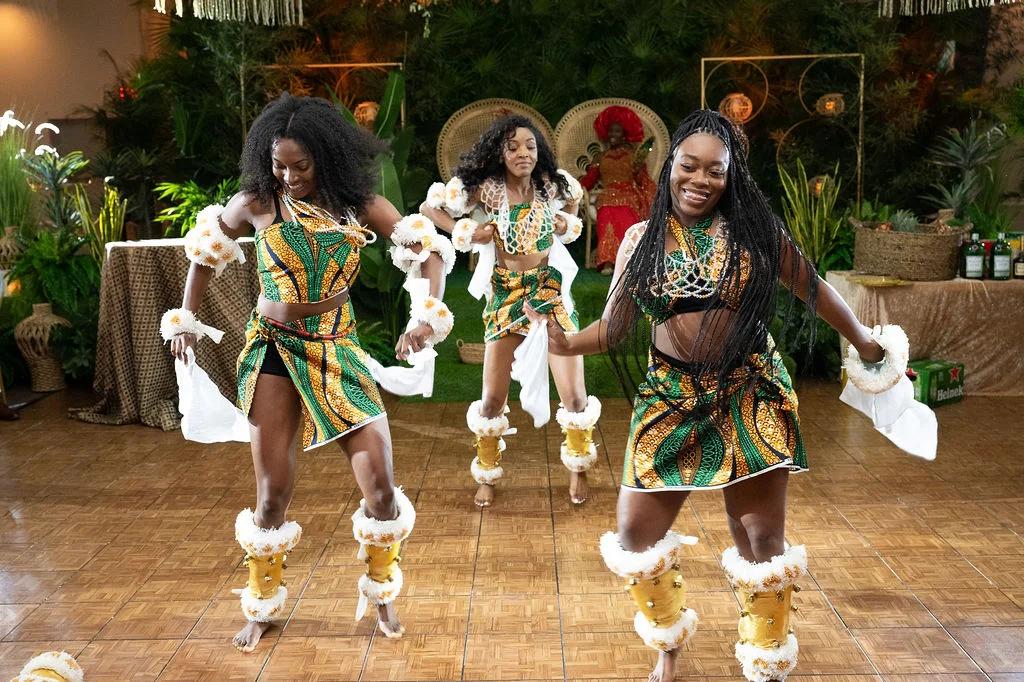
Photo credit / source: EventDesignByBE
To witness ịgba nkwu is to experience the heartbeat of Igbo culture, a living poem of unity, ancestry, and joy. It’s not merely a wedding ceremony but a reaffirmation that to be Igbo is to honor one’s roots, cherish community, and celebrate love under the watchful eyes of the ancestors. “Nwunye bụ akụ, di bụ ogu.” (A wife is wealth; a husband is strength). “Udo diri unu n’ụlọ unu.” (Peace be upon your home.)
Sources and references
- Ani, C. C. (2020). Traditional marriage rites in Igbo culture: A socio-cultural perspective. International Journal of Religious and Cultural Studies, 6(1), 45–53.
- Falola, T., & Heaton, M. M. (2008). A history of Nigeria. Cambridge University Press.
- Wikipedia contributors. (2025). Traditional marriage in Igbo culture. In Wikipedia, The Free Encyclopedia.
Cite this article
Discussion
Sign in to join the discussion
Comments are checked by an editor before they appear. Leave a source or a correction and it is read first.
Continue reading
Related histories
 Cultural HeritageEleven Days of Nwafor Ogidi: Inside the Festival Keeping an Old Igbo Tradition AliveRead history →
 Cultural HeritageIli Ji Nkpor Obododike: The Indigenous Agricultural Ritual CycleRead history →
 Cultural HeritageMusic and Drum Traditions: Tracing the “Igbo Drum” in the AmericasRead history →
No comments yet
Nothing has been approved on this record yet. Comments are checked by an editor before they appear, so one written now shows on this page after that check.