 Ozikoro
 Cultural Heritage · Published history
Akalogoli Charms: Warding Off Evil Spirits
![Burning palm flower [man burying akalogoli charm to ward off evil spirits]](/media/ozikoro/6299-Burning-palm-flower-man-burying-akalogoli-charm-to-ward-off-evil-spirits-.jpg)
In Igbo culture, spirituality weaves through daily life, connecting the living with ancestors and the unseen world. One fascinating practice is the use of akalogoli charms, as captured in a striking early 1910s photograph by Northcote Thomas, showing a man burying a charm made from burning palm flowers to ward off evil spirits. This ritual reflects deep Igbo beliefs about life, death, and the restless spirits that linger when proper burial rites are denied. This article explores the akalogoli charm, its cultural significance, and the broader Igbo worldview on spirits.
The written record
Historical context
The Akalogoli Charm: Meaning and Purpose
The term akalogoli likely comes from the Igbo words akala (sign or mark) and ogoli (a wastrel or good-for-nothing), suggesting a troublesome or malicious spirit. According to Igbo beliefs, akalogoli are the roaming spirits of people who suffered a “bad death,” known as ọnwụ ike (hard death). This could include those who died by suicide, were executed for crimes, or succumbed to mysterious illnesses. Unlike those who receive proper burials and transition to the afterlife as ancestors, these spirits are stuck on earth, unable to complete the cycle of life, death, and rebirth.
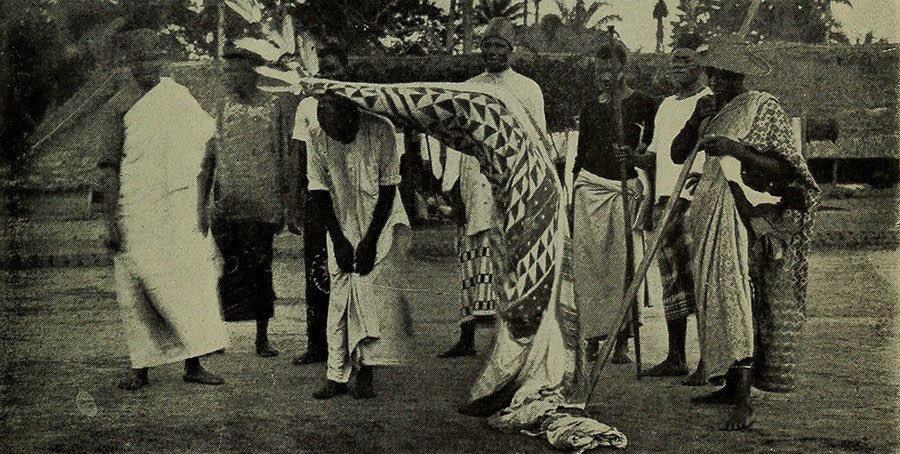
G. T. Basden (1921). Among the Ibos of Nigeria.
The Igbo Cycle of Life and Death
To understand akalogoli charms, we need to look at the Igbo worldview on life and death. In Igbo cosmology, life is a cycle that includes birth, death, and rebirth. When someone dies, a proper burial ensures their spirit joins the ancestors in the afterlife, where they can guide the living or return as a reincarnated child. This cycle is sacred and central to Igbo identity.
However, a “bad death” disrupts this cycle. Those who die in dishonorable or unnatural ways are often denied traditional burial rites. Instead, their bodies may be cast into an ajo ọfịa (evil forest), a forbidden wilderness area, as described in Chinua Achebe’s Things Fall Apart. Without proper rites, their spirits cannot transition to the afterlife and may become akalogoli—tricky or violent poltergeists that haunt the living. This belief reflects the Igbo emphasis on community harmony and the consequences of actions that disrupt it, even in death.
The Ritual of the Akalogoli Charm
The photograph by Northcote Thomas, taken in the early 1910s, captures a man performing a ritual to bury an akalogoli charm made from burning palm flowers. Palm trees hold deep cultural significance in Igbo land, used in everything from wine production to roofing. The burning of palm flowers likely serves a dual purpose: the fire purifies, and the ashes create a potent charm. Burying the charm in the earth is key, as soil is believed to repel spirits who hover above the ground, like owummiri. This act of burial is both practical and symbolic, grounding the spirit’s influence and restoring peace to the community.
The ritual is typically performed by a dibia (diviner or spiritual expert), though community members might also participate under guidance. The dibia may use sacred items like nzu (edible chalk) or ọmụ (tender palm fronds) to enhance the charm’s power, as these are common in Igbo spiritual practices. The goal is to neutralise the akalogoli’s ability to cause harm, ensuring safety for the household or village.
Cultural Context and Historical Insights
The akalogoli charm is part of a broader Igbo tradition of spiritual protection. Igbo cosmology recognises a variety of spirits, from benevolent ancestors to malevolent entities like akalogoli. This belief system is shared with neighbouring cultures, such as the Efik and Ibibio, who also have rituals to manage restless spirits. The use of earth as a deterrent is particularly significant, as it reflects the Igbo view of the land as a sacred force, often personified as Ala, the earth goddess who governs morality and fertility.
Historical accounts, like those from colonial-era anthropologists such as Northcote Thomas, provide valuable glimpses into these practices. Thomas, who worked in Igbo land in the early 20th century, documented rituals and beliefs through photographs and writings, though his interpretations sometimes carried colonial biases. Modern Igbo scholars and cultural practitioners emphasise that akalogoli are not merely folklore but part of a living spiritual tradition that continues to shape Igbo identity.
Modern Relevance and Challenges
While akalogoli charms and similar rituals remain part of Igbo culture, they face challenges in the modern world. The spread of Christianity, which often views traditional practices as incompatible with its teachings, has led some Igbo people to abandon these rituals. Urbanisation and migration to cities also make it harder to maintain traditional practices tied to specific lands or communities. However, many Igbo people continue to honour their spiritual heritage, adapting rituals to new contexts or using social media to share knowledge.
Efforts to preserve Igbo culture, led by groups like Ohanaeze Ndigbo, emphasise the importance of documenting practices like the akalogoli charm. Festivals, community gatherings, and online platforms play a key role in keeping these traditions alive, ensuring younger generations understand their roots. The burning palm flower ritual, though less common today, remains a powerful symbol of the Igbo ability to confront and manage the unseen forces in their world.
The akalogoli charm offers a window into the rich spiritual world of the Igbo people. By burying charms made from burning palm flowers, Igbo communities protect themselves from restless spirits, reflecting their deep respect for the cycle of life and death. This practice, rooted in the belief that earth can ward off evil forces, highlights the Igbo’s resourcefulness and spiritual resilience. Despite modern challenges, the legacy of akalogoli charms endures, carried forward by those who cherish Igbo culture and its timeless connection to the past.
Sources and references
- Achebe, C. (1994). Things fall apart. Anchor Books. (Original work published 1958)
- Ụkpụrụ. (2018, March 18). Burning palm flower [man burying akalogoli charm to ward off evil spirits]. Tumblr.
Cite this article
Discussion
Sign in to join the discussion
Comments are checked by an editor before they appear. Leave a source or a correction and it is read first.
Continue reading
Related histories
 Cultural HeritageEleven Days of Nwafor Ogidi: Inside the Festival Keeping an Old Igbo Tradition AliveRead history →
 Cultural HeritageIli Ji Nkpor Obododike: The Indigenous Agricultural Ritual CycleRead history →
 Cultural HeritageMusic and Drum Traditions: Tracing the “Igbo Drum” in the AmericasRead history →
No comments yet
Nothing has been approved on this record yet. Comments are checked by an editor before they appear, so one written now shows on this page after that check.