 Ozikoro
 Ethnohistory · Published history
Igbo Entrepreneurship and Migration: A Post-War Economic Phenomenon
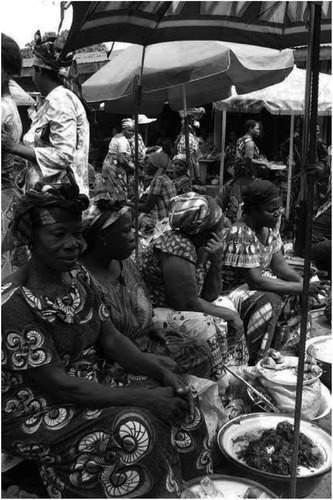
The Igbo people of southeastern Nigeria are widely known for their business ingenuity, mobility, and ability to rebuild from adversity. Nowhere is this more visible than in the period following the Nigeria–Biafra Civil War (1967–1970). The war left the Eastern Region devastated economically, socially, and politically. Yet within a few decades, the Igbo became one of the most economically vibrant groups in Nigeria, establishing thriving commercial hubs at home and across Africa.
The written record
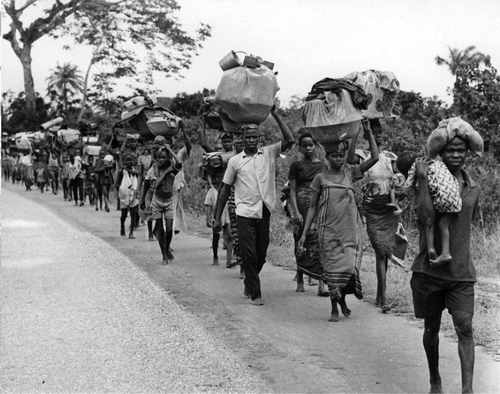
Photo credit: X.com
Historical context
The Post-War Landscape: Devastation and Determination
When the civil war ended in 1970, the Igbo people faced severe economic reconstruction challenges. Many returned to their towns to find property destroyed, businesses collapsed, and bank accounts reduced to “£20” regardless of their pre-war savings. The region’s infrastructures, roads, schools, markets were also severely damaged.
Yet this moment of hardship sparked an extraordinary resurgence. Igbo communities tapped into their traditions of communal solidarity, apprenticeship, and aggressive mobility. What followed was a unique post-war economic phenomenon. Thousands of Igbo people took to migration as a survival strategy, spreading across Nigeria and beyond.
Migration as an Economic Response.
Migration became both a necessity and a strategy. With limited opportunities at home, Igbo men and women moved to cities such as Lagos, Kano, Kaduna and Port Harcourt. Others expanded further to West and Central Africa, Ghana, Cameroun, Gabon, Equatorial Guinea, and even as far as Sudan.
This migration was not random; it was opportunity-driven. Many migrants established:
Spare parts businesses
Electronic and phone markets
Motor vehicle import and distribution
Clothing and textile shops
Transportation companies
Food and agricultural produce trade.
Igbo commercial presence soon became strong enough to shape major Nigerian markets like Alaba International Market, Ladipo Auto Parts Market, Ariaria Market, and Main Market Onitsha.
The Igbo Apprenticeship System: Foundation of Post-War Growth
One of the strongest pillars of Igbo post-war economic revival is the renowned Igbo apprenticeship system, often called “Igba boi.” Scholars describe it as “the world’s largest business incubator”. This system works through a mentor–apprentice relationship:
1. A young boy (the apprentice) is placed under an established businessman.
2. He works for several years, learning the trade and understanding business ethics.
3. At the end of the agreed period, the mentor “settles” him with capital, goods, or shop space to start his own business.
4. The new businessman often returns the favor in the future by training others.
This system provided thousands of youths with a pathway out of poverty. After the war, when formal employment opportunities were scarce, the apprenticeship model filled the gap. It democratized business knowledge and ensured the rapid multiplication of Igbo-owned enterprises across the country.
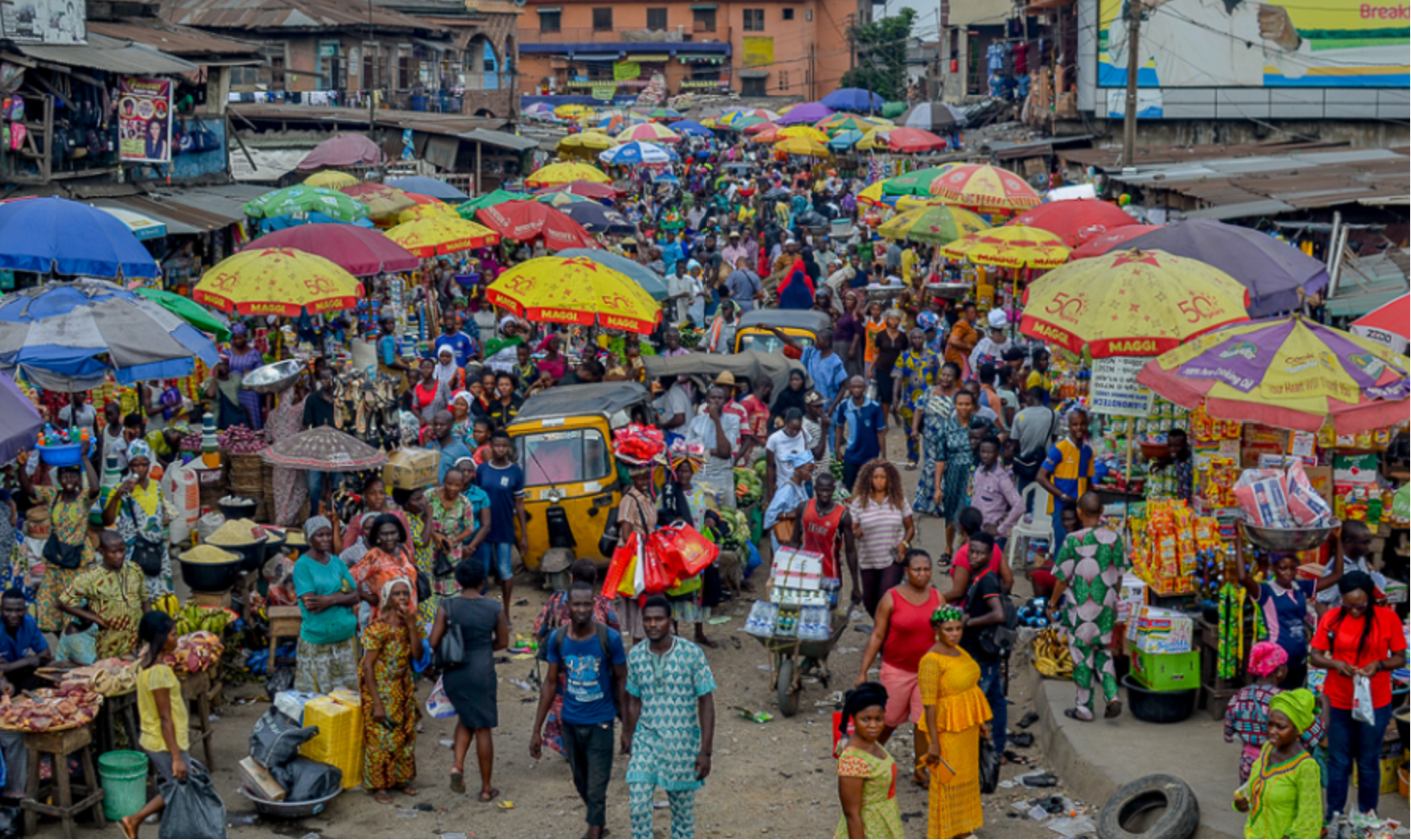
Photo credit: Wikipedia.
Cultural Values that Supported Igbo Entrepreneurial Success.
Various cultural values supported the post-war economic revival:
1. Hard Work (Olu Ọma): The Igbo cultural ethos places strong emphasis on industry. Success is tied to effort, not birthright, creating a natural drive for economic advancement.
2. Risk-Taking: Igbo traders often enter new markets early, taking calculated risks. This boldness allowed them to dominate emerging sectors like electronics importation in the 1980s.
3. Mobility: Migration is normalized in Igbo culture. A man who travels and returns wealthy is celebrated, reinforcing movement as a strategy for prosperity.
4. Communal Support: From town unions to village associations, Igbo communities create networks that help new migrants secure accommodation, market spaces, and even loans.
5. Flexibility and Adaptability: The ability to adjust to new business environments, north, west, or abroad helped Igbo entrepreneurs thrive in hostile or unfamiliar terrains.
Formation of Igbo Business Clusters Across Nigeria
As migration deepened, Igbo people formed business clusters that turned into economic powerhouses:
Alaba International Market (Lagos) – Africa’s largest electronics market.
Ariaria Market (Aba) – “China of Africa,” renowned for manufacturing and leatherwork.
Onitsha Main Market – One of West Africa’s largest commercial hubs.
Ladipo Market – The heart of motor spare parts in West Africa.
These clusters were built through communal investment, apprenticeship networks, and reinvestment of profits. Their success influenced Nigeria’s broader economy, supplying goods nationwide and creating jobs for thousands.
Diaspora Expansion: Beyond Nigeria’s Borders
By the 1980s and 1990s, Igbo migration expanded internationally. Igbo entrepreneurs established businesses in:
Ghana (Kantamanto, Makola markets)
Cameroon (Douala, Yaoundé)
Equatorial Guinea
Gambia
South Africa
United Kingdom
United States
China and Dubai (electronics and import networks).
Their success abroad mirrored their achievements at home, aggressive trade, risk-taking, and strong community associations helped them build industries from scratch.
Igbo women were not left behind. Market queens and traders revitalized the economy through:
Textile trade
Foodstuffs distribution
Cosmetics and beauty products
International buying trips (Dubai, China, Cotonou)
Local manufacturing of garri, palm oil, soap, and fabric.
Women’s associations such as “August Meeting” and market cooperatives created microcredit systems that empowered female entrepreneurs.
However, despite their achievements, Igbo businesses have confronted obstacles:
Hostility in some regions, especially due to ethnic tensions.
Market demolitions and government policies targeting informal traders.
Insecurity in the southeast affecting home-based investments.
Limited access to formal credit.
Lack of industrialization policies to support manufacturing.
Competition from foreign products.
Yet, Igbo entrepreneurs continue to adapt, leaning on innovation and global networks.
The Legacy: Rebuilding a Nation from the Ashes
The post-war Igbo economic resurgence is often described as miraculous. Starting from near-zero capital, the Igbo people built:
Massive commercial centers
Transnational trade networks
Millions of small and medium-sized enterprises
A system of mentorship that continues to inspire economic models worldwide.
Their story is a testament to resilience, mobility, and communal solidarity.
“Igbo Entrepreneurship and Migration” is not just an economic phenomenon, it is a cultural identity shaped by history, survival, and innovation. The civil war may have devastated the Igbo homeland, but it also ignited one of the greatest examples of economic rebirth in modern Africa. Through migration, apprenticeship, hard work, and communal support, the Igbo have built a global commercial relevance that remains unmatched in West Africa. Their story offers important lessons on resilience, community-driven growth, and the power of culture in shaping economic success.
Sources and references
- Achebe, C. (2012). There was a country: A personal history of Biafra. Penguin Press.
- Aja, O. (2020). The Igbo apprenticeship system as a model for youth empowerment. African Journal of Business and Economic Research, 15(3), 45–60.
- Chuku, G. (2015). Igbo women and economic transformation in Southeastern Nigeria, 1900–2000. Routledge.
- Nwosu, O. (2019). Migration, markets, and Igbo entrepreneurial strategies in Nigeria. Journal of African Studies, 12(4), 88–107.
- Uchendu, V. C. (1965). The Igbo of Southeast Nigeria. Holt, Rinehart and Winston.
Cite this article
Discussion
Sign in to join the discussion
Comments are checked by an editor before they appear. Leave a source or a correction and it is read first.
Continue reading
Related histories
 EthnohistoryGbam, Chai, Ewo: How Igbo Expressions Became the Language of Nigerian Pop CultureRead history →
 EthnohistoryAro Merchant Network: Historical Trade Integration in the Cross-Niger RegionRead history →
 EthnohistoryTransition to Commodities in the aro confederacy(e.g., Palm Oil, Ivory, Cloth)Read history →
No comments yet
Nothing has been approved on this record yet. Comments are checked by an editor before they appear, so one written now shows on this page after that check.