 Ozikoro
 Cultural Heritage · Published history
Igbo greetings etiquette and hierarchical variations
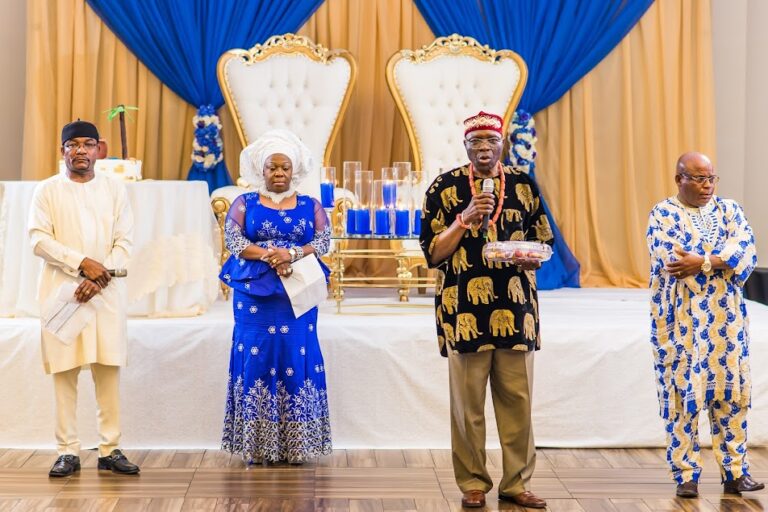
In the cultural framework of the Igbo people of Southeastern Nigeria, a greeting is far more than a casual exchange of pleasantries; it is a “social contract” and a profound acknowledgment of an individual’s place within the cosmic and communal order. The act of greeting, known as Elee k’idu or Inye ekele, serves as the primary mechanism for maintaining “social harmony” and reinforcing the traditional hierarchies of age, title, and gender. To fail to greet appropriately is often viewed not just as a lapse in manners, but as a “moral failing” or a deliberate act of hostility. From the subtle nuances of body language to the specific linguistic markers used for titled elders, Igbo greeting etiquette is a sophisticated system that reflects the values of a society built on mutual respect and ancestral connection. This article explores the structural rules, hierarchical variations, and the evolving nature of Igbo greetings in a modernizing world.
The written record
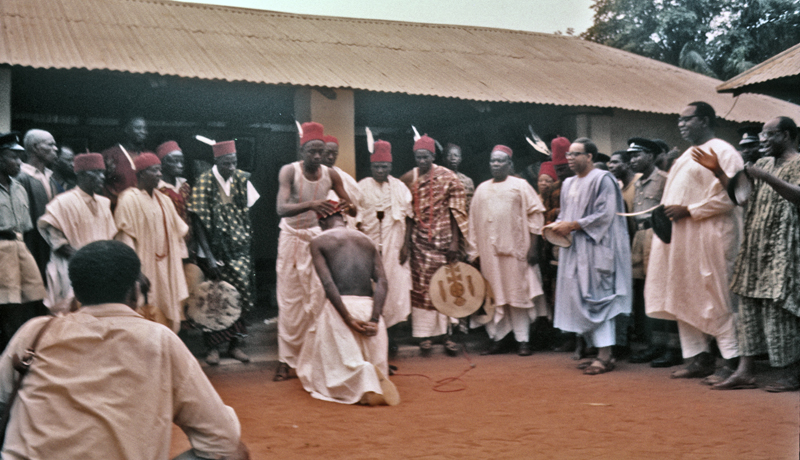
Historical context
The Primacy of Age: The “First Rule” of Igbo Etiquette
The most fundamental pillar of Igbo greeting etiquette is the “unquestionable respect for seniority.” In Igbo culture, age is synonymous with wisdom and proximity to the ancestors:
The Direction of the Greeting: It is the “absolute responsibility” of the younger person to initiate the greeting. To wait for an elder to greet first is a grave sign of disrespect (ulọ). Even in a crowded marketplace, a younger person is expected to acknowledge every elder they recognize.
Physical Posture and Gestures: Body language is as important as the spoken word. A younger man may slightly bow his head, while in some sub-groups, a younger woman might “curtsy” or slightly bend her knees. Direct, piercing eye contact with a much older person during a greeting is often discouraged as it can be perceived as “challenging authority.”
The Handshake Protocol: A younger person should never initiate a handshake with an elder. They must wait for the elder to “extend their hand” first. If a handshake is offered, the younger person often uses both hands to clasp the elder’s single hand, a gesture of “holding the elder’s hand in high esteem.”
Hierarchical Variations: Titled Men and Traditional Rulers
When greeting individuals who hold traditional titles, such as the Ozo, Nze, or the Ichie, the language and etiquette shift into a more “formalized ritual”;
The Title Name (Afa Otutu): Titled men are rarely addressed by their biological names in a greeting. Instead, they are greeted by their “title names.” A common prefix is “Ogbuefi” (for those who have slaughtered a bull) or simply “Nze.” Repeating the title three times (e.g., “Nze, Nze, Nze!”) is a common way to show “reverent enthusiasm.”
The Three-Way Hand Clasp: Among titled peers, the “Igbo handshake” often involves three distinct movements: a palm-to-palm clasp, a thumb-to-thumb lock, and a final return to the palm. This symbolizes a “triple bond” of brotherhood and shared responsibility.
Greeting the Monarch (Onye Isi Ala/Eze): Greeting a King (Eze or Igwe) involves the highest level of formality. Subjects often bow low and proclaim “Igwe!” or “Agogoro!” multiple times. In many palaces, it is “taboo” to touch the King’s hand unless you are also a high-ranking titled chief; instead, a “clashing of fans” (the Akupe) or a staff-to-staff touch is used.
Gender and Contextual Nuances
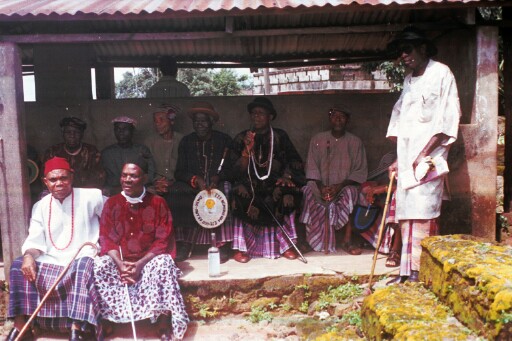
While age is the primary driver, gender and the specific social context also dictate the “flow of the greeting”;
Greetings for Women: Titled women, such as the Lolo (wife of an Ozo) or the Omu (female traditional leader), are greeted with specific honorifics. A younger person might greet a titled woman as “Lolo” followed by her husband’s title name, acknowledging her “shared status” in the marriage.
The “Kola Nut” Preamble: In a formal setting, a greeting is rarely complete without the “presentation of the kola nut.” The ritual of Iwa Oji (breaking the kola nut) is essentially a “prolonged greeting” to the visitors and the ancestors. The person who brings the kola nut is seen as “bringing life,” and the etiquette surrounding who breaks it is a complex study in hierarchical seniority.
Time-Based Greetings: The Igbo language has specific markers for different times of the day, such as Ututu oma (Good morning) and Mgbe-esusu (Good evening). However, the most versatile greeting remains Nnoo (Welcome) or Daalu (Thank you/Well done), which can be applied to almost any positive action or arrival.
The Linguistic “Proverbs” of Greeting
A sophisticated Igbo greeting often incorporates “proverbs and metaphors,” demonstrating the speaker’s “mastery of the mother tongue”:
Inquiries into Well-being: A greeting is never just “Hello.” It must be followed by inquiries into the “health of the family, the children, and the household.” Asking Kedu ka ndi ulo gi me? (How are the people in your house?) shows that the speaker values the “collective unit” over the individual.
The Response as a Blessing: When an elder is greeted, they do not just say “Hi.” They respond with a “blessing” or a prayer, such as I ga-adi (You shall live) or Ndu mmiri, ndu azu (May the fish and the water both live). This reinforces the role of the elder as a “conduit for ancestral favor.”
The Silence of Displeasure: In Igbo etiquette, “refusing to respond” to a greeting is one of the most severe non-verbal insults. It signals a “complete severance of social ties” and often necessitates an intervention by the Umunna (kindred) to resolve the underlying conflict.
Modern Shifts and the “Pidgin” Influence
As the Igbo diaspora grows and urbanization increases, traditional greeting etiquette is undergoing a “pragmatic transformation”:
- The Rise of “Sir” and “Ma”: In professional and urban settings, Western honorifics like “Sir” and “Ma” are increasingly used as “shortcuts” for traditional titles. However, many Igbo people still combine these with traditional markers (e.g., “Good morning, Sir Nze”).
- The Pidgin Synthesis: Among the youth in cities like Enugu and Onitsha, greetings like How far? or Kedu? are common. While this reflects a more “egalitarian social structure,” many elders lament the loss of the “depth and poetry” found in traditional village greetings.
- Digital Etiquette: On social media and messaging platforms, the “respect for seniority” persists. A younger person writing to an elder on WhatsApp will almost always begin with “Good morning, Uncle” or “Ma,” regardless of the informal nature of the platform.
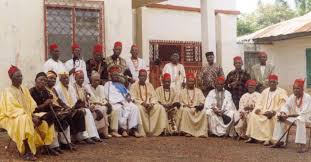
A group of igbo chiefs . Photo credit : British council
Igbo greetings etiquette and hierarchical variations are the “connective tissue” that holds the community together. These practices ensure that every individual is “seen, recognized, and valued” within the social pyramid. From the simple Nnoo of a mother to her returning child to the “thrice-repeated title” of an Ozo chief, these greetings are a celebration of “identity and continuity.” While the world around Igboland changes, the “fundamental respect for the elder” and the “sanctity of the titled name” remain the hallmarks of a people who understand that a society is only as strong as the “respect its members show to one another.” To master the art of the Igbo greeting is to master the “language of the heart,” ensuring that the “path between the living and the ancestors” remains open and honored.
Sources and references
- Achebe, C. (1958). Things Fall Apart. London: Heinemann. (Contextualizing the role of titled men and the kola nut ritual).
- Aniakor, C. C. (1984). Igbo Arts: Community and Cosmos. Los Angeles: Museum of Cultural History, University of California.
- Basden, G. T. (1921). Among the Ibos of Nigeria. London: Seeley, Service & Co. (Providing an early ethnographic account of Igbo social manners).
- Henderson, R. N. (1972). The King in Every Man: Evolutionary Trends in Onitsha Ibo Society and Culture. Yale University Press.
- Nzimiro, I. (1972). Studies in Ibo Political Systems: Chieftaincy and Politics in Four Niger States. University of California Press.
- Uche ndu, V. C. (1965). The Igbo of Southeast Nigeria. Holt, Rinehart and Winston.
Cite this article
Discussion
Sign in to join the discussion
Comments are checked by an editor before they appear. Leave a source or a correction and it is read first.
Continue reading
Related histories
 Cultural HeritageEleven Days of Nwafor Ogidi: Inside the Festival Keeping an Old Igbo Tradition AliveRead history →
 Cultural HeritageIli Ji Nkpor Obododike: The Indigenous Agricultural Ritual CycleRead history →
 Cultural HeritageMusic and Drum Traditions: Tracing the “Igbo Drum” in the AmericasRead history →
No comments yet
Nothing has been approved on this record yet. Comments are checked by an editor before they appear, so one written now shows on this page after that check.