 Ozikoro
 Cultural Heritage · Published history
Igbo moon festivals or lunar observations tied to planting, harvesting, or women’s cycles
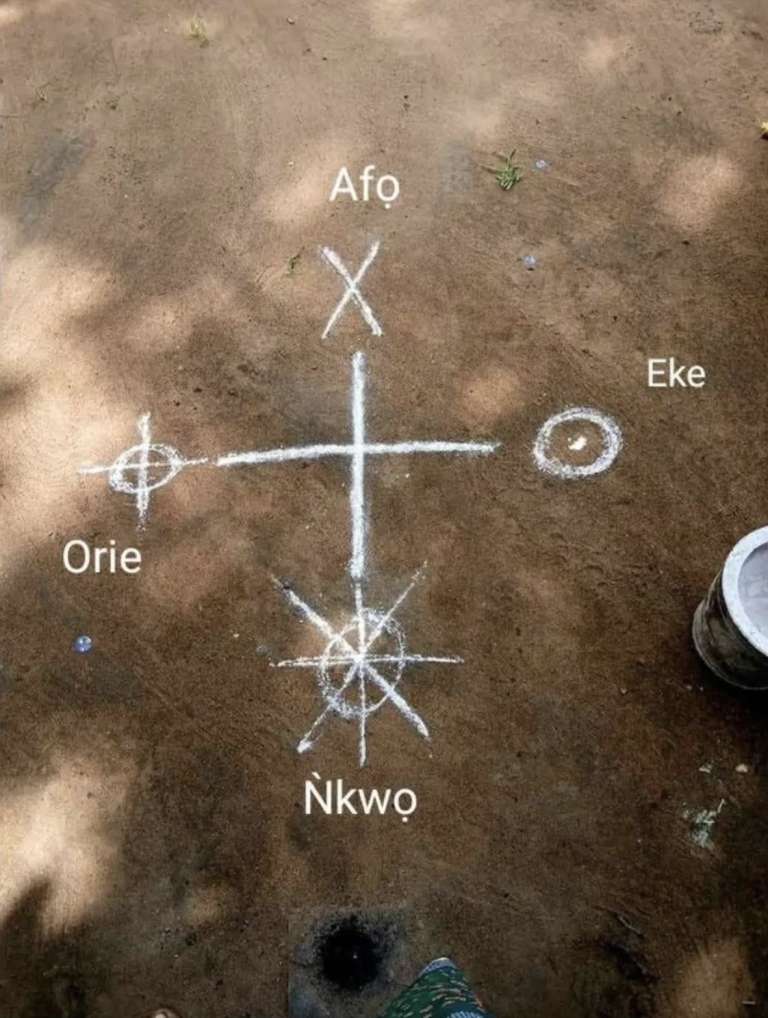
In the traditional worldview of the Igbo people of Southeastern Nigeria, the sky is not a distant void but a “living clock” that dictates the rhythm of existence on Earth. Central to this celestial navigation is the moon (Onwa), whose phases provide the framework for the Iguafo n’Igbo (the Igbo calendar). For the Igbo, the moon is far more than a source of nocturnal light; it is a “divine feminine principle” that governs the fertility of the soil, the success of the harvest, and the biological cycles of women. The synchronization of communal life with lunar observations ensured that agricultural activities were aligned with the natural laws of growth and decay. Through a series of festivals and rituals, the Igbo celebrated this “lunar-solar harmony,” creating a culture where time was measured not in sterile seconds, but in the “waxing and waning” of life. This article explores the intricate connections between Igbo lunar observations and the critical pillars of planting, harvesting, and the sacred nature of women’s cycles.
The written record
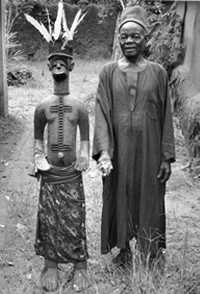
Historical context
The Lunar Calendar: 13 Moons and the Four-Day Week
The structural foundation of Igbo timekeeping is rooted in a “lunar-centric” mathematical system that balances the solar year with the cycles of the moon;
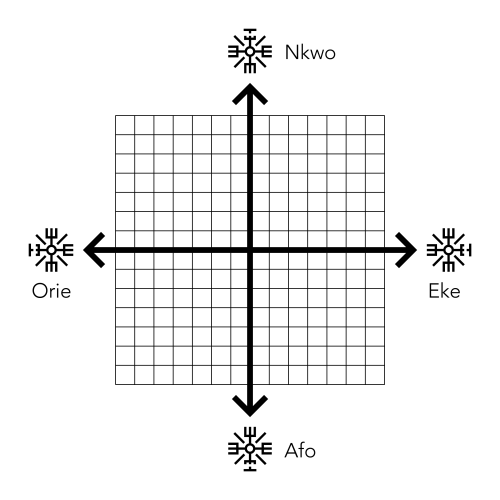
- The 28-Day Lunar Cycle: A traditional Igbo month consists of precisely 28 days, composed of seven weeks of four days each (Eke, Orie, Afo, Nkwo). This 28-day period mirrors the “synodic month,” the time it takes for the moon to return to the same position relative to the sun.
- The 13-Month Year: Because each month is 28 days, an Igbo year (Arọ) consists of 13 lunar months. This totals 364 days, which is then reconciled with the solar year through a “floating intercalary period” or a 13th-month adjustment proclaimed by the priest-kings (the Eze Nri).
- Observation of the New Moon: The appearance of the “crescent moon” is a moment of profound spiritual significance. It marks the “death and rebirth” of the month. In many communities, children would run outside to greet the first silver sliver of the moon with songs, asking for long life and prosperity in the coming cycle.
Lunar Observations in Planting and Agriculture
For the Igbo farmer, the moon is the “ultimate director” of the agricultural labor force. Lunar phases were observed to determine the exact moments for soil preparation and seeding;
- The Waxing Moon and Growth: It is a traditional belief that crops, particularly those that grow above ground, should be planted during the “waxing phase” (from new moon to full moon). The “rising energy” of the moon is believed to pull the sap upward, encouraging vigorous growth and leafy expansion.
- Root Crops and the Waning Moon: Conversely, yams (Ji), which are the “king of crops” in Igboland, are often planted or tended during specific lunar transitions to ensure that the energy is “pushed downward” into the tubers. The moon acts as a “regulator of moisture,” and its gravitational pull is understood to influence the “sap pressure” within the yam tendrils.
- The First Moon of the Year (Onwa Mbu): The agricultural year officially begins with the sighting of the first moon after the dry season. This observation triggers the “clearing of the bush” and the preparation of mounds. Without the “lunar signal,” the planting season cannot commence.
The Moon and Women’s Biological Cycles
In Igbo cosmology, there is an “undeniable link” between the 28-day lunar cycle and the 28-day menstrual cycle of women. The moon is viewed as a “celestial mirror” of the female body:
- The Moon as the Governess of Fertility: Women’s menstruation is often referred to in traditional terms as “seeing the moon” (ihu onwa). This linguistic connection reinforces the idea that women are “tuned to the sky.” A woman’s fertility is believed to be at its peak when her internal rhythm is in “perfect alignment” with the lunar phases.
- Taboos and Sacred Time: During her menstrual period, a woman was often seen as being in a “state of heightened spiritual power” that required certain taboos (nso). She might be restricted from entering certain sacred groves or preparing meals for titled men. This was not a sign of “uncleanliness” in the Western sense, but a “respect for the intense energy” of the life-giving cycle that the moon governed.
- Postpartum and the Moon: After childbirth, the “confinement period” (Omugwo) is often measured in lunar weeks. The recovery of the mother and the early development of the infant are monitored according to the “changing face of the moon,” ensuring that the child is introduced to the community under a “favorable lunar light.”
Lunar Festivals: Celebrating the Harvest and Ancestors
Several major Igbo festivals are “strictly lunar,” occurring only when the moon reaches a specific phase in a specific month of the calendar:
- Iri Ji (The New Yam Festival): While the timing varies by region, the New Yam Festival is always tied to the “harvest moon.” It cannot take place until the moon of the harvest month is sighted. This festival is a “thanksgiving to Ala” (the Earth Goddess) and the ancestors for the successful alignment of labor and lunar influence.
- Onwa Agwu: This is a month-long festival dedicated to Agwu, the deity of health, divination, and creativity. During this lunar month, the “vibrations of the moon” are believed to be particularly conducive to “healing and spiritual initiation.”
- Onwa Asato (The Eighth Moon): In many Northern Igbo communities, the eighth moon marks a period of “great feasting and remembrance.” It is a time when the “veil between the living and the dead” is thin, and the light of the full moon is used to guide the Mmanwu (masquerades) as they visit the village square.
Symbolism of the Full Moon (Onwa Fullu Eju)
The full moon is the “pinnacle of the lunar cycle,” representing “completeness, clarity, and communal joy;
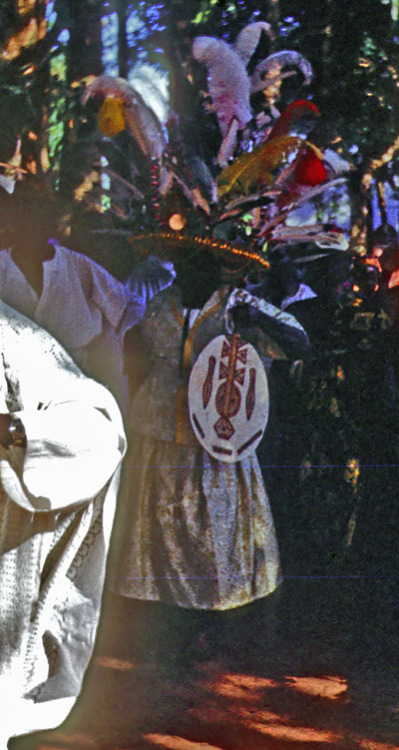
- Moonlight Play (Egwu Onwa): The full moon provided the “natural amphitheater” for Igbo social life. On such nights, the community would gather for Egwu Onwa (Moonlight Play). Children would listen to “folktales” (Akuko Ifo), and youths would engage in wrestling or dancing. It was a time of maximum social cohesion.
- The Full Moon as a Witness: Major oaths and “covenants” were often sworn under the full moon. Its bright, unblinking light was seen as a “witness of truth” that exposed any “hidden darkness” or deceit in the hearts of men.
- Spiritual Rejuvenation: Titled men and priests often used the night of the full moon for “meditation and the cleansing of sacred objects.” The “silver light” (Anwu Onwa) was believed to possess “cool, purifying properties” that could neutralize negative spirits.
Modern Science and the Resilience of Lunar Traditions
While modern meteorology and the Gregorian calendar have replaced traditional systems in official capacities, the “lunar logic” of the Igbo remains resilient;
- Validation by Ethnobotany: Modern researchers have found that many of the “lunar planting rules” of the Igbo have a basis in “photobiology” and “tidal influences” on soil moisture. The traditional observation of the moon was, in fact, a “rigorous empirical science.”
- The Digital Iguafo: Today, there are “mobile applications and digital calendars” designed to help the Igbo diaspora track the four market days and the 13 lunar months. This “digital preservation” ensures that the connection to the “celestial clock” is not lost to urbanization.
- The Enduring New Yam: Even in cities like London or Lagos, the New Yam Festival is still celebrated. While the farmers may not be clearing the bush, they still “wait for the harvest moon” to signal the time for cultural celebration and the “breaking of the kola nut.”
Igbo moon festivals or lunar observations tied to planting, harvesting, or women’s cycles are the “golden threads” that weave the Igbo person into the fabric of the universe. This system demonstrates that the Igbo were not just inhabitants of the land, but “students of the cosmos.” By observing the moon, they learned the “patience of the soil” and the “sanctity of the body.” The moon provided a “shared rhythm” that ensured the village moved as one, whether in the “silent labor of planting” or the “vibrant dance of the harvest.” In an age of digital distraction, the traditional Igbo calendar serves as a reminder that we are part of a “larger, luminous cycle.” To look at the moon and know it is Eke or Orie, or to understand the “rising sap of a waxing moon,” is to remain “connected to the source” of all life. The “Face of the Moon” remains the “Face of the Ancestors,” watching over the cycle of life forever.
Sources and references
- Aniakor, C. C. (1984). Igbo Arts: Community and Cosmos. Los Angeles: Museum of Cultural History, University of California. (Describing the spatial and temporal aesthetics of the moon).
- Achebe, C. (1958). Things Fall Apart. London: Heinemann. (Providing literary evidence of the importance of moonlight plays and the harvest moon).
- Henderson, R. N. (1972). The King in Every Man: Evolutionary Trends in Onitsha Ibo Society and Culture. Yale University Press.
- Onwuejeogwu, M. A. (1981). An Igbo Civilization: Nri Kingdom and Hegemony. Ethnographica. (The primary text for the 13-month lunar calendar).
- Umeh, J. A. (1999 ). After God is Dibia: Igbo Cosmology, Divination & Sacred Science. Karnak House.
Cite this article
Discussion
Sign in to join the discussion
Comments are checked by an editor before they appear. Leave a source or a correction and it is read first.
Continue reading
Related histories
 Cultural HeritageEleven Days of Nwafor Ogidi: Inside the Festival Keeping an Old Igbo Tradition AliveRead history →
 Cultural HeritageIli Ji Nkpor Obododike: The Indigenous Agricultural Ritual CycleRead history →
 Cultural HeritageMusic and Drum Traditions: Tracing the “Igbo Drum” in the AmericasRead history →
No comments yet
Nothing has been approved on this record yet. Comments are checked by an editor before they appear, so one written now shows on this page after that check.