The Igbo women were very powerful in business, as they controlled small markets and far trade in southern Nigeria before 1900. They were big players in the market—they handled everything from the local market to the international trade, including the slave trade, and later, they switched to palm oil and other goods.
The written record
Dominance in Local Markets
Historical context
The market is normally the Igbo women’s territory, where they sell what they farm, weave, and make other things in their houses. As George Basden said, “Almost all the trade in the Igbo country is in the hands of women, and they know how well to do it. Charles Meek said the way Igbo women entered trade so fast is “what showed more in the life of the Igbos,” while Margaret Green said “for the Igbo people, trade is like an air that gives life, especially for the women.”
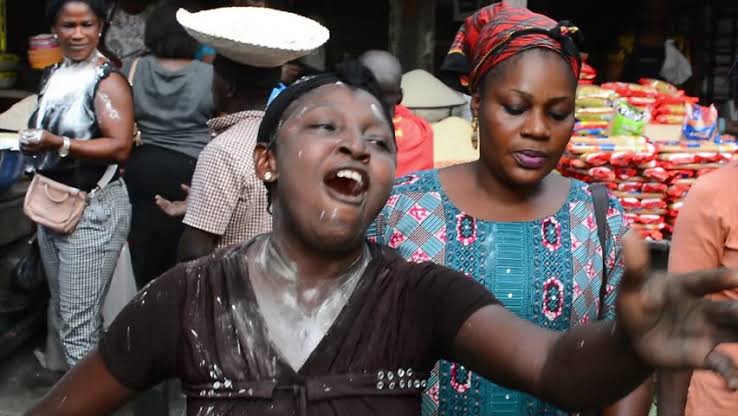
The market is not just a place to buy and sell. It is a place where women gather information, build connections, and even celebrate when someone gives birth.
Women rubbed powder (Nzú) in the market in celebration of new born baby. Photo – Ibiene Magazine.
Long-Distance Trade Networks
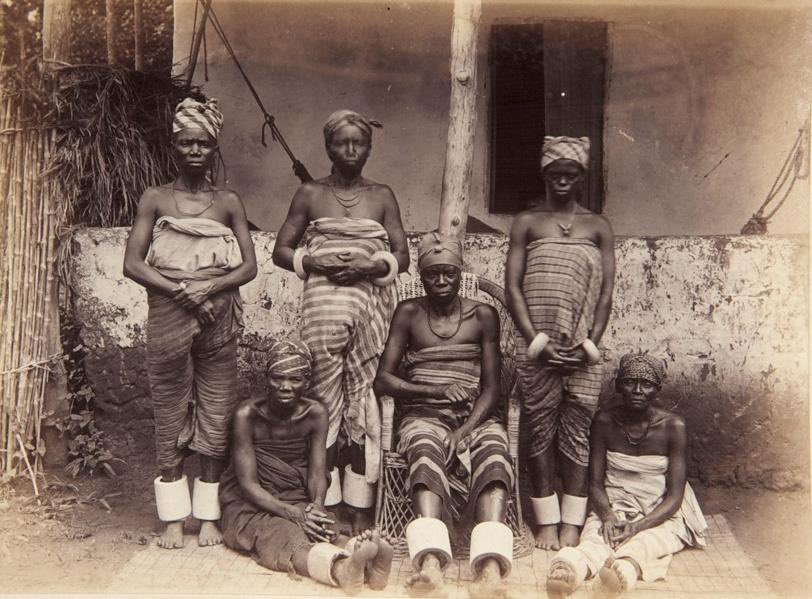
Igbo women, especially those from the Ndi-Ahia areas like Aboh, Ahaba, Onicha mmili, Oguta, and Aku, established a massive trade reaching faraway places. In Onicha, women traders organized themselves very well. They controlled the main market on the riverside under the woman leader that they called Omu or “Queen.” The Onitsha king (Obi) and his chiefs protected them so they could create a network that connected all the markets inside the land.
As Flora Nwapa said about Oguta, ” A Woman who doesn’t know how to trade in our town is a senseless woman. She is not a woman at all.” Many people in the Ndi-Ahia areas believed this.
Wealthy Market women in Onicha. G. F. Packer, 1880s. Pitt Rivers Museum.
Participation in the Slave Trade
Strong Igbo women were very active in the slave trade as owners, dealers, and middlepeople. In Onitsha, chiefs’ wives and family daughters use their connection to do safe business. The Ọmụ (women leaders) have plenty of money and power not only from how they controlled the market but from the slave trade too even if the women were in control of the market, plenty of slave trade happened in the ancestral houses of chiefs, big men who had titles, and women who knew how to trade very well, like the queen.
Women from Aboh were managing their own boats that had cannons. Some of them are more famous:
– Ojobo, which has more than 200 slaves who collect palm oil and plant yams
– Okwuenu Ezeiwere, one of the richest women at that time
– Ikpeaku Ifeipbu from Oguta, who made so much money that she can marry many wives and build houses for them
– Ezenwanyi Nnenne Mgbọkwọ, the 4th Arochukwu woman leader, who dealt in slaves during the height of the Aro slave trade
Provisioning Trade and Palm Oil
Women played a big role in the food supply trade that followed the slave trade. Palm oil, which they needed with yam to feed slaves on ships that crossed the Atlantic, has become an important trade item since the sixteenth century.
When the slave trade was stopped in 1807, many Igbo women quickly switched to “decent
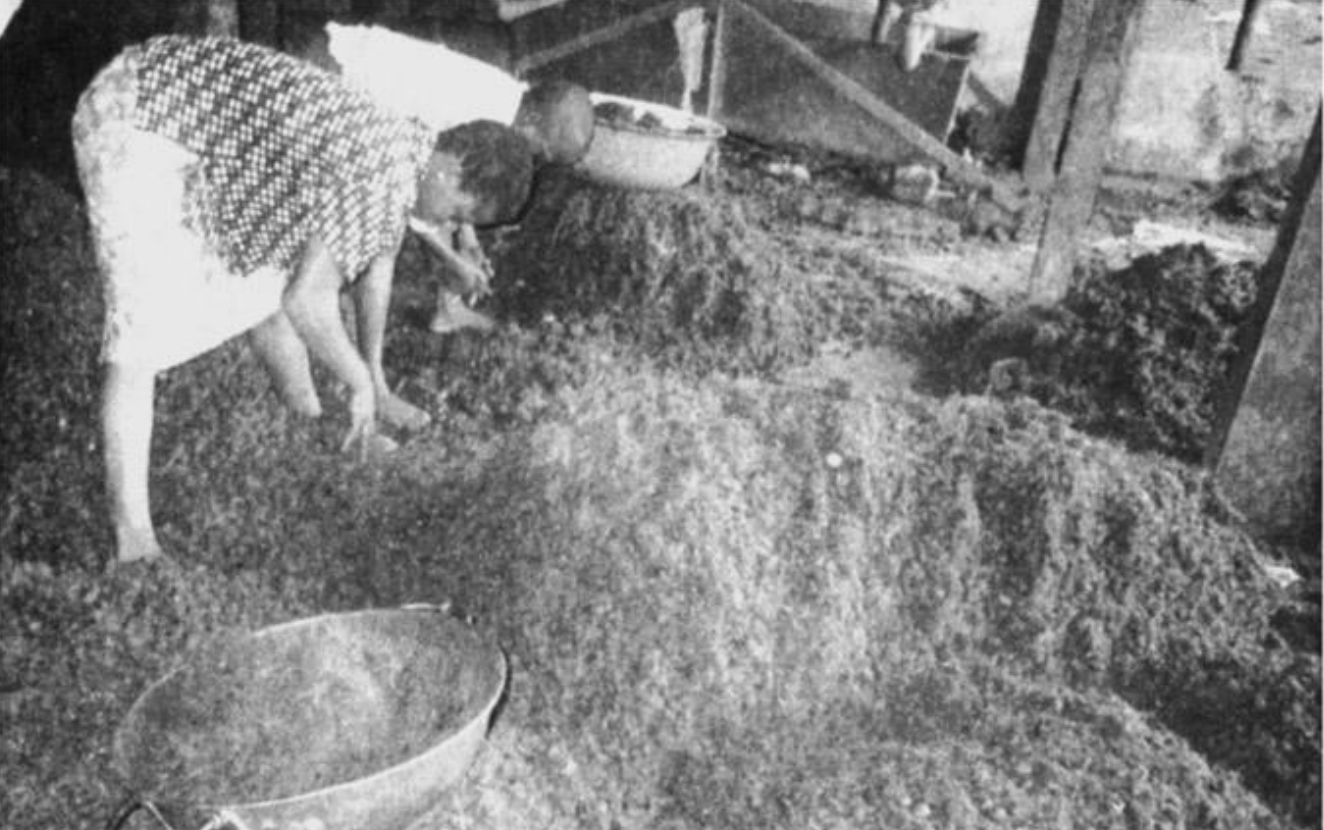
Girls Separating Palm Kernels from the Fibers at an Oil Mill ~ Gloria Chuku
commerce” for palm oil and other things. Women from Ngwa, Ndoki, and Akwete were very active in the palm oil trade. Akwete women sold palm oil to Ijo traders before switching to cloth weaving and trading.
Regional Trade Specializations
Different Igbo communities have their own special trade:
Aku women from Ibagwa Nsukka traded kola nuts with people from northern Nigeria. They exchanged them for ọkpa (beans), pepper, melon, smoked meat and fish. When Onitsha became a big market center, they added clothes that they weaved and palm oil was also included in their business.
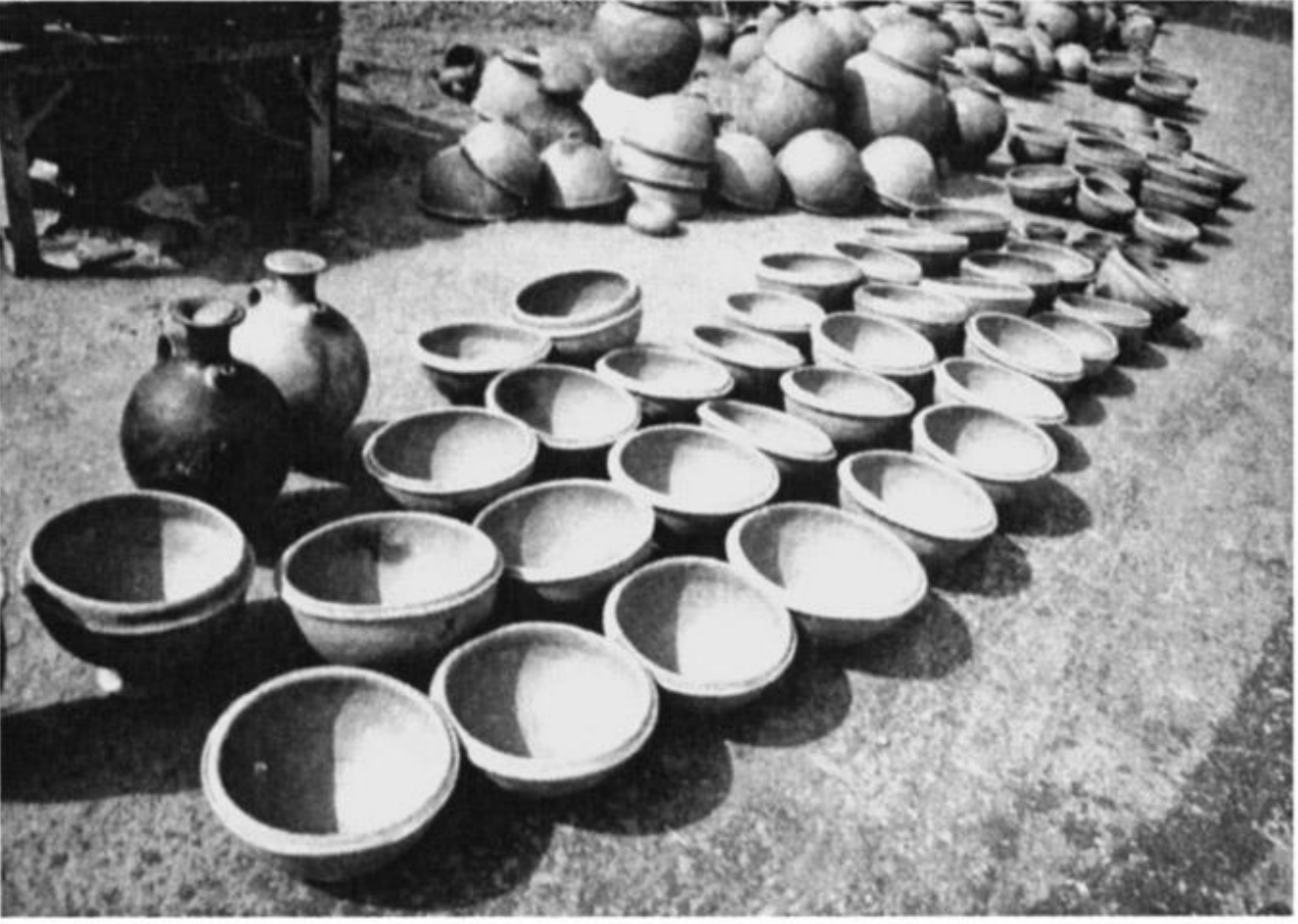
Women control the local pot trade, but men handle the far pot trade. Even though pot breaks easily, Afikpo pots were transported by canoe to far markets in Calabar, and their price was higher than that of other pots.
Ishiagu Pottery Products photo by Gloria Chuku
Economic and Social Power
Through trade, Igbo women had not just money but political power and a better societal position. When European companies set up trading posts in Oguta and Onicha Ado in the middle of the nineteenth century, women from these areas changed their lifestyles. They began staying in one place to buy goods that people from the inland brought. They exchanged palm products for European goods.
As they succeeded in business, men began to try out what was previously in the women’s area. As Eleanor Leacock said, women who could maintain their economic freedom as traders kept their status and organized themselves to protect their rights.
The story of the Igbo women traders shows how economic power can change to social and political influence, and it challenges the simple idea about what men and women should do in African society before the white men came.
Refrerence
Chuku, Gloria. Igbo Women and Economic Transformation in Southeastern Nigeria, 1900–1960. Routledge, 2005.
Basden, George T. Among the Ibos of Nigeria. Seeley, Service & Co., 1921.
Meek, Charles Kingsley. Law and Authority in a Nigerian Tribe: A Study in Indirect Rule. Oxford University Press, 1937.
Cite this article
Chukwunwike Ossai. “Igbo Women’s Impact in Trade: A Historical Perspective.” Ozikoro, 2025. https://ozikoro.com/igbo-womens-impact-in-trade-a-historical-perspective/
Discussion
Sign in to join the discussion
Comments are checked by an editor before they appear. Leave a source or a correction and it is read first.
Nothing has been approved on this record yet. Comments are checked by an editor before they appear, so one written now shows on this page after that check.
 Ozikoro
 Cultural HeritageEleven Days of Nwafor Ogidi: Inside the Festival Keeping an Old Igbo Tradition AliveRead history →
 Cultural HeritageIli Ji Nkpor Obododike: The Indigenous Agricultural Ritual CycleRead history →
 Cultural HeritageMusic and Drum Traditions: Tracing the “Igbo Drum” in the AmericasRead history →
No comments yet
Nothing has been approved on this record yet. Comments are checked by an editor before they appear, so one written now shows on this page after that check.