 Ozikoro
Cultural Heritage · Published history
Iguaro: The Igbo Calendar, Culture, and Cosmology
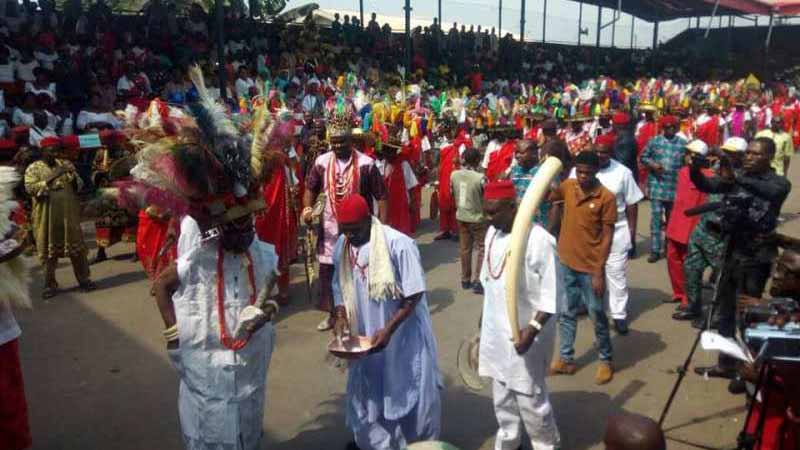
The Iguaro or Ògụ́àfọ̀ is a sacred ritual that marks the beginning of the Igbo lunar calendar, proclaimed by the Eze Nri, the spiritual and cultural leader of the Nri civilisation. For over a millennium, this tradition has signalled the start of the Igbo year in February, guided by the cycles of the moon. Rooted in the spiritual beliefs, agricultural practices, and communal values of the Igbo people of southeastern Nigeria, the Igbo calendar is a powerful symbol of indigenous knowledge and cultural resilience. It integrates spirituality, farming, and community life. This article provides a detailed exploration of the Iguaro ritual, the structure of the Igbo calendar, its cultural and spiritual significance, its connection to deities like Arobinagu (Agwu Nsi), and its role in preserving Igbo identity in the modern world.
The written record
Historical context
The Igbo Calendar: A Lunar and Spiritual Framework
The Igbo calendar is a lunar-based system that organises time according to the moon’s cycles. It reflects the Igbo people’s deep connection to nature, spirituality, and community, guiding their agricultural, ritual, and social activities. The calendar’s structure includes:
- 13 months (Ọnwa) in a year (Aro or Afo): Each month is approximately 28 days, aligned with the lunar cycle, totalling about 364 days per year.
- 7 weeks (Izu) in each month: A week consists of four days, creating a 28-day monthly cycle.
- 4 days in each week: These are the sacred market days—Eke, Orie, Afo, and Nkwo—which are central to Igbo culture and spirituality.
- An extra day, Ọnwa Ụzọ Alụsị: Added at the end of the last month to complete the lunar cycle, ensuring alignment with the moon’s phases.
The calendar varies across Igbo communities due to differences in lunar observations and local spiritual practices. However, the four-day market cycle provides a shared rhythm, facilitating inter-village cooperation in trade, rituals, and social events. This flexibility displays the Igbo value of ụmụnna (community kinship), allowing communities to adapt while maintaining cultural unity.
The Sacred Market Days: Pillars of Igbo Time
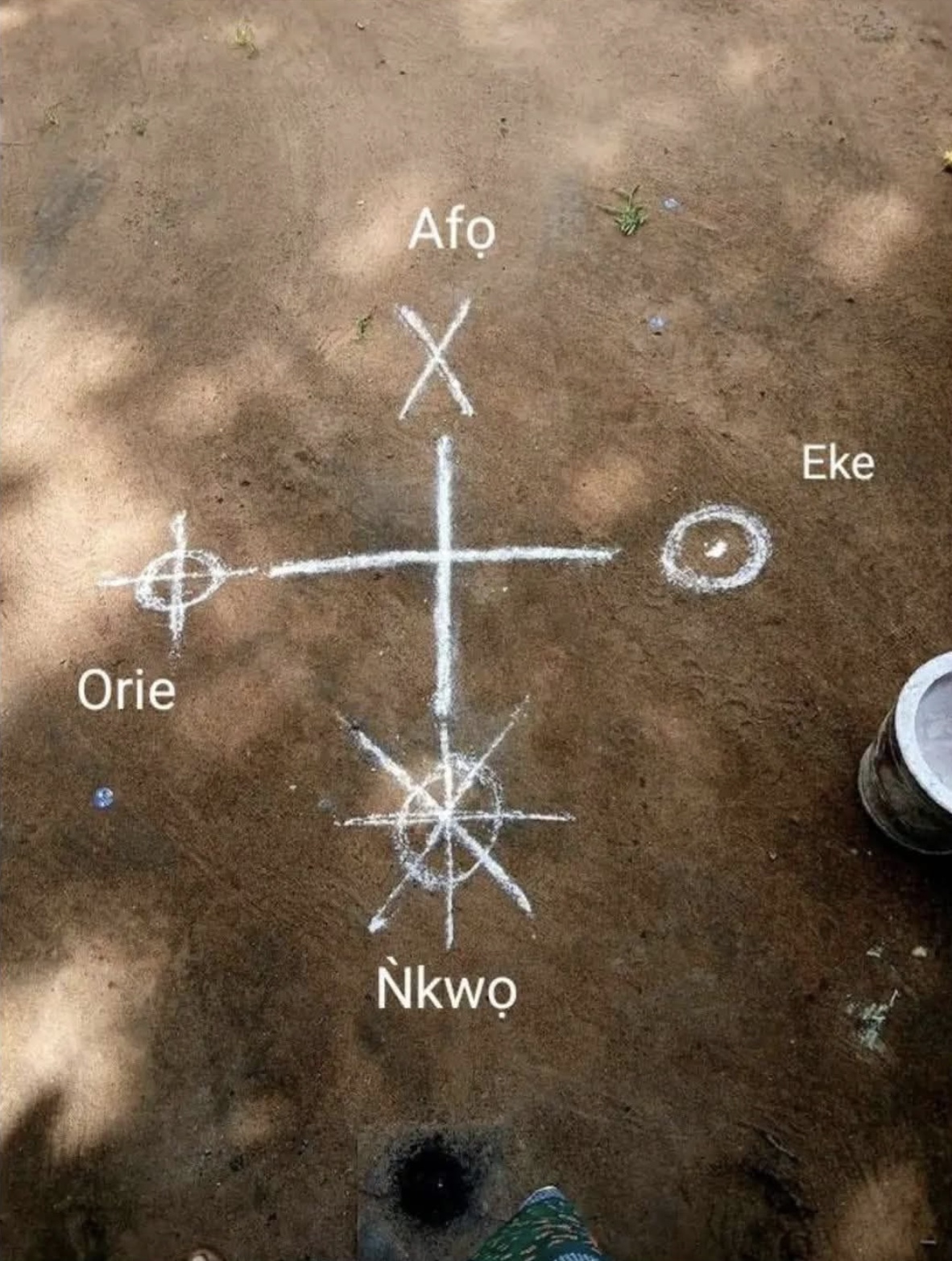
The four market days—Eke, Orie, Afo, and Nkwo—are the foundation of the Igbo calendar, serving as more than just commercial intervals. Each day is linked to a specific alusi (deity) and carries spiritual, social, and economic significance. According to Igbo oral traditions, the market days were established by the Eze Nri, who sent priestly agents to consecrate shrines across Igboland, spreading this timekeeping system. The market days shape Igbo life in several ways:
- Naming Traditions: Children are often named after their birth day, such as Nweke or Mgbeke (Eke), Nwaorie (Orie), Nwafo (Afo), and Nwankwo (Nkwo). These names tie individuals to the spiritual energy of their market day.
- Market Schedules: Communities hold their main markets on the day sacred to their shrine. For example, Afo Mkpoo in Nkpor (Mkpoo) operates on Afo day, attracting traders and boosting economic ties.
- Cultural Taboos and Rest Days: In some communities, days like Eke are observed as rest days, similar to Sunday in Christianity. Farming or heavy work may be avoided to honour the alusi associated with the day.
- Spiritual Practices: Each market day is an opportunity for offerings, prayers, and rituals to the corresponding alusi, ensuring spiritual harmony and community well-being.
The market days integrate spirituality into daily life, making time a sacred concept that connects the physical and spiritual realms.
Months of the Igbo Calendar: A Cycle of Spirituality and Agriculture
The 13 months of the Igbo calendar, particularly in the Nri tradition, are named to reflect the agricultural, spiritual, and communal activities of the Igbo people. Each month has a specific purpose, aligning human endeavours with the rhythms of nature and the divine. Below is a detailed overview of the months and their significance:
- Ọnwa Mbụ (February–March): The new year begins with the Iguaro ritual, where the Eze Nri proclaims the planting season. Communities offer prayers and prepare farms for sowing.
- Ọnwa Abụo (March–April): A time for clearing land, cleaning farms, and spiritual purification to ensure a successful planting season.
- Ọnwa Ife Eke (April–May): A period of fasting and sacrifices to Ana (the Earth goddess), seeking her blessings for fertile soil. Rituals honour Eke-related alusi.
- Ọnwa Anọ (May–June): Seed yam planting begins, a critical phase in the agricultural cycle. Some communities celebrate the Ekeleke dance festival, fostering unity and joy.
- Ọnwa Agwụ (June–July): Dedicated to Agwu Nsi (Arobunagu), the deity of healing, herbalism, and divination. Dibia (traditional healers) honour Arobunagu through the Arobunagu Agwunsi festival, offering herbs (mkpọrọgwụ na mkpafifia) and charms (ọgwụ). Masquerades perform, and dibia seek Agwu’s guidance for effective remedies.
- Ọnwa Ifejiọkụ (July–August): Rituals for Ifejiọkụ and Njoku Ji, deities of yam and agriculture, culminate in the New Yam Festival (Iri Ji), a time of thanksgiving for the harvest.
- Ọnwa Alọm Chi (August–September): Women commune with their ancestors, focusing on motherhood and family. Prayers, kola nut breaking, and veneration of chi (personal spirit) strengthen familial bonds.
- Ọnwa Ilo Mmụọ (Late September): A spiritual retreat marked by the Ọnwa Asatọ festival, where communities reflect on their connection to the spiritual world.
- Ọnwa Ana (October): Dedicated to Ana, with major rituals to honour the Earth goddess and seek her protection for the community.
- Ọnwa Okike (Early November): Creation rituals celebrate Chineke (the creator god) and the origin of life, emphasising Igbo cosmology.
- Ọnwa Ajana (Late November): Continuation of creation rituals, focusing on spiritual renewal and preparation for the year’s end.
- Ọnwa Ede Ajana (December): Final ritual closures, marking the completion of the agricultural and spiritual cycle.
- Ọnwa Ụzọ Alụsị (January–February): Dedicated to all alusi, with offerings and prayers to close the year and prepare for the Iguaro.
These months weave together agriculture, spirituality, and community life, embodying the Igbo belief that time is a sacred cycle guided by divine forces.
Iguaro: The Sacred New Year Proclamation
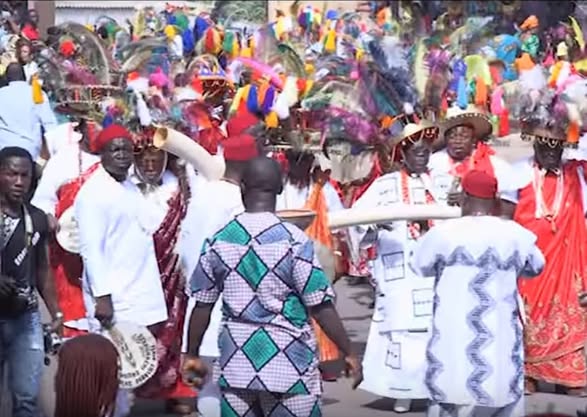
The Iguaro ritual is the cornerstone of the Igbo calendar, performed by the Eze Nri or his regent in mid-February, typically on an Nkwo day. As the spiritual leader of the Nri civilisation, the Eze Nri holds the ancestral mandate to proclaim the new year, a role that highlights Nri’s status as the sacred heart of Igboland. The ritual signals the start of the planting season, guiding communities across Ana Igbo (Igbo land) to begin farming.
During Iguaro, the Eze Nri distributes yam seeds coated with white chalk (nzu), symbolising purity, prosperity, and continuity. Yams, a staple crop and cultural symbol, connect the spiritual and physical realms. The ritual includes prayers, offerings to alusi, and divinations to ensure a bountiful year. Dibia, elders, and community members participate, seeking the Eze Nri’s blessings and aligning with the spiritual rhythms of the new year.
The Iguaro is closely linked to Agwu Nsi (Arobinagu), the forest deity of healing and herbalism. Arobinagu controls herbs and charms, which are vital for agricultural rituals and healing ceremonies. Dibia invoke Arobinagu during Iguaro to empower herbal remedies used in planting and community health, reinforcing the deity’s role in Igbo cosmology.
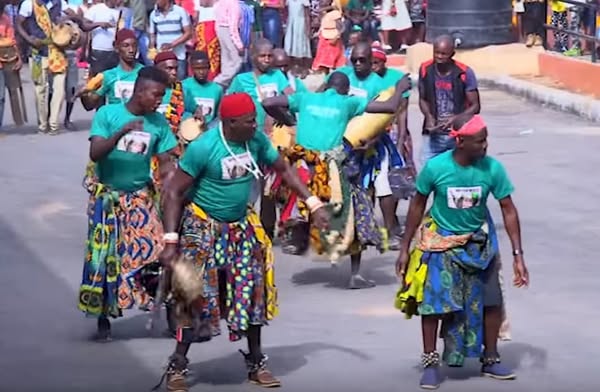
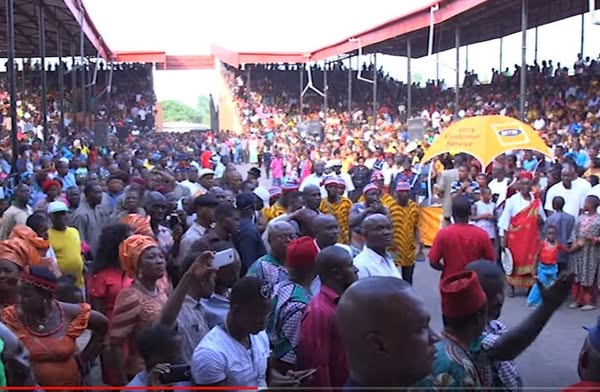
The Iguaro festival in Enugu-Ukwu, Anambra State. Photos – Goge Africa
Arobinagu’s Role in the Igbo Calendar
The month of Ọnwa Agwụ is a highlight of the Igbo calendar, dedicated to Agwu Nsi (Arobinagu), the deity honoured during the Arobinagu Agwunsi festival. As a forest deity, Arobinagu holds absolute control over herbs (mgbọrọgwụ na mkpafifia) and charms (ọgwụ), guiding dibia in their healing and divination practices. During Ọnwa Agwụ, communities celebrate Arobinagu’s power through rituals, offerings, and masquerade performances. Dibia presents herbs and charms at Arobinagu’s shrines in Ofia (sacred groves), seeking inspiration for effective remedies.
Arobinagu is particularly significant for Ọgbanje (spirit children), Ezenwanyi (female spiritual leaders), and Ezenwoke (male spiritual leaders), who are often called to serve as healers or herbalists. These individuals rely on Arobinagu’s guidance to prepare herbal remedies and charms. Without installing Arobinagu through rituals like ịchụ aja Agwụ Ofia, their abilities may be ineffective, leading to challenges such as illness or spiritual powerlessness. Arobinagu also influences those with wind/air elements, known as Eze Ikuku (Lord of the Wind), who may need its guidance to harness their spiritual gifts.
Medical practitioners, including nurses, midwives, doctors, and pharmacists with spiritual inclinations, are encouraged to maintain a good relationship with Arobinagu. This connection enhances their ability to treat patients, conduct operations, and provide effective care, as Arobinagu ensures the efficacy of their efforts. The Iguaro ritual and the calendar’s spiritual framework reinforce these connections, aligning human activities with divine will.
Historical Significance: The Famine of 1723–1725
A critical event in Igbo history underscores the importance of Iguaro. Between 1723 and 1725, a devastating famine struck Igboland, attributed to the murder of Eze Nri Ezimilo I. Without the Eze Nri to perform the Iguaro, the ritual was disrupted, leading to crop failure and widespread hunger. The famine ended only when Eze Nri Ewenatam, Ezimilo’s son, restored the ritual, highlighting its essential role in aligning human activities with divine forces. This event remains a powerful reminder of the Iguaro’s agro-spiritual significance and the Eze Nri’s sacred authority.
Cultural and Spiritual Significance
The Igbo calendar is a profound expression of Igbo culture and cosmology, with multiple layers of meaning:
- Spiritual Connection: Each month and market day is dedicated to a specific alusi, linking human activities to the spiritual realm. This ensures that Igbo life is guided by divine forces, from planting to healing.
- Agricultural Guide: The calendar aligns farming with lunar cycles, ensuring successful harvests. Rituals like Iguaro and the New Yam Festival connect agriculture to spirituality, honouring the sacredness of the land.
- Communal Unity: The market days and festivals foster ụmụnna, bringing communities together for trade, rituals, and celebrations. This strengthens social bonds and collective identity.
- Cultural Resilience: The calendar preserves Igbo indigenous knowledge, resisting colonial and modern influences that threaten cultural erosion.
The Igbo Calendar in Modern Society
Despite challenges from colonialism, Christianity, and globalisation, the Igbo calendar remains a vital part of Igbo culture. The Gregorian calendar, introduced by colonial powers, disrupted traditional timekeeping, but many communities continue to observe the lunar calendar for cultural and spiritual purposes. The Iguaro ritual, led by the Eze Nri, is still performed in Nri and other areas, maintaining its sacred role.
Recent efforts to revive the calendar reflect a growing movement to reclaim Igbo heritage:
- In 2023, Nzuko Ozo Ndi Igbo, a group of Ozo title holders, celebrated Iguaro Ndigbo at Godfrey Okoye University in Enugu, themed “Iguaro Ndi Igbo and its Relevance in Cultural and Socio-Political Life.” The event showcased the calendar’s 364-day lunar system, aligning it with Jewish and Chinese calendars and highlighting its sophistication.
- Prof. Ike Oluka, president of Nzuko Ozo Ndi Igbo, emphasised the need to teach the calendar to Igbo youth to preserve cultural wisdom and identity.
- Monsignor Christian Anieke, Vice Chancellor of Godfrey Okoye University, urged young Igbo people to reconnect with their roots, using the calendar as a tool for cultural pride.
- Prince Chukwuemeka Onyesoh, Okpala Eze Nri (first son of the Eze Nri), reaffirmed Nri’s role as the origin of the Igbo calendar and market days, advocating for its recognition as a cultural treasure.
In the Igbo diaspora, communities in the United States, the United Kingdom, and Canada use the calendar to schedule cultural events, such as New Yam Festivals and Arobunagu celebrations, adapting it to modern contexts. Social media platforms have become vital for sharing knowledge about the calendar, with posts, videos, and discussions educating younger generations and the global Igbo community.
The calendar’s integration with Arobunagu’s influence shows its relevance to modern healers. Dibia and medical practitioners in urban areas and the diaspora draw on Arobunagu’s power during Ọnwa Agwụ, ensuring their remedies remain effective. This blend of tradition and modernity strengthens the calendar’s role in Igbo society.
Challenges and Future Prospects
The Igbo calendar faces several challenges:
- Christianity and Western Influence: Many Igbo people, influenced by Christianity, view traditional practices as incompatible with their faith, reducing participation in lunar calendar rituals.
- Gregorian Calendar Dominance: The Gregorian calendar dominates official and educational systems, limiting the visibility of the Igbo calendar.
- Urbanization and Economic Pressures: Urban development and economic constraints reduce the time and resources available for traditional rituals like Iguaro.
- Loss of Sacred Spaces: Sacred groves (Ofvia) and other ritual sites are threatened by land development, impacting festivals like Arobunagu Agwunsi.
Despite these challenges, efforts to preserve the calendar are gaining speed. Cultural organisations, scholars, and community leaders are documenting the calendar through books, documentaries, and online platforms. The rise of cultural tourism in Nigeria has brought attention to Igbo traditions, with Iguaro and related festivals attracting visitors and researchers. Educational initiatives aim to teach the calendar in schools, ensuring its transmission to future generations. By integrating the calendar into modern contexts, such as diaspora events and digital platforms, the Igbo people can maintain their relevance and vitality.
The Iguaro and the Igbo lunar calendar are more than tools for measuring time—they are a spiritual blueprint, a cultural legacy, and a testament to Igbo resilience. Rooted in the sacred traditions of the Nri civilisation, the calendar connects the Igbo people to their ancestors, alusi, and the rhythms of the land. Through rituals like Iguaro and festivals like Arobunagu Agwunsi, it weaves together spirituality, agriculture, and community, embodying the depth of Igbo cosmology. The calendar’s revival, supported by cultural advocates and modern platforms, ensures that Igbo identity and wisdom endure in a rapidly changing world. By honouring the Igbo calendar, the Igbo people reaffirm their cultural pride, preserving a living heritage for generations to come.
Sources and references
- Ugochukwu, F. (2025, January 1). Oguafo: The Igbo Calendar . DibiaNwangwuUchendu.
- Umendu, C. U. (2023, February 28). Igu Aro comes alive . The Sun Nigeria.
- Igbo calendar. (2025, June 13). Wikipedia.
- Osibe, O. (2024, April 26). Iguaro Nri festival ushers Igbo New Year calendar, planting season.
Cite this article
Idenze Ezeme. “Iguaro: The Igbo Calendar, Culture, and Cosmology.” Ozikoro, 2025. https://ozikoro.com/iguaro-the-igbo-calendar-culture-and-cosmology/Discussion
Sign in to join the discussion
Comments are checked by an editor before they appear. Leave a source or a correction and it is read first.
Continue reading
Related histories
 Cultural HeritageEleven Days of Nwafor Ogidi: Inside the Festival Keeping an Old Igbo Tradition AliveRead history →
 Cultural HeritageIli Ji Nkpor Obododike: The Indigenous Agricultural Ritual CycleRead history →
 Cultural HeritageMusic and Drum Traditions: Tracing the “Igbo Drum” in the AmericasRead history →
No comments yet
Nothing has been approved on this record yet. Comments are checked by an editor before they appear, so one written now shows on this page after that check.