 Ozikoro
Ethnohistory · Published history
Igwe Okoye Odili: (Okoye Chief): The First Warrant Chief of Umueri
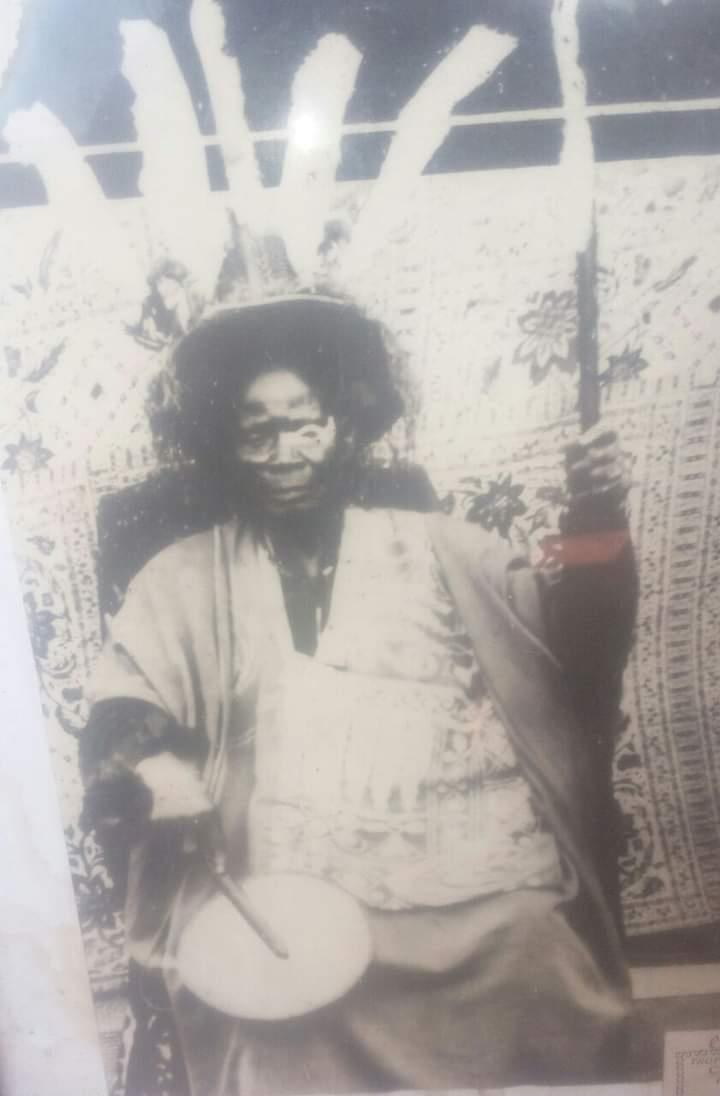
In the late nineteenth and early twentieth centuries, the Umueri community in the Omambala region of present-day Anambra State was led by King Okoye Odili, popularly known as Okoye Chief. He is remembered not only as a paramount ruler and spiritual authority, but also as the first Warrant Chief of Umueri, formally recognised under British colonial administration. Oral history suggests that he began his reign around 1886, continuing until his passing on 3 March 1948, giving him an unusually long period of influence that spanned the transition from precolonial autonomy to colonial governance.
The written record
Historical context
Traditional Authority before Colonial Rule
Before colonial intrusion, King Okoye Odili exercised leadership rooted in Igbo indigenous political systems, where authority rested on a blend of lineage prestige, wisdom, military reputation, and spiritual potency. He was renowned as a dibia, a master of both medicinal and metaphysical knowledge, and as a fearless warrior who defended Umueri against external threats. Oral accounts recall that he resisted slave raiders from Ada (Edda) who threatened surrounding communities during the nineteenth century (Isichei, 1976). His reputation for courage and decisive leadership shaped the communal identity of Umueri in a period defined by instability and conflict across many Igbo territories.
Spiritual Protection and Early Encounters with Europeans
As European presence intensified through the commercial activities of the Royal Niger Company, King Okoye Odili recognised the cultural and political danger posed by foreign intrusion. To protect his people, he created a sacred charm known as “Oyibo Vee Anyi Enu”, believed to shield the community from colonisation. Its effects were reflected in patterns of settlement: early Catholic missionaries bypassed Umueri and instead established themselves at Aguleri, at what later became known as Ugwu Ndi Uka. Some accounts maintain that the missionaries directly requested land in Umueri, which King Okoye Odili refused, consistent with his belief that practices unknown to the ancestors were taboo (Oguejiofor, 2001).
This strong defence of cultural continuity meant Umueri did not initially receive schools or mission institutions as early as some neighbouring towns. While this preserved religious tradition, it also delayed early access to Western education, one of the enduring historical ironies of his protective leadership.
Alliance and the Transition to Colonial Governance
Despite early resistance, colonial presence grew stronger. The Royal Niger Company sought to avoid conflict along the Omambala River trade routes and entered into arrangements requiring regular payment of royalties to King Okoye Odili for the safe passage of palm oil. These transactions later became key legal evidence in land ownership disputes, including the Otuocha land case, since receipt of royalties demonstrated territorial control during the relevant era (Falola & Heaton, 2008).
As British administration formalised rule in Southern Nigeria, the colonial government introduced the Warrant Chief System, selecting influential indigenous leaders to serve as intermediaries. King Okoye Odili was officially appointed as the first Warrant Chief of Umueri, receiving a staff of office and colonial recognition of his authority (Afigbo, 1972). He maintained, however, the regal dignity and authority of a precolonial king, travelling in a royal hammock borne by six attendants, with a seventh shielding him with an umbrella on state visits, including to court sessions at Onitsha.
Diplomacy, Settlement, and Territorial Administration
During his reign, Umueri accommodated several groups, including:
- The Idigo family of Aguleri
- Umuoba-Anam migrants from Umuoba-Abaegbu around 1910
These relationships later shaped land negotiations and disputes. King Okoye Odili represented Umueri in the 1920 customary court litigation involving Aguleri, overseen by the District Officer, Captain D. P. J. O’Connor. O’Connor’s remarks describing the linguistic limitations of both parties remain preserved in legal records.
A Lineage That Continued to Shape Regional Identity
Among King Okoye Odili’s children, Chief Fidelis Nzegwu Okoye stands out prominently. He embraced Western education, became one of the first Igbo Chartered Accountants, and emerged as a significant political actor during the First Republic. He is credited with popularising the term “Omambala” as a regional political name and moved the motion that led to the creation of the Omambala County Council.
Called to inherit his father’s throne in the 1950s, he declined due to civil service commitments, nominating Igwe Nelson Okoye (Oke Ebo I) instead.
King Okoye Odili is survived by numerous descendants, including lawyers, administrators, traditional cabinet members, and public intellectuals who continue to make significant contributions to the cultural and political life of Umueri.
Sources and references
- Diboh, B. (2022). A history of Umueri town: The historical nexus of Igbo origin. Publisher.
- Afigbo, A. E. (1972). The Warrant Chiefs: Indirect Rule in Southeastern Nigeria, 1891–1929 . Longman.
- Akuko-Eri. (2023, May 31 ). KING OKOYE ODILI (Okoye Chief) – The Umueri first warrant chief. AkukoEri.
- Isichei, E. (1976). A History of the Igbo People . Macmillan.
- Nwokeji, G. U. (2010). The Slave Trade and Culture in the Bight of Biafra: An African Society in the Atlantic World . Cambridge University Press.
- Oguejiofor, J. O. (2001). African Philosophy and the Issue of Mission . John Wiley Academic Press.
Cite this article
Discussion
Sign in to join the discussion
Comments are checked by an editor before they appear. Leave a source or a correction and it is read first.
Continue reading
Related histories
 EthnohistoryGbam, Chai, Ewo: How Igbo Expressions Became the Language of Nigerian Pop CultureRead history →
 EthnohistoryAro Merchant Network: Historical Trade Integration in the Cross-Niger RegionRead history →
 EthnohistoryTransition to Commodities in the aro confederacy(e.g., Palm Oil, Ivory, Cloth)Read history →
No comments yet
Nothing has been approved on this record yet. Comments are checked by an editor before they appear, so one written now shows on this page after that check.